George Lucas, Not Guilty

Today, on the premiere of ‘The Last Jedi’ – the eighth official episode in the Star Wars saga, creator of Star Wars – Mr. George Lucas – stands trial. He is accused of being a hack.

The prosecution (The internet)
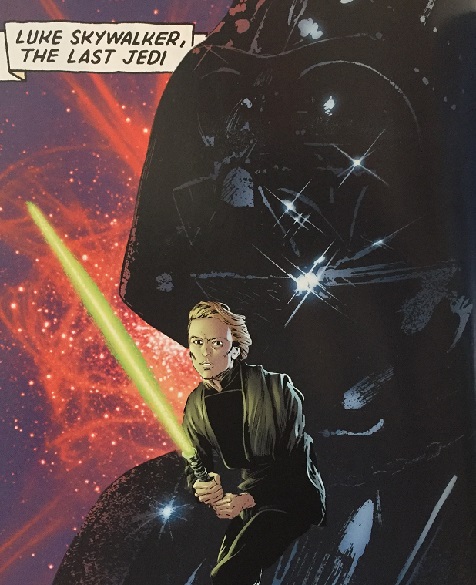
Of the many things that catch blame for ‘ruining’ the Star Wars prequels – Jar Jar Binks, midi-chlorians, almost every line of dialogue George Lucas wrote for Padme and Anakin – there is one moment that makes almost every fan cringe, no matter how dedicated. We’re talking about Anakin Skywalker’s transformation into Darth Vader, literally the jumping-off point of the entire Star Wars saga.

In this moment, Vader learns that he has lost his wife and unborn children…and has been transformed into, like, a Space Robocop. So, what does he do? He breaks free from his shackles and lets out the now infamous, “NOOOOOOO!” that felt like it had a Kanye-level of autotune to it. It felt ridiculous when it should have been the defining moment of the prequels. What the hell was Lucas thinking?

The defense (Johnny Cochran)

This defense will be short and easy. This is the man who gave us Star Wars after all. The original Star Wars films still form the best trilogy ever created hands down. Even the third part – which is never the best in any series – is in case of Star Wars nearly perfect: ‘Return of the Jedi’ contains some of the best stuff of the series. Legendary film critic Roger Ebert (1942 – 2013) gave each of the three original films the maximum rating of four stars (read his awesome reviews here, here, and here).

So why is Lucas so hated despite being the man who gave us Darth Vader, Yoda, Han Solo, Princess Leia and Luke Skywalker amongst many others? Because he also gave us Jar Jar Binks? Because he writes remarkably terrible love scenes? So what? Didn’t the other great filmmakers of his generation make similar mistakes? Francis Ford Coppola cast his daughter in ‘The Godfather: Part III’ and it nearly ruined the film. Yet, he is never criticized in the way Lucas is.

Statistically, after sunshine comes rain. Lucas gave us the best trilogy ever made, so the prequels were never going to top that. Still, that is no excuse for not making better movies. But are they really so terrible?

Episode I: The Phantom Menace is the worst, most will agree. But look at what it does have: the pod race, Darth Maul (IMDb-poll names him the second greatest SW villain after Vader), and the return of many great characters: Palpatine, Yoda and Obi-Wan (Ewan McGregor is perfect casting as a young Alec Guinness). There is also fun foreshadowing going on of all that is to come. Finally, the world building is spectacular and unforgettable.

Roger Ebert – who gave ‘The Phantom Menace’ 3,5 stars out of 4 – concluded: “Mostly I was happy to drink in the sights on the screen, in the same spirit that I might enjoy ‘Metropolis’, ‘Forbidden Planet’, ‘2001: A Space Odyssey’, ‘Dark City’ or ‘The Matrix’. The difference is that Lucas’ visuals are more fanciful and his film’s energy level is more cheerful; he doesn’t share the prevailing view that the future is a dark and lonely place.”

Episode II: Attack of the Clones – The greatest weakness is the love story, we can be clear about this. But it would be a shame to let that ruin the whole movie experience, because episode II has a lot going for it. First of all, it has a terrific Raymond Chandler-style mystery plot. Also, there is a great sense of urgency; the battle for the galaxy has now really begun. And the filmmaking in general – the editing, sound, production design, music, etc – are all A-grade. There are few filmmakers with such imagination, and with the ability to bring it to the screen, like Lucas.

As for villains, usually the best thing about a Star Wars-film, I don’t like Jango Fett so much, but Count Dooku – played the uncanny Christopher Lee – is terrific, and so is his lightsaber duel with Yoda. The dark side is really prevailing now and Lucas effectively uses the principles of Eastern Philosophy to craft the story development. People may not like Hayden Christensen, but what is actually accomplished by his performance is that we get an uneasy feeling about Anakin. The air gets thick in the confrontational scenes. Unlike Obi-Wan – who was the perfect Jedi-student in episode I – Anakin is the pupil you always have to worry about. And these foreshadowing shots with Palpatine are grand. His quest to the dark side is thus very well handled.

Episode III: Revenge of the Sith  Episode III is a return to the classic space opera style that launched the series, and many agree that Lucas really approaches old trilogy greatness here. In the saga’s darkest chapter, Anakin really journeys to the dark side under the influence of the demonic Palpatine. Aside from the infamous ‘Noooo’-moment, episode III is a thoroughly exciting and enjoyable film with some of the best action sequences in the series.

And so, ladies and gentlemen of the jury, if George Lucas is a hack, then Chewbacca lives on Endor, and therefore you must acquit! The defense rests.

So let us all shut the hell up and enjoy Lucas’ legacy.

Mijn Top 20 favoriete filmmakers

1. Martin Scorsese
Verantwoordelijk voor mijn favoriete film aller tijden: GoodFellas. Maar maakte talloze andere meesterwerken; Raging Bull, Taxi Driver, Casino, en vele anderen. Scorsese is een echte maestro die nooit teleur stelt.
Beste film: GoodFellas

2. Sergio Leone
Leefde te kort om een enorm portfolio na te laten, maar alles wat hij gedaan heeft is te gek. The Dollars Trilogy met Eastwood zijn de coolste films ooit en Once Upon a Time in America is een geniaal gangster epos.
Beste film: Once Upon a Time in the West

3. Quentin Tarantino
Maakt originele & uber coole films die hij baseert op onbekende pareltjes. Zijn meesterwerk is nog altijd Pulp Fiction, maar Reservoir Dogs en Kill Bill zijn bijna net zo briljant. Maakt nooit iets ondermaats.
Beste film: Pulp Fiction

4. Peter Jackson
Wist de onmogelijke missie om The Lord of the Rings te verfilmen tot een onvoorstelbaar succes te maken. Was daarvoor al een geweldig regisseur die Nieuw-Zeelandse splatter horror films maakte zoals Bad Taste en Braindead.
Beste film: The Lord of the Rings: The Two Towers

5.
The Coen Brothers
Hun oog voor bizarre personages is hyper ontwikkeld, hun humor onovertroffen en hun pen vlijmscherp. Ze maken om de twee jaar een te gekke film al zo’n 25 jaar lang, met hun hoogtepunt in de jaren 90 toen ze achtereenvolgens Fargo, The Big Lebowski en O Brother, Where Art Thou? maakte.
Beste film: Miller’s Crossing

6. Stanley Kubrick
De perfectionist. Leverde meesterwerken af die voor altijd verankerd zijn in de filmgeschiedenis. Wist uit te blinken in verschillende genres waaronder sci-fi (2001: A Space Odyssey), oorlog (Full Metal Jacket) en misdaad (The Killing)
Beste film: A Clockwork Orange

7. Steven Spielberg
Objectief de beste regisseur ter wereld. Weet de magie van film te pakken als geen ander. Heeft talloze klassiekers op zijn staan waaronder E.T.: The Extra-Terrestrial, Close Encounters of the Third Kind, Schindler’s List en Jurassic Park.
Beste film: Raiders of the Lost Ark

8.
Alfred Hitchcock
Hitchcock weet van een kartonnen doos nog tot een super spannend voorwerp te maken. Ze noemen hem niet voor niets de Master of Suspense. Is waarschijnlijk de meest invloedrijke regisseur ooit. Talloze scènes uit zijn oeuvre staan voor altijd op mijn netvlies gebrand.
Beste film: Rear Window

9. Sam Raimi
Maakte de hoogst vermakelijke Spider Man films, maar waar hij zichzelf wat mij betreft mee onsterfelijk heeft gemaakt is de Evil Dead trilogie. Heerlijke films. Maakte met The Quick and the Dead ook een fantastische western.
Beste film: Evil Dead II

10. Francis Ford Coppola
Hey, hij regisseerde The Godfather trilogie, hoe ga ik hem niet in mijn Top 10 zetten? Was ook verantwoordelijk voor de beste oorlogsfilm aller tijden met Apocalyse Now. Fenomenaal.
Beste film: The Godfather

Daarna volgen:
11. George Lucas (Beste Film: Star Wars: Episode IV – A New Hope)
12. James Cameron (Beste Film: Terminator 2: Judgment Day)
13. Danny Boyle (Beste Film: Trainspotting)
14. Brian De Palma (Beste Film: The Untouchables)
15. Akira Kurosawa (Beste Film: Throne of Blood)
16. Paul Verhoeven (Beste Film: RoboCop)
17. Robert Zemeckis (Beste Film: Back to the Future Part II)
18. Richard Linklater (Beste Film: Dazed and Confused)
19. Robert Rodriguez (Beste Film: Sin City)
20. Jim Jarmusch (Beste Film: Ghost Dog: The Way of the Samurai)

The Godfather: Part III (1990)


‘All the power on earth can’t change destiny.’

Directed by:
Francis Ford Coppola

Written by:
Mario Puzo (screenplay)
Francis Ford Coppola (screenplay)

Cast:
Al Pacino (Don Michael Corleone), Diane Keaton (Kay Adams Michelson), Talia Shire (Connie Corleone Rizzi), Andy Garcia (Vincent Mancini), Eli Wallach (Don Altobello), Joe Mantegna (Joey Zasa), George Hamilton (B.J. Harrison), Bridget Fonda (Grace Hamilton), Sofia Coppola (Mary Corleone), Raf Vallone (Cardinal Lamberto)

Just when you thought you were out, they pull you back in! 18 years after the original masterpiece, Francis Ford Coppola and many of his old collaborators return for the finale of the Godfather saga. The studio was screaming for a sequel for years, but Coppola waited until he had a story he really wanted to tell. Originally he wanted to call this story; ‘The Death of Michael Corleone’.

Part III is the story of an old Don looking for redemption. Michael Corleone is no longer a gangster; he is the chairman of a corporation. He has finally achieved legitimacy, but his heart is ever heavy. This is a man getting ready for death, but he wonders if he made the right decisions in life. In Part II he had his brother Fredo killed. Now, he wants to make things right with his ex-wife Kay, his children and with God.

Redemption does not come cheap. In the deal of his lifetime, Michael wants to purchase shares in a large real estate company, owned by the Vatican, for the sum of 600 million dollars. But he soon learns that the higher he gets, the dirtier it gets. In The Godfather: Part III, the hypocrisy of the mob, the Catholic Church and big business mix perfectly. Michael feels like he can’t deal with these snakes anymore; he needs a successor. His own son Anthony won’t have anything to do with his business, but perhaps his nephew Vincent (Andy Garcia) could be the one. Or is he too much of a hothead like his father Sonny?

Like the previous Godfather films, The Godfather: Part III opens with a lavish celebration – a fitting introduction that reintroduces familiar faces while showcasing new ones. It’s a promising start, but it also highlights the film’s most significant flaw. Francis Ford Coppola cast his daughter, Sofia Coppola, as Mary, Michael Corleone’s daughter. Unfortunately, she doesn’t quite fit the role. It’s not that her acting is utterly terrible, but she lacks the presence and nuance needed for such a pivotal character. Her on-screen romance with Vincent, in particular, feels forced and unconvincing, weakening an already delicate subplot.

Despite its flaws, Coppola demonstrates once again that he knows how to craft a compelling narrative. While Sofia Coppola’s performance may undercut the impact of some key scenes, they are still powerful scenes. The beloved characters we’ve followed throughout the saga each receive fitting and meaningful conclusions. The strong sense of family – a hallmark of the series – endures, lending the film its emotional core. The cast, for the most part, is outstanding. Al Pacino brings a Shakespearean weight to Michael, portraying him as a deeply tragic figure. Andy Garcia proves to be as fierce and magnetic a presence as James Caan was in the first film. Meanwhile, Talia Shire, Diane Keaton, and Eli Wallach all deliver touching and memorable performances in their supporting roles.

The final act that plays at an opera house is one of cinematic excellence. The combination of classic Sicilian opera, the traditional bloody settling of the Corleone affairs and the ultimate tragedy that unfolds is a sequence worthy of comparison to earlier Godfather-endings. The final frames are, as always in Godfather movies, beautiful. It is hard not to shed a few tears as Michael looks back on the women of his life and then dies.

Rating:

Quote:

KAY ADAMS: I came here to protect my son. I didn’t come here to see you disguised by your church. I thought that was a shameful ceremony.

Trivia:

Catherine Scorsese, Director Martin Scorsese’s mother, is one of the women that complains to Vincent in the street about the poor care of the neighbourhood. In the same year, she also appeared in her own son’s gangster film GoodFellas.

The Godfather: Part II (1974)

Directed by:
Francis Ford Coppola

Written by:
Mario Puzo (novel / screenplay)
Francis Ford Coppola (screenplay)

Cast:
Al Pacino (Don Michael Corleone), Robert Duvall (Tom Hagen), Diane Keaton (Kay Adams), Robert DeNiro (Vito Corleone), John Cazale (Fredo Corleone), Talia Shire (Connie Corleone), Lee Strasberg (Hyman Roth), Michael V. Gazzo (Frankie Pentangeli), G.D. Spradlin (Senator Pat Geary), Richard Bright (Al Neri)

Francis Ford Coppola’s The Godfather: Part II is a rare sequel that not only lives up to the legacy of its predecessor but in many ways deepens and expands it. Rich with atmosphere, emotional depth, and moral complexity, this beautifully dark chapter in the Corleone saga is, indeed, an offer you can’t refuse.

Following the immense success of the 1972 classic, a sequel was greenlit almost immediately. However, with only a small portion of unused material from Mario Puzo’s original novel – the early life of Vito Corleone – Coppola and Puzo crafted an original narrative chronicling Michael Corleone’s reign as head of the family, interwoven with the rise of his father, Vito. These parallel timelines form the heart of Part II, highlighting both the legacy and the transformation of the Corleone family.

In Vito’s storyline, we witness his arrival in New York as a young immigrant, escaping the trauma of his family’s murder in Sicily. As he grows up, he confronts the oppressive rule of a local crime boss and takes the first steps toward becoming a benevolent – but ruthless – leader within the community. Robert De Niro is mesmerizing as the young Vito, embodying the character with subtlety and strength, and earning a well-deserved Academy Award for Best Supporting Actor.

Meanwhile, Michael’s narrative unfolds in stark contrast. Now at the height of his power, Michael strives to legitimize the family business and expand into Cuba, partnering with the aging Hyman Roth. But betrayal and deception close in from all sides. Al Pacino delivers a haunting performance as a man consumed by control, paranoia, and an increasingly cold detachment from those closest to him. Despite the role being arguably the pinnacle of his career, Pacino was controversially overlooked by the Academy.

The film’s production design by Dean Tavoularis and the moody, shadow-drenched cinematography by Gordon Willis once again elevate the storytelling to operatic heights. But it’s the ensemble cast that truly shines – John Cazale as the fragile Fredo, Robert Duvall’s solid Tom Hagen, Diane Keaton’s heart-wrenching portrayal of Kay, and powerful additions like Lee Strasberg as Roth and Michael V. Gazzo as Pentangeli.

Coppola’s structural innovation – juxtaposing father and son at similar ages – profoundly enriches the film. While both Vito and Michael are motivated by a desire to protect and provide for their families, their approaches – and ultimate fates – are starkly different. Vito, though a criminal, retains warmth and humanity; Michael becomes increasingly isolated, sacrificing everything in his quest for power.

This is essentially the story of Michael Corleone’s downfall. He may get to keep his power, but he is completely lost, not understanding anymore how his actions have a destructive effect on his environment. He is now estranged from his wife and then from all others around him.

In the first movie, when Michael has the heads of the Five Families murdered, it is very satisfying, but when he deals with his enemies – including his own brother – at the end of The Godfather: Part II, it has completely the opposite effect. Michael’s transformation, which started in the first movie, is now complete. He is alone with all his power and it is with that frightening image that Coppola ends this remarkable film.

Rating:

Quote:
MICHAEL CORLEONE: Connie, if you don’t listen to me and marry this man… you’ll disappoint me.

Trivia:
Marlon Brando and Robert DeNiro are the only two actors to ever win separate Oscars for playing the same character. Brando won Best Actor for playing Vito Corleone in The Godfather (1972) and DeNiro won Best Supporting Actor for playing Vito Corleone in its sequel and prequel The Godfather: Part II (1974)