[Klaar voor de => “AI-revolutie”]

Machines die slimmer zijn dan mensen. Het kan realiteit worden in de toekomst en daar zitten veel haken en ogen aan. Verschillende topexperts brengen de implicaties in kaart in de documentaire We Need To Talk About A.I.

In deze fase zijn we omringt door Narrow AI, kunstmatige intelligentie die een specifieke taak veel beter dan mensen kan uitvoeren. Bijvoorbeeld schaken, autorijden, beleggen, een vliegtuig besturen en gezichten herkennen. Deze AI is vergelijkbaar met een autistische savant. Dit is indrukwekkend, maar staat nog ver af van A.G.I.: Artificial General Intelligence. Mocht dit ooit arriveren, wat gaat er dan gebeuren? De scenario’s in films zijn meestal niet erg rooskleurig. Denk maar aan The Terminator, The Matrix, 2001: A Space Odyssey en Ex Machina. Ook verschillende publieke figuren hebben gewaarschuwd voor de gevaren van AI, zoals Elon Musk, Stephen Hawking en Bill Gates.

Een van de gevaren is dat AGI-machines niet noodzakelijk dezelfde doelen als de mensheid nastreven: het goal alignment probleem. Bijvoorbeeld, wanneer de missie wereldvrede is, dan vindt de AI het misschien wel een goed idee om het hele menselijke ras uit te roeien. Zie bovenstaande films voor dergelijke scenario’s. De film die waarschijnlijk het meest realistische beeld geeft is 2001: A Space Odyssey. De boordcomputer HAL van het ruimteschip Discovery One besluit dat hij de missie naar Jupiter beter zonder bemanning kan uitvoeren, en probeert astronauten om zeep te helpen. Een duidelijk goal alignment probleem. Maar veel AI-experts worden boos van dit soort bangmakerij. Het is onmogelijk om ver vooruit te kijken bij technologische ontwikkelingen. We moeten gewoon bouwen, experimenteren en leren van wat er goed en fout gaat.

Dat kan zo zijn, maar er is wel een grote zorg die tijdig geadresseerd moet worden. Als AGI wordt ontwikkeld kan dat de machtsverhoudingen op de wereld enorm verstoren. Stel dat een dictator als Poetin, Trump of Xi als eerste AGI in handen krijgt… Ik durf er niet aan de denken. Of mogelijk even verschrikkelijk; een tech-gigant als Google of Facebook die ermee aan de haal gaat. Dit is een winner takes all contest. Degene die het als eerste krijgt zal binnen de kortste keren iedere industrie domineren. Hier moeten we afspraken over maken of het kan rampzalig uitpakken.

Maar er is ook heel veel dat AGI kan brengen. Een paar voorbeelden: tijdig de signalen herkennen van hartproblemen, kanker en suïcide. Het sterk verbeteren van verkeersveiligheid. Het laten slagen van veel meer operaties met robotchirurgie. Maar ook het mogelijk maken van een meer gelijkwaardige verdeling van welvaart binnen een vrije markt economie. En zorgen voor meer duurzaamheid en minder oorlog.

Dit klinkt idyllisch, maar een keerzijde hiervan kan weer zijn het inleveren van vrijheid. Een AI dictatorschap dus. Een tussenvorm kan zijn dat de AI als scenarioplanner fungeert die de mens alle ideale beleidsvoorstellen voorlegt. Maar de mensen blijven beslissen. We moeten hoe dan ook nadenken over hoeveel autonomie we machines geven. Dat geldt bijvoorbeeld ook voor zelfrijdende auto’s die ethische keuzes moeten maken, zoals het laten sterven van hun passagier of het inrijden op een groep kinderen. Wie beslist?

Er komt nogal wat bij kijken. En gezien de enorme revolutie die AI gaat inluiden is het niet verkeerd als hier zoveel mogelijk risicomanagement op los te laten. Alles wat er mogelijk verkeerd kan gaan moet in kaart worden gebracht en alle mogelijke maatregelen moeten worden genomen om deze risico’s in te dammen. De vuistregel van riskmanagement-expert Nassim Nicholas Taleb is hier van toepassing: ‘wat moeder natuur doet, is rigoureus totdat het tegendeel is bewezen; wat mens en wetenschap doen, is gebrekkig totdat het tegendeel is bewezen.’ We zijn gewaarschuwd.

What Do Gollum, Darth Vader & Agent Smith Have in Common?

You were just wondering about that, weren’t you? Well, I’ll explain.

Every big epic in fantasy or science fiction, needs a legendary villain-character like Darth Vader, Gollum or Agent Smith. But these three are not normal evil doers. They are very special, because their destiny is directly tied to the resolution of the whole story. They are more like causal agents than just ordinary bad guys.

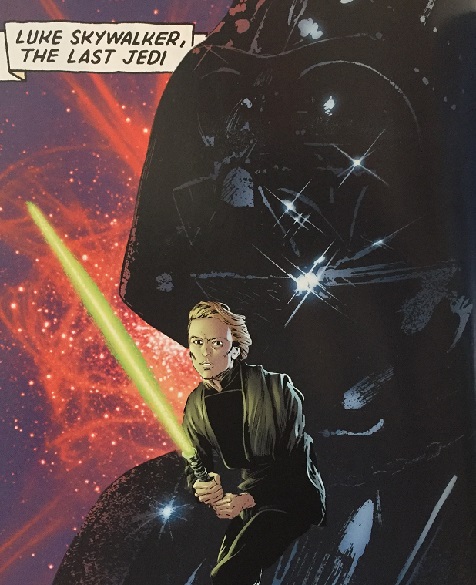
Their evil is also much more nuanced than the other main villains in their holy trilogies. And their motivations are often harder to fully grasp. Take emperor Palpatine in Star Wars. He is just evil to the core. There is not a single shade of grey: he is BAD. Darth Vader, on the other hand, was actually a good man before he was seduced by the dark side of the force. Luckily, for the oppressed galaxy, Vader’s son Luke Skywalker felt there was still good in him. Luke exploited this inner conflict, which lead to the death of Palpatine by Vader’s hand at the end of Return of the Jedi. The galaxy was free once again due to Vader’s destiny.

Gollum and Agent Smith (especially after his supposed destruction by Neo in the first Matrix movie) don’t even belong to the villain class and are free agents, so to speak, Smith quite literally. They are just roaming around in their fantasy worlds, driven by their own insatiable desires. Gollum by his addiction to the Ring of Power, and Smith by his need to destroy his arch enemy Neo and the entire simulated computerworld the Matrix with it. But, like in Vader’s case, through their actions they enable the heroes of their stories to fulfill their appointed tasks while they would have otherwise failed.

Like Frodo in The Lord of the Rings. He managed to get the ring all the way to Mount Doom, but could unavoidably no longer resist the power of the mighty precious and thus refused to destroy it. Gollum took his chance and jumped at Frodo, bit off his finger, and took the ring. But he could only enjoy it for a brief moment. As a crazed Frodo attacked him, Gollum fell to his doom taking the ring with him. The panic in Sauron’s one eye is very satisfying. His reign is over forever. Gandalf had foreseen this turn of events: ‘My heart tells me that Gollum has some part to play yet, for good or ill, before this is over.’

Agent Smith’s faith is similar. When Neo realises that it is inevitable that Smith – who he has destroyed before – must now destroy him in order for things to end. He allows Smith to clone him, like he has done to the entire population of the Matrix (‘me, me, me’). But since Neo is the One, the anomaly of the system, this creates a fatal chain reaction eliminating the virus Smith. By pursuing his own purposes, against the will of his masters (the machines in case of The Matrix), he ensures that the humans are set free.

Do all epics have this type of causal agent? What about Harry Potter for example? Well in a way: yes, a very interesting one. When Voldemort tried to kill Harry when he was a baby, he unwillingly put a horcrux (a piece of his soul) in Harry. While Harry was growing up, he slowly discovered his connection to the Dark Lord. In the end, the only way to defeat him, was by letting Voldemort kill him. This villain created a causal agent himself that lead to his doom! Because Voldemort didn’t kill Harry, but just the horcrux. The now released Harry could return and finish off Voldemort in a final confrontation, ridding the wizard and muggle world of this ultimate baddie.

The world is more complex than just good-evil. While most of the characters in these epics are either of the hero or villain archetype, these causal agents are not so easily defined. So to answer the question, what do they have in common? They are tools used by the clashing higher forces to decide the faith of the world. Apparently, free will is absent in these worlds, and we are merely instruments of the ruling powers. This makes sense, for at least two of these trilogies (Star Wars and The Matrix) are inspired by Eastern Philosophy of which some movements (Advaita Vedanta) teaches us that free will is an illusion. The Lord of the Rings seems more in tune with paganism that also suggests that greater spiritual forces can impact the course of events or the ultimate outcome.

The individual destinies of these characters are thus intertwined with the destiny of the world at large. Thereby, they completely transcend a clearcut character definition. Beneath their wicked appearances, they actually become saviors, even though that was never their intention. Gandalf nailed it when he said: ‘Even the very wise cannot see all ends.’ Good, bad, everyone has their own perspective. But in the end, love and goodness will always be victorious.

Lucid in the Sky with Diamonds

Het is ochtend of middag. Ik ben in mijn oude vertrouwde ouderlijk huis in Heiloo. Hoe ik hier terecht ben gekomen weet ik niet. Ik loop de trap af, de woonkamer in en richting de keuken. En dan zie ik opeens door het keukenraam een gigantische komodovaraan lopen. Ik draai me om en zie dat er twee kleinere exemplaren op de paarse bank zitten – dezelfde bank waar ik het die middag met mijn vader over gehad heb, de bank die mijn ouders opnieuw gaan laten bekleden.

Ik wil mijn ontdekking graag delen en begin te roepen: ‘Papa, mama, Loesje, Rosa!’. Niemand reageert. Ik loop snel naar het halletje en zie Rosa en mijn moeder vanuit de voortuin richting het huis komen samen met een hippievrouw. Ze dragen kartonnen dozen. ‘Kom snel’, roep ik. Rosa komt met me mee naar de keuken en mijn vader is er ook opeens. In de keuken wijs ik door het raam naar buiten en zij zien nu ook de gigantische groene draak lopen.

Dan bedenk ik me opeens in paniek dat komodo’s, wanneer ze hongerig zijn, ook mensen eten. Ik sprint naar het halletje en sluit mijn moeder en de hippievrouw op. Dan ren ik terug naar de keuken en sluit ik mezelf, Rosa en m’n vader op. Vervolgens trek ik twee messen uit het keukenblok. De adrenaline giert door m’n lijf. ‘Jij maakt je druk’, zegt mijn pa. ‘Ja, natuurlijk maak ik me druk’, roep ik. ‘Dat zijn komodovaranen!’

Dan krijg ik een raar gevoel, er iets iets vreemds aan dit hele scenario. Hoezo zijn er komodo’s in Heiloo? En dan – in een flits – weet ik het: dit is een droom! Ik geef mezelf een knipoog. Wat nu? Eerst stabiliseren. Ik draai 360 graden en roep ‘stabilize!’. Zo, mijn droomomgeving wordt stabiel (minder wazig). Nu kan ik mijn plan uitvoeren. Ik heb van te voren met mezelf afgesproken wat ik zou doen als ik lucide zou worden, namelijk vliegen in Schermerhorn. Ik geef Rosa een kus op haar wang en loop de keuken uit. Ik sta nu in een soort witte gang waar verder helemaal niks is: het doet denken aan The Matrix. Aan het einde van de gang is een soort energierooster. Ik ren er op af en spring er doorheen….

Dan ben ik in Schermerhorn, het nieuwbouwgedeelte. Yes, het is gelukt. Ik ben enorm opgewonden; ik zie voetgangers lopen, allemaal creaties van mijn eigen geest. Dan begin ik met vliegen – de op één na favoriete bezigheid van lucide dromers. Maar in plaats van rustig op te stijgen, ga ik af als een raket. Hier heb ik over gelezen. Je hebt invloed over een deel van je droomomgeving als je lucide bent, maar veel dingen gebeuren ook vanzelf. Bovendien is vliegen echt een vaardigheid waarvoor je eerst op les moet.

Ik zie het dorp onder me steeds kleiner worden en gil alsof ik in een achtbaan zit (ik gil alleen in mijn droom, van de buitenkant is er behalve REM-slaap niks aan lucide dromers te zien). Voor het eerst hoog vliegen is doodeng, maar ik vertel mezelf steeds; je kunt niet te pletter vallen. Ik droom. Rustig maar. Ik geniet van de rest van mijn vlucht boven het dorp en prachtige bloemenvelden. Het voelt 100 procent echt! Dan ben ik weer op de grond. Ik zweef nog een stukje over de straat en dan word ik wakker. ‘Yes, het is gelukt!’

Hoe word je lucide?
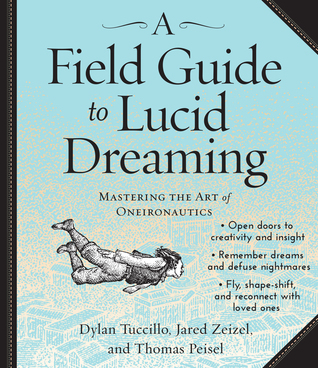
Mijn eerste lucide droom kreeg ik spontaan nadat ik van mijn neef Quinten had gehoord over de mogelijkheid. Daarna heb ik het boek A Field Guide to Lucid Dreaming gelezen over hoe je lucide dromen kunt opwekken. Ik heb er een maand en vijf dagen over gedaan om dit resultaat te bereiken.

De volgende vier technieken zijn cruciaal om lucide te dromen:

1. Dream recall: Alle dromen noteren in de dagboek en er bewust aan werken ze te onthouden. Dit doe je door niet meteen op te staan, maar even te blijven liggen na het wakker worden en alles naar boven te halen van de afgelopen nacht. Vervolgens noteer je ze zo gedetailleerd mogelijk in je droomdagboek. Na een tijdje leer je droomsignalen herkennen (mensen, symbolen en situaties die vaak in je dromen voorkomen) en die kunnen vervolgens triggers zijn van het Aha-moment.

2. Reality checks: Vraag je gedurende de dag steeds af; droom ik nu of niet? Stel vast of je je in een Newtoniaanse omgeving bevindt waar alles vast lijkt, of dat de omgeving steeds verandert. Probeer te zweven. Probeer je vinger door je handpalm te steken. Houd je adem in en kijk of dit een probleem is. Wanneer je dit 10-20 keer per dag doet, ga je het vanzelf ook in je dromen doen.

3. Visualiseren van Aha-moment: Net als een topskiër een afdaling vele malen visualiseert in zijn hoofd, doe je dat ook met lucide dromen. Gebruik al je zintuigen om in te beelden hoe je ontdekt dat je droomt en wat je vervolgens gaat doen. Je hersenen maken niet het onderscheid tussen visualiseren en de echte ervaring.

4. Wake-back-to-bed: Lucide dromen vinden uitsluitend plaats in REM-slaap, en die cycli zijn ‘s ochtend het langste. Ga twee uur voor je op moet een kwartier uit bed en maak je linker, analytische hersenhelft wakker door bijvoorbeeld wat te lezen over lucide dromen. Ga wel rustig zitten zodat je lichaam moe blijft. Ga vervolgens weer slapen. Mijn lucide droom kwam ook na een wake-back om 7:45 ‘s ochtends.

Deze korte ervaring is alle moeite meer dan waard geweest, en ik ben mijn volgende expeditie al aan het plannen. Nu nog het hoofdstuk over vliegen een keer doorlezen…

George Lucas, Not Guilty

Today, on the premiere of ‘The Last Jedi’ – the eighth official episode in the Star Wars saga, creator of Star Wars – Mr. George Lucas – stands trial. He is accused of being a hack.

The prosecution (The internet)
Of the many things that catch blame for ‘ruining’ the Star Wars prequels – Jar Jar Binks, midi-chlorians, almost every line of dialogue George Lucas wrote for Padme and Anakin – there is one moment that makes almost every fan cringe, no matter how dedicated. We’re talking about Anakin Skywalker’s transformation into Darth Vader, literally the jumping-off point of the entire Star Wars saga.

In this moment, Vader learns that he has lost his wife and unborn children…and has been transformed into, like, a Space Robocop. So, what does he do? He breaks free from his shackles and lets out the now infamous, “NOOOOOOO!” that felt like it had a Kanye-level of autotune to it. It felt ridiculous when it should have been the defining moment of the prequels. What the hell was Lucas thinking?

The defense (Johnny Cochran)

This defense will be short and easy. This is the man who gave us Star Wars after all. The original Star Wars films still form the best trilogy ever created hands down. Even the third part – which is never the best in any series – is in case of Star Wars nearly perfect: ‘Return of the Jedi’ contains some of the best stuff of the series. Legendary film critic Roger Ebert (1942 – 2013) gave each of the three original films the maximum rating of four stars (read his awesome reviews here, here, and here).

So why is Lucas so hated despite being the man who gave us Darth Vader, Yoda, Han Solo, Princess Leia and Luke Skywalker amongst many others? Because he also gave us Jar Jar Binks? Because he writes remarkably terrible love scenes? So what? Didn’t the other great filmmakers of his generation make similar mistakes? Francis Ford Coppola cast his daughter in ‘The Godfather: Part III’ and it nearly ruined the film. Yet, he is never criticized in the way Lucas is.

Statistically, after sunshine comes rain. Lucas gave us the best trilogy ever made, so the prequels were never going to top that. Still, that is no excuse for not making better movies. But are they really so terrible?

Episode I: The Phantom Menace is the worst, most will agree. But look at what it does have: the pod race, Darth Maul (IMDb-poll names him the second greatest SW villain after Vader), and the return of many great characters: Palpatine, Yoda and Obi-Wan (Ewan McGregor is perfect casting as a young Alec Guinness). There is also fun foreshadowing going on of all that is to come. Finally, the world building is spectacular and unforgettable.

Roger Ebert – who gave ‘The Phantom Menace’ 3,5 stars out of 4 – concluded: “Mostly I was happy to drink in the sights on the screen, in the same spirit that I might enjoy ‘Metropolis’, ‘Forbidden Planet’, ‘2001: A Space Odyssey’, ‘Dark City’ or ‘The Matrix’. The difference is that Lucas’ visuals are more fanciful and his film’s energy level is more cheerful; he doesn’t share the prevailing view that the future is a dark and lonely place.”

Episode II: Attack of the Clones – The greatest weakness is the love story, we can be clear about this. But it would be a shame to let that ruin the whole movie experience, because episode II has a lot going for it. First of all, it has a terrific Raymond Chandler-style mystery plot. Also, there is a great sense of urgency; the battle for the galaxy has now really begun. And the filmmaking in general – the editing, sound, production design, music, etc – are all A-grade. There are few filmmakers with such imagination, and with the ability to bring it to the screen, like Lucas.

As for villains, usually the best thing about a Star Wars-film, I don’t like Jango Fett so much, but Count Dooku – played the uncanny Christopher Lee – is terrific, and so is his lightsaber duel with Yoda. The dark side is really prevailing now and Lucas effectively uses the principles of Eastern Philosophy to craft the story development. People may not like Hayden Christensen, but what is actually accomplished by his performance is that we get an uneasy feeling about Anakin. The air gets thick in the confrontational scenes. Unlike Obi-Wan – who was the perfect Jedi-student in episode I – Anakin is the pupil you always have to worry about. And these foreshadowing shots with Palpatine are grand. His quest to the dark side is thus very well handled.

Episode III: Revenge of the Sith  Episode III is a return to the classic space opera style that launched the series, and many agree that Lucas really approaches old trilogy greatness here. In the saga’s darkest chapter, Anakin really journeys to the dark side under the influence of the demonic Palpatine. Aside from the infamous ‘Noooo’-moment, episode III is a thoroughly exciting and enjoyable film with some of the best action sequences in the series.

And so, ladies and gentlemen of the jury, if George Lucas is a hack, then Chewbacca lives on Endor, and therefore you must acquit! The defense rests.

So let us all shut the hell up and enjoy Lucas’ legacy.