Enter the Void


Director:
Gaspar Noé
Written by: Gaspar Noé, Lucile Hadzihalilovic
Cast: Nathaniel Brown, Paz de la Huerta, Cyril Roy, Olly Alexander

Year / Country: 2009, France / Germany / Italy / Canada / Japan
Running Time: 161 mins.

Death is the greatest drug!

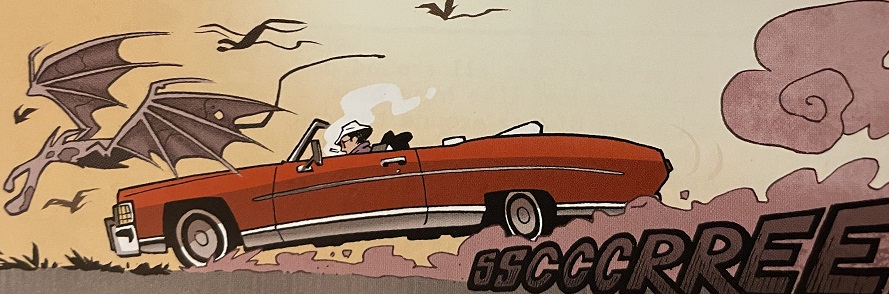
Gaspar Noé’s Enter the Void is hypnotic from the trippy credits onwards. The entire film is shot from the perspective of the heavy drug user and dealer Oscar who dies fifteen minutes into the movie. He gets shot during a police raid in a Tokyo bar called ‘the Void’ when he locked himself in the toilet trying to flush his stash of gear.

Oscar, who was just reading ‘The Tibetan Book of the Dead’ which he borrowed from his friend Alex, sees his own dead body on the restroom floor and it feels like a genuine death experience. The rest of the film follows Oscar’s consciousness point-of-view that keeps hovering above people he used to be close to, seeing psychedelic images, or just strangers and old friends having sex. He also re-experiences scenes from his own life from an outside perspective. Oscar is no longer burdened by the restraints of a physical body or the flow of time. Philosophically, the laws of cause and effect are one of the main themes of the film.

His main memory is the car crash that killed his parents and left him and his sister traumatized orphans. They ended up in Tokyo where she became a stripper and he became a dealer and user. Oscar observes the aftermath of his death which includes police interrogations, dramatic arguments between his old friends, and lives going seriously off the rails. Watching the human tragedy play out from an eagle eye perspective is playful and refreshing. (Spoiler: It ends with Oscar’s soul reincarnating as a baby).

Noé’s dream project is a successful experimental film with a number of powerful scenes and some stunning visuals. The film’s main problem is that it is more than two and a half hours long! For an experimental movie that is a major sin. But Noé is all about trying new things. Unfortunately, the film became a major flop (not even a million gross worldwide versus a sixteen million dollar budget according to IMDb). Still these beautiful crane shots of neon-lit Tokyo were worth every buck. With some proper editing, this could have been a masterpiece.

Another downside is that Enter the Void is mostly a visual experience. The electronic pop helps to create the unique atmosphere, but there are no thoughts by Oscar after he is killed or other sensations. Therefore, I hope that monsieur Noé will one day create a virtual reality project of his vision. About his elaborate view on death two notions stick. One, dying ain’t so bad. And two, voiced by Oscar in a discussion with Alex about the ‘The Book of the Dead’ on their way to the club is; are we really gonna be stuck forever on this shit hole of a planet?

Rating:

Biography: Gaspar Noé (1963, Buenos Aires) is an Argentine-born French film director. Noé spent his childhood in Buenos Aires and New York before moving to France with his parents at the age of 12. He studied philosophy and film studies at the École Louis-Lumière in Paris. After this he initially started working as First Assistant Director before becoming a director himself. In 1992 he made his breakthrough as a director with his short film Carne. Noé mainly focuses on short films. Stanley Kubrick’s films in particular serve as inspiration for him. Well known feature length films he directed are the controversial Irreversible and Enter the Void. Noé is married to filmmaker Lucile Hadzihalilovic. She is credited as co-writer for his movie Enter the Void from 2009.

Filmography (a selection): Carne (1991, short) / I Stand Alone (1998) / Sodomites (1998, short), Irréversible (2002), Intoxication (2002, short), Eva (2005, short), Destricted (2006, segment: We Fuck Alone), SIDA (2006, short), Enter the Void (2009), 42 One Dream Rush (2010, short), Love (2015), Climax (2018), Lvx Æterna (2019), Vortex (2021)

VIDEO: Trailer Nicky & Mugs (1999)

Ik heb een nieuwe video op mijn YouTube-kanaal gezet: een trailer van één van mijn vroegste video’s. Nicky & Mugs is een nooit afgemaakte amateur gangster film. Voor deze trailer heb ik ook geput uit de wel afgemaakte korte video Half 6 waarin de personages Nicky en Mugs geïntroduceerd worden.

Het zes minuten durende Half 6 heb ik samen met mijn oude maat Max gemaakt op de videocursus Open Studio in Charme, Frankrijk. Het gaat over de twee jonge criminelen Mugs en Nicky (gespeeld door Max en ikzelf) die door de straten van een klein Frans dorpje zwalken. Mugs steelt een set jeu de boules ballen en de twee vrienden doen een potje in een steegje. Een Franse toerist vraagt de weg (logisch!) en de gangsters slaan hem finaal in elkaar.

In de volgende scène lopen ze door een bos. Nicky beledigt Mugs door te zeggen dat hij er als een wijf bijloopt. Mugs gooit hem voor straf van een heuvel af. Vervolgens komen ze bij een bar waar Mugs alleen een biertje voor zichzelf besteld. Nicky gooit woedend zijn brandende peuk in het biertje en de twee kemphanen beginnen te knokken. Als Mugs met een bloedneus op de grond ligt ziet hij dat het half zes is (“shit, half zes man!”) en de twee vrienden zetten het op een rennen.

Na een keiharde spint komen ze bij een huisje, bergen hun pistolen op en gaan naar binnen. Nu komt de punchline. Een vrouw die hun moeder blijkt te zijn vraagt of ze hun handen al hebben gewassen en begint ze te meppen als ze toegeven van niet. De harde criminelen blijken niets meer dan puberjongens te zijn.

Half 6 is duidelijk geïnspireerd door Scarface (mijn kapsel is hetzelfde als Tony Montana), GoodFellas (er zit een heuse freeze frame in!) en Reservoir Dogs (gangsters wandelend over straat met coole muziek). Helaas kan ik het niet online zetten, want er zit gelicenseerde muziek onder.

De bedoeling van het vervolg getiteld Nicky & Mugs was om er een échte gangster film van te maken met drugs, rip deals en liquidaties, maar omdat het mijn eerste zelfstandige videoproject was maakte ik een aantal grote beginnersfouten. Zo begon ik met filmen voordat ik een script geschreven had, zodat ik slechts een vaag idee had van waar het verhaal heen ging. Ook filmde ik op plekken, zoals de McDonalds (geïnspireerd door Pulp Fiction?), waar achtergrondmuziek opstond, zodat montage achteraf niet mogelijk bleek.

De trailer is dus eigenlijk een fake trailer (want er is geen film en die zal er ook niet komen), maar ik vond het fijn om nog iets met het – vaak best grappige – materiaal te doen. Kijk dus hier mijn regiedebuut, mijn eigen Mean Streets:

Bekijk hier: Trailer Nicky & Mugs (1999)

Vrije WIL bestaat WEL

Vrije wil is een veelbesproken onderwerp onder filosofen en wetenschappers. En met enige regelmaat beweert er eentje – vaak met behoorlijke stelligheid – dat vrije wil helemaal niet bestaat. Dat lijkt nogal een vreemde bewering, want het lijkt toch echt alsof we zelf keuzes maken. Maar volgens o.a. hersenwetenschapper Dick Swaab en non-dualist Paul Smit is dit een illusie.

Dick Swaab is van de materialistische school. Dat wil zeggen dat hij gelooft dat we onze hersenen zijn. Ons bewustzijn en de keuzes die daaruit voortkomen zijn volgens Swaab niks meer dan het gevolg van de extreem complexe interactie tussen talloze miljarden zenuwcellen in het brein. De illusie van vrije wil ontstaat wanneer ons bewustzijn een verhaaltje verzint over waarom we gedaan hebben wat we gedaan hebben. Het feit dat je dat verhaal vertelt, geeft je het idee dat je alles in de hand hebt en dat je vrije wil hebt. Maar in feite is het slechts een verhaaltje achteraf, aldus de hersenonderzoeker.

In een interview dat ik jaren geleden had met Swaab gaf hij aan dat het een plezierige illusie is om te hebben, want wanneer je het niet hebt ontstaat het idee dat anderen je besturen. “Er zijn schizofrene patiënten die deze illusie niet hebben”, vertelde hij me. “Die hebben het idee dat ze bestraald worden vanuit het universum of dat er allerlei elektrische activiteit op ze af wordt gestuurd die hun brein overneemt. Dat is het voordeel van die illusie van vrije wil. Het maakt ook duidelijk dat er bij een beslissing allemaal onbewuste processen aan de gang zijn waardoor heel verstandige mensen hele wonderlijke beslissingen kunnen nemen.”

Van een andere gedachteschool is cabaretier, filosoof en non-dualist Paul Smit. In tegenstelling tot Swaab gelooft hij niet dat we ons brein zijn, maar ons bewustzijn. Alles is slechts een droom. Volgens Smit hebben we geen vrije wil omdat we helemaal niet bestaan! Non-dualiteit of Advaita Vedanta houdt in dat alles één is en wat dus lijken op individuele vrije keuzes zijn in feite de keuzes van dat ene bewustzijn.

Met beide heren ben ik het deels eens. Swaab heeft absoluut gelijk wanneer hij zegt dat er allerlei onbewuste processen meespelen in beslissingen en Smit slaat wat mij betreft de spijker op zijn kop met de bewering dat alles uiteindelijk in één singulair bewustzijn plaatsvindt. Maar over het volledig ontbreken van vrije wil denk ik anders. Klopt, we komen voort uit puur bewustzijn, maar dat betekent niet dat we niet bestaan. Volgens natuurkundige en bewustzijnsonderzoeker Thomas Campbell zijn we individuele eenheden bewustzijn die als doel hebben winstgevende keuzes te maken. Het doel daarvan is individueel bijdragen aan collectieve evolutie.

Dus neem ik ‘s ochtends de bewuste keuze om koffie te nemen? Niet of nauwelijks; dit gaat puur volgens de onbewuste hersenprocessen die Swaab beschrijft. Maar ik kan wel bewust besluiten wat ik wil, door even te stoppen en te zeggen tegen mezelf: ‘wacht even, wil ik wel koffie? Wil ik niet liever thee, water of whiskey misschien? Even nadenken. Nee, ik wil toch echt koffie.’ Nu heb ik een bewuste, vrije wil beslissing genomen. Dat heeft me wel een beetje energie gekost. En dat is de reden dat veel dingen automatisch plaatsvinden: we hebben beperkte energie beschikbaar en om succesvol te zijn in de evolutie moeten we die gelimiteerde energie zo optimaal mogelijk inzetten. Overleven staat op de eerste plaats en succesvol zijn op de tweede.

Onze echt vrije wil keuzes komen volgens Campbell tot uiting in onze intenties. In zijn boek ‘My Big TOE’ schrijft hij: ‘Elke geïndividualiseerde eenheid van bewustzijn moet zich op zijn eigen unieke manier ontwikkelen, aangedreven door de vrije wil die zijn intentie drijft. Kansen voor verandering ontstaan, keuzes worden gemaakt, de realiteit wordt geactualiseerd en er wordt vooruitgang of achteruitgang in persoonlijke groei bereikt.’

Onze taak is als eenheden bewustzijn dus groeien in de kwaliteit van ons bewustzijn. Deze kwaliteit kunnen wij volgens Campbell waarnemen in de spiegel van anderen. Is onze intentie goed, wordt dat weerspiegelt in wat wij waarnemen als buitenwereld en de wezens (andere eenheden bewustzijn) waarmee wij interacteren. Nog een citaat: ‘We projecteren ons persoonlijke bewustzijn op het actieveld van een interactieve reality-game voor meerdere spelers, waarbij het gaat om onze individuele groei en leren.’

Kortom, leren staat centraal in het bewustzijnsveld waarin we ons volgens zowel Paul Smit als Thomas Campbell begeven. En om te kunnen leren heb je vrije wil keuzemogelijkheden nodig. Het bestaan van evolutie als drijvende proces in het universum wijst er sterk op dat het bestaan van vrije wil geen illusie is, maar een fundamentele component van deze realiteit.

Lees ook: A Shift In Scientific Worldview – Part 3: Thomas Campbell’s My Big TOE

Why Market-based Solutions Won’t Solve the Climate Crisis

‘Capital is seeking a path to maintain rather than to change.’

For those of us who are deeply concerned about the rapidly escalating climate disaster (like yours truly), it was certainly great to hear prominent voices in finance – such as hedge fund manager Larry Fink of Blackrock – start to express the need for urgent action in recent years. The days of climate denial and massive lobbying of the fossil industry are finally over, so it seems. However, according to Adrienne Buller, researcher at think tank Common Wealth, we have only moved on to a new illusion called ‘green capitalism’. Her book ‘The Value of a Whale’ is an antidote against the wishful notion that ‘the market’ is going to solve all problems.

It is easy to understand the appeal of green capitalism to politicians and investors alike. Through measures like ‘carbon offsets’, green capitalism aims to solve climate and biodiversity problems with minimal disruption to the current economic system. Carbon offsets make it possible for businesses to pay somebody to plant forest, so they can keep on polluting.

Ironically, in recent bootleg fires in Oregon and California, thousands of square kilometers of forest went up in smoke that was designated for the carbon offsets of companies including BP and Microsoft. Our response to ecological disaster is still determined by old economic thinking. Our institutions are still very much in the grip of this old mindset and this is the reason we are not making any real progress in addressing the escalating climate emergency.

Putting a Price Tag on Everything
The book is called ‘The Value of a Whale’ because in our current political climate every discussion about the ecological crises we are facing is framed in terms of markets and profits. In the neoliberal frame of mind, a transition directed by governments is considered undesirable and without chance. Reducing emissions will create untenable burdens for citizens and enormous debts for future generations. The only solution is that markets must solve the problem. To do this, the externalities of ecological damage must be adequately priced.

The IMF (International Monetary Fund) actually calculated the value of a whale. A specimen of the great whale is valued at two million dollars. This is based on its carbon capture capabilities and tourism income. The author says it may be weird to put an animal in a spreadsheet, but when discussing green capitalism the question is very relevant. After all, the global trade in carbon molecules is about to begin.

So why does Buller believe that putting a price on carbon won’t solve the climate crisis? The first problem is a practical one. Our current global economy is completely dependent on the earth’s ecosystems. These highly complex interdependencies are impossible to capture in prices, models and financial products. A second problem is that carbon pricing is employed because many economists find it the most efficient solution. But do we need efficiency? To radically reduce emissions, we need effectiveness more than anything. We also need solutions which are ethical and just, and carbon pricing doesn’t address these considerations at all. If a billionaire wants to be launched into space for fun? Fine, as long as he pays. Pricing is no equalizer for all parties.

ESG in Financial Markets Falls Short
During the Covid19 pandemic, the financial world saw a major boom in ESG (Environmental, Social and Governance). ESG-labels are given to funds that invest ethically and environmentally conscious. More awareness is a good thing, right? Yet, argues Buller, we are falling way short to what we could do. Let alone what we should be doing to prevent global warming to pass 1,5 degrees which is the upper limit to remain safe on the planet (which is already out of reach, says Bill Gates).

The problem with ESG-ratings, Buller writes, is that they are mostly concerned with reporting, and not so much with realizing actual impact in reducing carbon emissions. Again, they are not effective, except in greenwashing the activities of the financial sector. What we need to accomplish in a very short timeframe, is the recreation of the infrastructures of the global economy (energy, transport, agriculture, fertilizer, etc). Is carbon pricing the best means to do this? Why let markets decide rather than just designing an effective reduction plan? Because the latter solution would be far more disruptive to companies and capital. Carbon pricing gives politicians an excuse to not enforce much stricter regulations sooner. States and political operatives can use carbon pricing to visibly respond to democratic demands for action while minimizing individual accountability and, crucially, avoiding direct confrontation with fossil capital or with the underlying economic dynamics in which the ecological crises originates, namely the accumulative, expansionary and externalizing drives of capitalism.

In the EU, reducing emissions is therefore left to the free markets in the forms of tradable permits. Smart financial engineers have already developed derivatives around these permits that can be traded and swapped. Some large polluters have profited from these financial instruments to make money from polluting rather than paying for it. Little studies have been done into the effectiveness of carbon pricing, but the ones that have been done in the EU conclude that 0% or 1,5% lower emissions were accomplished. And this is considered the crown jewel of progressive EU climate policy! The fact that big companies are embracing carbon pricing, should be a clear marker that they see this as relatively painless measures. They can continue to do business as usual, add some more ESG-reporting to please regulators and capital providers, and as a bonus get a nice branding story to tell their customers. All this, once again, distracts from creating serious regulation with the much needed impact.

Another problem, even if big polluters want to change radically, is that they need their shareholders to go along. Shareholders are insulated from responsibility from the ecological and social havoc their investments cause. As we have seen in the 2008 financial crisis, society bears the risk. Asset management giants Blackrock and Vanguard own 20 percent of most S&P 500 companies. with the threat of huge selloffs, they can sway every management to first and foremost protect their investments. For the hugely influential asset management industry only one thing counts: the aggregate growth of the total asset pool.

ESG-investing might give us the impression that investors are moving their money from dirty to clean companies. In reality, it is mostly money changing hands between stock investors. There is hardly any link between these investments and the actions taken by a company. ESG is good at creating the impression of material progress while very little is really accomplished. Investing, Buller writes, is very different from making an investment. Investing might be entirely speculative with no material impact in the real world. A lot of money is made from failures.

Conclusion
The current ‘green capitalist’ movement is designed for – the name says it – capitalists, whose primary aim was and always will be accumulation. Because of the nature of climate risk with radical uncertainty due to cascading and self-reinforcing impacts, complex feedback loops and potential tipping points, we must adhere to a ‘precautionary principle’ – taking all the steps we are capable of in recognition of the fact that even a small chance of a catastrophic outcome is not one worth taking. Capitalism cannot and will not do this.

Yes, we are still trapped in old economic thinking. Even the lauded EU Green Deal is not based on rapidly curbing emissions, addressing inequality, reducing materials and so on. Rather, the inherent bias of world leadership and our international institutions is toward an imagined market-led efficiency of capital allocation that will not be realized, and which has no likelihood of being effective at delivering on the immensely complex challenge of overhauling our economy’s relationship with the natural systems that support it. Priority is on the creation and guarantee of new profitable areas for investors.

There is no easy solution going forward, but as Buller argues, market-based thinking isn’t it. We have to open our minds to how we want to live and what is ecologically possible, and organize our societies accordingly. Then we need strong political leaders to make this happen and accept that a price will have to be paid by everybody.