For the ultimate Beatles movie experience, we’ll have to Wait until 2028, when Sam Mendes is set to release a series of four biopics – one for each Beatle. This promises to be a magnificent, once-in-a-lifetime cinematic event. Until then, there are already some great films out there that celebrate the legacy of the Greatest Band Ever. A perfect place to start is with this Double Bill, featuring two films inspired by Beatles’ songs – one named after a John Lennon track and the other after a Paul McCartney classic. Once you’ve enjoyed these two movies, Across the Universe (2007) is another highly recommended Beatles-inspired film. For a deeper dive into their early days, Backbeat (1994) dramatizes the band’s formative years in Hamburg. But back to this Double Bill: Nowhere Boy (2009) explores John Lennon’s troubled childhood. Raised by his strict aunt Mimi after his parents couldn’t – or wouldn’t – take care of him, the film delves into his complex relationship with his biological mother Julia, beautifully played by Anne-Marie Duff, alongside Kristin Scott Thomas as Mimi. It also highlights the origins of The Quarrymen, the band that would eventually evolve into the Beatles, and Lennon’s legendary first meeting with Paul McCartney. Aaron Johnson shines as the young Lennon, perfectly capturing his wit, imagination, and artistic genius. Having read Lennon’s biography, I feel this film authentically portrays his early life and character. Mendes’ upcoming film will likely draw inspiration from Nowhere Boy, especially in its portrayal of touching moments from the band’s early days, such as their first gigs and the tragic loss of John’s mother, Julia. Yesterday (2019) takes a more fantastical approach, blending comedy and romance with a unique premise: what if the world forgot the Beatles, except for one profoundly unsuccessful singer-songwriter called Jack Malik? Malik suddenly finds himself performing these forgotten classics and skyrocketing to fame. The film delivers plenty of laughs, with witty lines like “The White Album has some diversity issues” and “A Hard Day’s Night – what does that even mean?” But it also offers deeper, more poignant moments, including a memorable scene where Jack competes in a songwriting duel with Ed Sheeran. Perhaps the film’s most touching sequence is Jack’s encounter with John Lennon, who, in this alternate reality, never became a Beatle but instead lives quietly as a fisherman, much like his father once did. It’s a beautifully imagined moment, one that makes the film much more than just a fun, nostalgic ride. Ultimately, both Nowhere Boy and Yesterday share a common message: All you need is love… and The Beatles.
Tagarchief: Danny Boyle
10 Reasons the Nineties’ Cinema Kicked Ass
I was a little young to realize what a terrific time for cinema the nineties were. Holy crap. Around forty percent of my favorite movies come from the nineties, including my number one of all time: GoodFellas. In this article, I will give you 10 reasons why the nineties kicked complete ass as a movie decade.
1. Tarantino’s Arrival
In 1992, a young film maverick silently arrived with Reservoir Dogs. Many viewers and critics were a little off-put by the violence and immoral characters, but yet loved the non-chronological storytelling, the brilliant dialogues and the awesome performances. The talent of this new writer/director named Quentin Tarantino was undeniable.
Two years later he blew critics and audiences away with his epic Pulp Fiction. Tarantino was for the nineties what Scorsese was for the seventies; a significant promise. And he delivered. The nineties saw him direct an excellent third movie, Jackie Brown (1997), and two of his screenplays were turned into memorable films: True Romance (1993) and Natural Born Killers (1994). In 1996 he also made From Dusk Till Dawn with another promising young director from Texas. Robert Rodriguez had debuted in 1992 with the low budget miracle El Mariachi which he followed up with Desperado (1995). A duo was formed…
2. It Was a Time to Thrill
The nineties was the decade of the thriller. Especially the detective versus serial killer genre flourished with The Silence of the Lambs (1991) and Se7en (1995). Of course these two spawned countless imitations, but none as good. Another excellent movie in the psychopath category is Rob Reiner’s adaptation of Stephen King’s Misery in 1990. That movie’s villain Annie Wilkes (played by Kathy Bates) is probably even scarier than Hannibal Lecter, Buffalo Bill and John Doe combined.
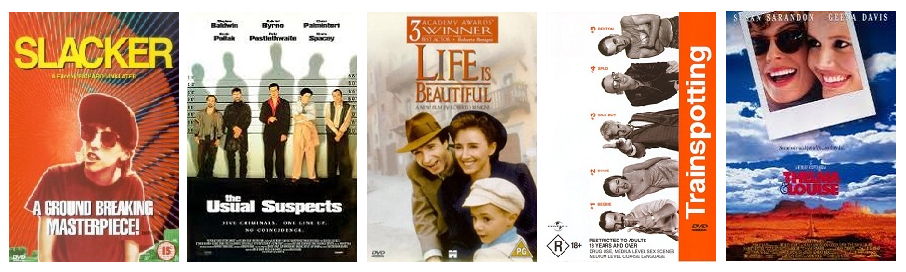
The nineties also had more than its share in fantastic crime thrillers. Top examples include Brian de Palma’s Carlito’s Way (1993), Luc Besson’s Leon (1994), Michael Mann’s Heat (1995), Brian Singer’s The Usual Suspects (1995) and Curtis Hanson’s L.A. Confidential (1997). Special mention in the Thriller department goes to Paul Verhoeven’s erotic contribution Basic Instinct (1992), an absolute classic in its genre.
3. Glory Days For the Coens
They already made an impression as independent filmmakers in the 1980’s. Both their debut Blood Simple and second feature Raising Arizona tasted like more. In the 1990’s they really became film-buffs’ favorites. Miller’s Crossing (1990) is a perfect take on Dashiell Hammett and possibly their finest crafted work. Later, this decade, they had a brilliant black comedy run with the unforgettable classics Fargo (1996) and The Big Lebowski (1998). These Coen Brothers are absolutely terrific.
4. History Can Be Fun
Sure, every period has produced great historical movies, but the nineties had a very impressive reaping in the War / History genre. Way above average to be sure. In 1990 a certain Kevin Costner brought the American frontier to the big screen with the Oscar-winning epic Dances With Wolves. It was a marvelous revitalization of the Western genre. World War 2 is also captured in several Oscar-winning pictures, most notably Steven Spielberg’s Schindler’s List (the ultimate WWII film), but also in Saving Private Ryan (also by Spielberg), La Vita E Bella (by Roberto Benigni) and The Thin Red Line (by Terrence Malick).
Another great war story is spectacularly told in Braveheart (1995), the bloody epic that showed that Mel Gibson is a highly competent director. A number of excellent historical biographies also saw the light of day, most notably JFK (1991, Oliver Stone) and Ed Wood (1994, Tim Burton). And last but least, Titanic (1997, James Cameron) and Forrest Gump (1994, Robert Zemeckis) came out and successfully combined fictional stories with historic events.
5. Great Stand Alone Triumphs
While many masterpieces made in the nineties are part of a larger oeuvre or movement, there were also loads and loads of standalone triumphs. Movies that seemingly came out of nowhere and surprised friend and foe. Below, I picked one of my favorites of these surprises for each year of the nineties. Choosing just one was very difficult in some cases…
1990 Edward Scissorhands (Tim Burton)
1991 Thelma & Louise (Ridley Scott)
1992 Hard Boiled (John Woo)
1993 Groundhog Day (Harold Ramis)
1994 The Shawshank Redemption (Frank Darabont)
1995 Toy Story (John Lasseter)
1996 Bound (Lana Wachowski, Lilly Wachowski)
1997 Boogie Nights (Paul Thomas Anderson)
1998 Festen (Thomas Vinterberg)
1999 Fight Club (David Fincher)
6. Harvest of Horror
O.k., so the eighties ruled in the Horror territory. That doesn’t mean the nineties sucked. What is so great about it then? Well, Wes Craven’s re-invention of the slasher genre with Scream (1996) and Scream 2 (1997) was a terrific postmodern treat leading to many new series, such as I Know What You Did Last Summer (1997), and new installments of old horror series like Bride of Chucky (1998). It goes without saying that some of these were better than others.
Abel Ferrara made a significant contribution to the genre with Body Snatchers (1993), a very effective remake of the classic Invasion of the Body Snatchers, and The Addiction (1995), a great original take on the vampire genre. Speaking of vampires, what to think of Bram Stoker’s Dracula (1992) by Francis Ford Coppola? It’s the best version since Tod Browning’s original from 1931.
The formidable Sam Raimi completed his magnificent Evil Dead trilogy with Army of Darkness, the funniest installment yet. Peter Jackson also combined humor and supreme gore in Braindead (1992) and also delivered The Frighteners (1996). Anything else? Certainly. A selection: Joe Dante’s Gremlins 2 (1990), Adrian Lyne’s Jacob’s Ladder (1990), Ron Underwood’s Tremors (1990), David Fincher’s Alien 3 (1992), Jean-Pierre Jeunet’s Alien: Resurrection (1997) and Taylor Hackford’s The Devil’s Advocate. Last but not least, Daniel Myrick and Eduardo Sánchez’s The Blair Witch Project (1999) spawned a new horror genre with its handheld camera. It’s also the first movie that successfully used the internet to create a hype.
7. The Brits are Back in Town
After a period of recession, the British film industry bloomed again in the nineties. Four Weddings and a Funeral (1994) launched the career of Hugh Grant and was a smash hit at the box office. In 1995 James Bond returned after a long period in the pretty awesome Goldeneye. What’s really great about British cinema in the nineties is the emergence of new talent though. The trio John Hodge, Danny Boyle and Andrew MacDonald made a terrific debut with Shallow Grave (1994) and followed it up with one of the best films of the decade: Trainspotting (1996). In 1998 Guy Ritchie was another positive British surprise with the very funny and exciting Lock, Stock and Two Smoking Barrels.
8. Scorsese Scores Big-time
He delivered brilliant work in the seventies (Mean Streets, Taxi Driver) and eighties (Raging Bull). In the early nineties the maestro showed that he could deliver masterpieces in every decennium. He started by breaking all cinematic conventions in GoodFellas (1990), the greatest film ever made about the real Mafia. Then he made the highly influential thriller Cape Fear (1991) and the excellent costume drama The Age of Innocence (1993) before returning to the mob genre with the superbly realized Casino (1995). He ended the decade with the underrated Bringing Out the Dead (1999).
9. Indie Cinema to the Max
Tarantino and the Coens are already honored in this overview, but there are many other great independent American directors who made their entrance in the nineties or definitely established themselves as masters. In the debut department, we saw Richard Linklater arrive with Slacker (1991), Dazed and Confused (1993) and Before Sunrise (1995). Kevin Smith also made a super impression with the low budget comedy Clerks (1994).
Other indie directors delivered some of their finest work in the nineties. For instance, Jim Jarmusch made Dead Man (1995) and Ghost Dog: Way of the Samurai (1999), David Lynch made Lost Highway (1997) and The Straight Story (1999), Steven Soderbergh made King of the Hill (1993) and Out of Sight (1998) and Todd Solondz made Happiness (1998). If we could only go back to re-experience this richness in indie cinema again. Oh boy.
10. Sci-Fi is Booming
The early nineties saw Schwarzenegger star in two of the most kick-ass Sci-Fi / Action movies of our time: Total Recall (1990) and Terminator 2: Judgment Day (1991). The director of the first one, Paul Verhoeven, would write more sci-fi history in 1997 with Starship Troopers (1997). Other excellent movies in this genre that came out in the nineties are: Robert Zemeckis’ Back to the Future III (1990), Steven Spielberg’s Jurassic Park (1993), Terry Gilliam’s Twelve Monkeys (1995), Roland Emerich’s Independence Day (1996), Luc Besson’s The Fifth Element (1997), Paul W.S. Anderson’s Event Horizon (1997), David Cronenberg’s ExistenZ (1999) and Dean Parisot’s Galaxy Quest (1999).
The final year of the millennium also saw Star Wars return to the big screen, but Star Wars: Episode I – The Phantom Menace (1999) was not an all positive experience. It was another sci-fi film released in 1999 that formed the perfect transition into the new millennium: the cyberpunk story The Matrix by the Wachowski brothers (now sisters). An exciting (and very, very good) surprise hit and the greatest ending imaginable for a movie decade that completely rocked.
The Verdict: Army of the Dead
When the great zombie revival began with Danny Boyle’s 28 Days Later (2002), director Zack Snyder (300, Man of Steel) was one of the first to capitalize on it with a remake of Dawn of the Dead (2004). His innovation: running zombies. While it took some getting used to, it added to the suspense. In Army of the Dead, another breed of zombies is introduced: the Alphas. They’re some type of intelligent zombies. While the master of the genre George A. Romero experimented with this idea in Day of the Dead (1985) and Land of the Dead (2005), the Alphas are definitely the most advanced flesh eaters yet. They can communicate, they can hunt every effectively, and I’ll admit: they’re pretty creepy. There are also ‘normal’ zombies present in this apocalypse by the way.
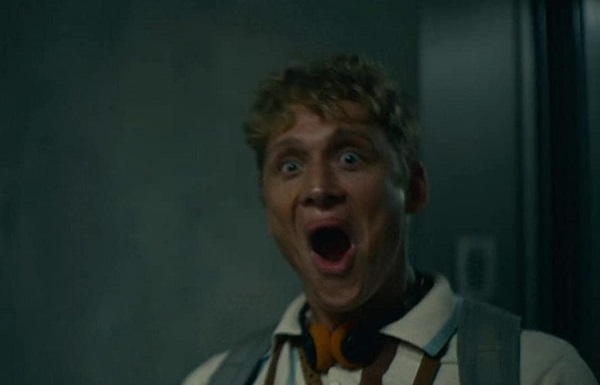
The pandemic occurred in Las Vegas this time, and the US government managed to maintain it within the city borders. As they are about to nuke Vegas, a group of mercenaries go in to steal 200 million dollars from a casino safe before the city is destroyed. These bad asses have to deal with normal zombies, Alphas and double crossers amongst their own ranks. As can be expected, Snyder throws in his usual visual eye candy, and admittedly, Army of the Dead looks pretty stunning. Unfortunately, it appears as though they’ve fired their continuity officer before the shoot began. There are a bunch of really major errors, even for a film of this kind. However, a campy story like this is too delicious to resist and the largely unknown cast definitely do a great job. There is also no lack of gory zombie extermination action and funny side gags along the way (this is Vegas, so an Elvis zombie and tiger zombie – from Siegfried & Roy – are present). Snyder is having a good time again and it shows.
Army of the Dead is now available on Netflix
The verdict: to stream or not to stream? To stream.
T2 Trainspotting (recensie)
The truth is that I’m a bad person. But, that’s gonna change – I’m going to change. This is the last of that sort of thing. Now I’m cleaning up and I’m moving on, going straight and choosing life. I’m looking forward to it already. I’m gonna be just like you. The job, the family, the fucking big television. The washing machine, the car, the compact disc and electric tin opener…
Aldus Mark Renton aan het einde van ‘Trainspotting’, de Britse filmsensatie uit 1996 over een stel heroïnejunkies, losers en psycho’s in Edinburgh, Schotland. Nu, 20 jaar later, krijgen we te zien in hoeverre Mark in zijn missie geslaagd is. De film opent met hem op een loopband in de sportschool op het ritme van de The Prodigy-remix van Iggy Pop’s Lust for Life, het memorabele openingsnummer van de eerste film, waarop hij rennend aan achtervolgend beveiligingspersoneel probeerde te ontsnappen die hem op de hielen zaten voor winkeldiefstal. Je zou kunnen denken dat hij nu inderdaad een softe huisvader is geworden, maar dit blijkt niet het geval. Hij heeft dan weliswaar de saaie baan gekregen (softwareverkoper in de retailsector), maar niet de vrouw en kinderen en ook niet de vele assets die hij zo mooi beschreef in T1.
Daarin ligt dan ook mijn enige kritiek in de film: Renton is enorm slim, wat later in de film ook door Begbie in één van de vele spot-on dialogen erkent wordt, dus als hij echt voor ‘life’ had willen kiezen had hij dat zeker bereikt. De neiging tot complete zelfdestructie zit meer in zijn vrienden ingebakken dan in hem. Dat was ook één van de redenen dat hij zijn maten de rug terugkeerde in het origineel. Dat hij ze nog eens zou willen zien, of de behoefte had iets goed te maken gezien zijn verraad in deel 1, is begrijpelijk. Dat hij echt weer in die wereld zou terugkeren omdat zijn opties in zijn nieuwe leven in Amsterdam zijn verkeken (baan kwijt, relatie stuk) is in zijn geval lastiger te geloven.
Dit is dan ook anders beschreven in het vervolg op het boek ‘Trainspotting’. In ‘Porno’, dat verscheen in 2002, komt Sick Boy Renton op het spoor in Amsterdam in plaats van dat Renton bij hem aanklopt. Daarna gaan ze wel weer met elkaar in zee, maar blijven ze voortdurend op gespannen voet met elkaar staan. In deze film blazen ze hun vriendschap nieuw leven in. Regisseur Danny Boyle vond ‘Porno’ geen goed vervolg, dus besloot hij uiteindelijk voor een ander concept te gaan waarbij ‘tijd’ en ‘nostalgie’ de belangrijkste elementen zijn. Een begrijpelijke keuze, al ben ik persoonlijk wel een fan van ‘Porno’ vanwege de donkere humor en geslaagde karakterstudie, componenten die gelukkig in ‘T2’ ook in ruime mate aanwezig zijn.
Wat direct opvalt aan ‘T2’ is het ontbreken van de centrale voice-over van Renton. Daardoor drukt hij minder zijn stempel op deze film en krijgen de vier hoofdpersonen evenveel aandacht. Dat is een goede keuze geweest, want alle vier krijgen ze een karakterboog die recht doet aan deze briljant geschreven personages. Ook is het een genot om de vier topacteurs (Ewan McGregor, Ewen Bremner, Jonny Lee Miller & Robert Carlyle) aan het werk te zien en hun allerbeste acteerprestatie neer te zetten sinds misschien wel het origineel. Humor is net als in deel 1 in ruime mate aanwezig, vooral in de dialogen en in de wijze waarop deze born losers alles wat op hun pad komt grandioos weten te verknallen. Een aantal scenes in ‘T2’ is net zo onvergetelijk als in de eerste film uit 1996.
Boyle en team hebben echt besloten er een andere film van te maken. ‘Trainspotting’ was energiek, hypnotisch en surrealistisch. Hij raasde als een trein over je heen. ‘T2’ is vooral reflectief, nostalgisch en bij vlagen ontroerend. Tijd is het centrale thema dat de filmmakers onderzoeken. “Ik ben 46 en moet misschien nog 30 jaar. Wat ga ik met die tijd doen?” vraagt Renton zich af. Deze existentiële crisis heeft hem doen besluiten terug te keren naar zijn roots, maar hij ontdekt dat dezelfde crisis zijn vrienden tergt. De coke-verslaafde Sick Boy (nu Simon) runt de kansloze pub van zijn tante, Spud probeert voor de zoveelste keer af te kicken van de skag en Francis Begbie zit al die tijd al in de lik. Na Rent’s terugkeer achtervolgen Renton en Sick Boy een kansloze businesskans en probeert Spud zijn verslaving kanaliseren door te schrijven. Begbie, al snel ontsnapt, heeft alleen maar wraak op Renton in zijn hoofd.
Gedurende een groot deel van de film bezoeken de jongens die nu mannen zijn vroegere gebeurtenissen en tijden. ‘T2’ neemt je mee op reis door hun, maar ook je eigen verleden. Voor mij en mijn generatiegenoten was ‘Trainspotting’ één van de bepalende films van de nineties die een snaar wist te raken met de treffende uitwerking van de thema’s drugs, drank, seks, uitgaan, vriendschappen en wanhoop. En niet te vergeten de innovatieve filmische stijl en monumentale soundtrack.
Het risico van een vervolg op zo’n cult klassieker is dat hij afbreuk doet aan het origineel. De missie van Boyle was dan ook in de eerste plaats om het niet te verknallen. Deze missie is meer dan geslaagd. ‘T2’ is een film geworden die zeer vertrouwd voelt en toch tamelijk uniek is in zijn ingenieuze opzet. Je groeit echt mee met deze personages waar je van bent gaan houden. Over 20 jaar hoop ik hen dan ook nog eens terug te zien als bijna-bejaarden.
—– Jeppe Kleyngeld