10 Reasons the Nineties’ Cinema Kicked Ass

I was a little young to realize what a terrific time for cinema the nineties were. Holy crap. Around forty percent of my favorite movies come from the nineties, including my number one of all time: GoodFellas. In this article, I will give you 10 reasons why the nineties kicked complete ass as a movie decade.

1. Tarantino’s Arrival
In 1992, a young film maverick silently arrived with Reservoir Dogs. Many viewers and critics were a little off-put by the violence and immoral characters, but yet loved the non-chronological storytelling, the brilliant dialogues and the awesome performances. The talent of this new writer/director named Quentin Tarantino was undeniable.

Two years later he blew critics and audiences away with his epic Pulp Fiction. Tarantino was for the nineties what Scorsese was for the seventies; a significant promise. And he delivered. The nineties saw him direct an excellent third movie, Jackie Brown (1997), and two of his screenplays were turned into memorable films: True Romance (1993) and Natural Born Killers (1994). In 1996 he also made From Dusk Till Dawn with another promising young director from Texas. Robert Rodriguez had debuted in 1992 with the low budget miracle El Mariachi which he followed up with Desperado (1995). A duo was formed…

2. It Was a Time to Thrill
The nineties was the decade of the thriller. Especially the detective versus serial killer genre flourished with The Silence of the Lambs (1991) and Se7en (1995). Of course these two spawned countless imitations, but none as good. Another excellent movie in the psychopath category is Rob Reiner’s adaptation of Stephen King’s Misery in 1990. That movie’s villain Annie Wilkes (played by Kathy Bates) is probably even scarier than Hannibal Lecter, Buffalo Bill and John Doe combined.

The nineties also had more than its share in fantastic crime thrillers. Top examples include Brian de Palma’s Carlito’s Way (1993), Luc Besson’s Leon (1994), Michael Mann’s Heat (1995), Brian Singer’s The Usual Suspects (1995) and Curtis Hanson’s L.A. Confidential (1997). Special mention in the Thriller department goes to Paul Verhoeven’s erotic contribution Basic Instinct (1992), an absolute classic in its genre.

3. Glory Days For the Coens
They already made an impression as independent filmmakers in the 1980’s. Both their debut Blood Simple and second feature Raising Arizona tasted like more. In the 1990’s they really became film-buffs’ favorites. Miller’s Crossing (1990) is a perfect take on Dashiell Hammett and possibly their finest crafted work. Later, this decade, they had a brilliant black comedy run with the unforgettable classics Fargo (1996) and The Big Lebowski (1998). These Coen Brothers are absolutely terrific.

4. History Can Be Fun
Sure, every period has produced great historical movies, but the nineties had a very impressive reaping in the War / History genre. Way above average to be sure. In 1990 a certain Kevin Costner brought the American frontier to the big screen with the Oscar-winning epic Dances With Wolves. It was a marvelous revitalization of the Western genre. World War 2 is also captured in several Oscar-winning pictures, most notably Steven Spielberg’s Schindler’s List (the ultimate WWII film), but also in Saving Private Ryan (also by Spielberg), La Vita E Bella (by Roberto Benigni) and The Thin Red Line (by Terrence Malick).

Another great war story is spectacularly told in Braveheart (1995), the bloody epic that showed that Mel Gibson is a highly competent director. A number of excellent historical biographies also saw the light of day, most notably JFK (1991, Oliver Stone) and Ed Wood (1994, Tim Burton). And last but least, Titanic (1997, James Cameron) and Forrest Gump (1994, Robert Zemeckis) came out and successfully combined fictional stories with historic events.

5. Great Stand Alone Triumphs
While many masterpieces made in the nineties are part of a larger oeuvre or movement, there were also loads and loads of standalone triumphs. Movies that seemingly came out of nowhere and surprised friend and foe. Below, I picked one of my favorites of these surprises for each year of the nineties. Choosing just one was very difficult in some cases…

1990 Edward Scissorhands (Tim Burton)
1991 Thelma & Louise (Ridley Scott)
1992 Hard Boiled (John Woo)
1993 Groundhog Day (Harold Ramis)
1994 The Shawshank Redemption (Frank Darabont)
1995 Toy Story (John Lasseter)
1996 Bound (Lana Wachowski, Lilly Wachowski)
1997 Boogie Nights (Paul Thomas Anderson)
1998 Festen (Thomas Vinterberg)
1999 Fight Club (David Fincher)

6. Harvest of Horror
O.k., so the eighties ruled in the Horror territory. That doesn’t mean the nineties sucked. What is so great about it then? Well, Wes Craven’s re-invention of the slasher genre with Scream (1996) and Scream 2 (1997) was a terrific postmodern treat leading to many new series, such as I Know What You Did Last Summer (1997), and new installments of old horror series like Bride of Chucky (1998). It goes without saying that some of these were better than others.

Abel Ferrara made a significant contribution to the genre with Body Snatchers (1993), a very effective remake of the classic Invasion of the Body Snatchers, and The Addiction (1995), a great original take on the vampire genre. Speaking of vampires, what to think of Bram Stoker’s Dracula (1992) by Francis Ford Coppola? It’s the best version since Tod Browning’s original from 1931.

The formidable Sam Raimi completed his magnificent Evil Dead trilogy with Army of Darkness, the funniest installment yet. Peter Jackson also combined humor and supreme gore in Braindead (1992) and also delivered The Frighteners (1996). Anything else? Certainly. A selection: Joe Dante’s Gremlins 2 (1990), Adrian Lyne’s Jacob’s Ladder (1990), Ron Underwood’s Tremors (1990), David Fincher’s Alien 3 (1992), Jean-Pierre Jeunet’s Alien: Resurrection (1997) and Taylor Hackford’s The Devil’s Advocate. Last but not least, Daniel Myrick and Eduardo Sánchez’s The Blair Witch Project (1999) spawned a new horror genre with its handheld camera. It’s also the first movie that successfully used the internet to create a hype.

7. The Brits are Back in Town
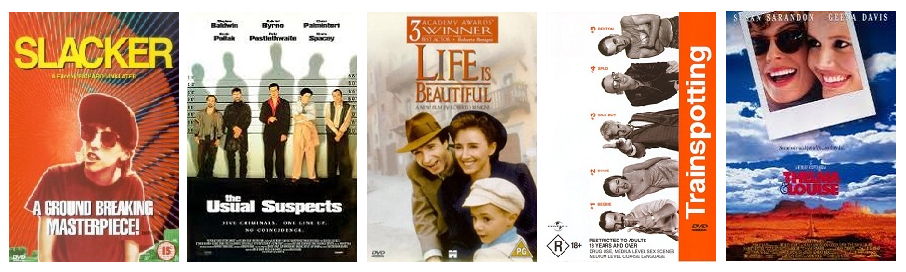
After a period of recession, the British film industry bloomed again in the nineties. Four Weddings and a Funeral (1994) launched the career of Hugh Grant and was a smash hit at the box office. In 1995 James Bond returned after a long period in the pretty awesome Goldeneye. What’s really great about British cinema in the nineties is the emergence of new talent though. The trio John Hodge, Danny Boyle and Andrew MacDonald made a terrific debut with Shallow Grave (1994) and followed it up with one of the best films of the decade: Trainspotting (1996). In 1998 Guy Ritchie was another positive British surprise with the very funny and exciting Lock, Stock and Two Smoking Barrels.
8. Scorsese Scores Big-time
He delivered brilliant work in the seventies (Mean Streets, Taxi Driver) and eighties (Raging Bull). In the early nineties the maestro showed that he could deliver masterpieces in every decennium. He started by breaking all cinematic conventions in GoodFellas (1990), the greatest film ever made about the real Mafia. Then he made the highly influential thriller Cape Fear (1991) and the excellent costume drama The Age of Innocence (1993) before returning to the mob genre with the superbly realized Casino (1995). He ended the decade with the underrated Bringing Out the Dead (1999).

9. Indie Cinema to the Max
Tarantino and the Coens are already honored in this overview, but there are many other great independent American directors who made their entrance in the nineties or definitely established themselves as masters. In the debut department, we saw Richard Linklater arrive with Slacker (1991), Dazed and Confused (1993) and Before Sunrise (1995). Kevin Smith also made a super impression with the low budget comedy Clerks (1994).

Other indie directors delivered some of their finest work in the nineties. For instance, Jim Jarmusch made Dead Man (1995) and Ghost Dog: Way of the Samurai (1999), David Lynch made Lost Highway (1997) and The Straight Story (1999), Steven Soderbergh made King of the Hill (1993) and Out of Sight (1998) and Todd Solondz made Happiness (1998). If we could only go back to re-experience this richness in indie cinema again. Oh boy.

10. Sci-Fi is Booming
The early nineties saw Schwarzenegger star in two of the most kick-ass Sci-Fi / Action movies of our time: Total Recall (1990) and Terminator 2: Judgment Day (1991). The director of the first one, Paul Verhoeven, would write more sci-fi history in 1997 with Starship Troopers (1997). Other excellent movies in this genre that came out in the nineties are: Robert Zemeckis’ Back to the Future III (1990), Steven Spielberg’s Jurassic Park (1993), Terry Gilliam’s Twelve Monkeys (1995), Roland Emerich’s Independence Day (1996), Luc Besson’s The Fifth Element (1997), Paul W.S. Anderson’s Event Horizon (1997), David Cronenberg’s ExistenZ (1999) and Dean Parisot’s Galaxy Quest (1999).

The final year of the millennium also saw Star Wars return to the big screen, but Star Wars: Episode I – The Phantom Menace (1999) was not an all positive experience. It was another sci-fi film released in 1999 that formed the perfect transition into the new millennium: the cyberpunk story The Matrix by the Wachowski brothers (now sisters). An exciting (and very, very good) surprise hit and the greatest ending imaginable for a movie decade that completely rocked.

Double Bill #04: Jackie Brown & Out of Sight

Both based on novels by the famous crime author Elmore Leonard and made roughly around the same time (Jackie Brown by Quentin Tarantino in 1997 and Out of Sight by Steven Soderbergh in 1998), the movies have a lot in common. They are both light hearted crime stories with not so much violence, especially compared to Tarantino’s other movies. They also both feature a romantic story about a love that doesn’t entirely come to fruition. Stewardess Jackie Brown (Pam Grier) tries to bond with bond bailsman Max Cherry (Robert Forster), but despite him being in awe of her, he doesn’t go for it for somewhat mysterious reasons. US Marshal Karen Sisco (Jennifer Lopez) and convicted bank robber Jack Foley (George Clooney) fall in love after he holds her hostage in the trunk of a car after a jailbreak, but because of their chosen professions, they cannot be together. Both movies also revolve around a big score (a half a million in cash and five million worth of uncut diamonds) that several parties try to get their hands on. And in both cases, the relative ‘good guys’ prevail and the badder (and stupider) ones meet their demise. As can be expected from the fantastic writer Leonard, the characters are top notch and the dialogues are both smart and funny. One character crosses over from one story to the next; Ray Nicolette, and Tarantino and Soderbergh cleverly casted the same actor for the role: Michael Keaton. Out of Sight also features quite a few actors from Pulp Fiction, which was one of the defining movies of the era: Ving Rhames, Paul Calderon and – in a surprise appearance at the end: Samuel L. Jackson. The better movie of the two? Jackie Brown for the brilliant screen adaptation by Tarantino and the unforgettable performances of Samuel L. Jackson and Robert De Niro as stupid criminal duo Ordell Robie and Louis Gara. Not to forget a superb Grier and Forster! But both movies are great and together form an ideal double feature.

VIDEO: Trailer Nicky & Mugs (1999)

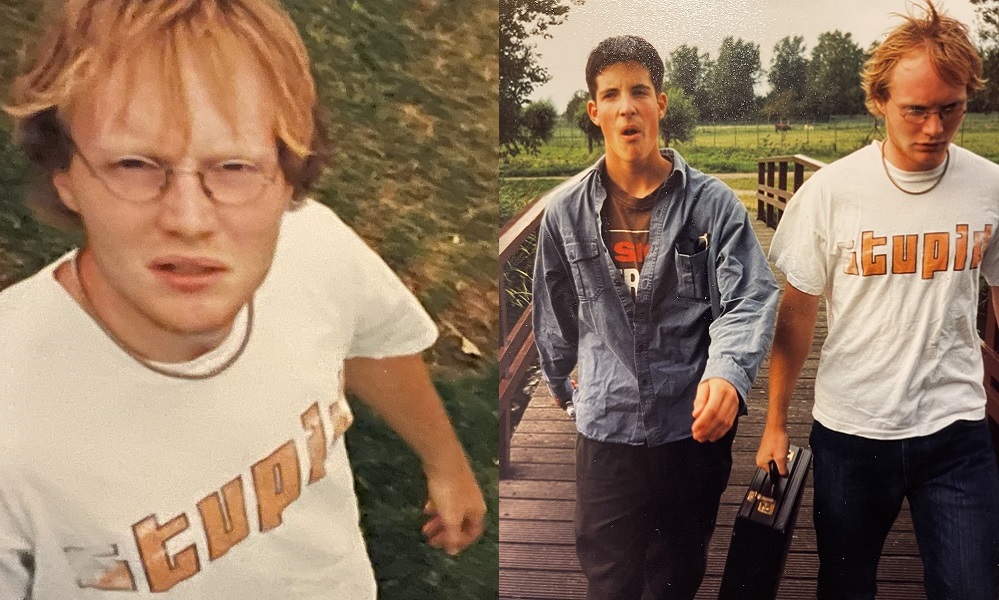
Ik heb een nieuwe video op mijn YouTube-kanaal gezet: een trailer van één van mijn vroegste video’s. Nicky & Mugs is een nooit afgemaakte amateur gangster film. Voor deze trailer heb ik ook geput uit de wel afgemaakte korte video Half 6 waarin de personages Nicky en Mugs geïntroduceerd worden.

Het zes minuten durende Half 6 heb ik samen met mijn oude maat Max gemaakt op de videocursus Open Studio in Charme, Frankrijk. Het gaat over de twee jonge criminelen Mugs en Nicky (gespeeld door Max en ikzelf) die door de straten van een klein Frans dorpje zwalken. Mugs steelt een set jeu de boules ballen en de twee vrienden doen een potje in een steegje. Een Franse toerist vraagt de weg (logisch!) en de gangsters slaan hem finaal in elkaar.

In de volgende scène lopen ze door een bos. Nicky beledigt Mugs door te zeggen dat hij er als een wijf bijloopt. Mugs gooit hem voor straf van een heuvel af. Vervolgens komen ze bij een bar waar Mugs alleen een biertje voor zichzelf besteld. Nicky gooit woedend zijn brandende peuk in het biertje en de twee kemphanen beginnen te knokken. Als Mugs met een bloedneus op de grond ligt ziet hij dat het half zes is (“shit, half zes man!”) en de twee vrienden zetten het op een rennen.

Na een keiharde spint komen ze bij een huisje, bergen hun pistolen op en gaan naar binnen. Nu komt de punchline. Een vrouw die hun moeder blijkt te zijn vraagt of ze hun handen al hebben gewassen en begint ze te meppen als ze toegeven van niet. De harde criminelen blijken niets meer dan puberjongens te zijn.

Half 6 is duidelijk geïnspireerd door Scarface (mijn kapsel is hetzelfde als Tony Montana), GoodFellas (er zit een heuse freeze frame in!) en Reservoir Dogs (gangsters wandelend over straat met coole muziek). Helaas kan ik het niet online zetten, want er zit gelicenseerde muziek onder.

De bedoeling van het vervolg getiteld Nicky & Mugs was om er een échte gangster film van te maken met drugs, rip deals en liquidaties, maar omdat het mijn eerste zelfstandige videoproject was maakte ik een aantal grote beginnersfouten. Zo begon ik met filmen voordat ik een script geschreven had, zodat ik slechts een vaag idee had van waar het verhaal heen ging. Ook filmde ik op plekken, zoals de McDonalds (geïnspireerd door Pulp Fiction?), waar achtergrondmuziek opstond, zodat montage achteraf niet mogelijk bleek.

De trailer is dus eigenlijk een fake trailer (want er is geen film en die zal er ook niet komen), maar ik vond het fijn om nog iets met het – vaak best grappige – materiaal te doen. Kijk dus hier mijn regiedebuut, mijn eigen Mean Streets:

Bekijk hier: Trailer Nicky & Mugs (1999)

Recensie: Cinema Speculation (Quentin Tarantino)

Onlangs heeft Mr. Quentin Tarantino zijn tweede boek afgeleverd na ‘Once Upon a Time in Hollywood’ vorig jaar. Het heet ‘Cinema Speculation’ en is een non-fictieboek over films uit de jaren 70’, het tijdperk van zijn jeugd en volgens de de schrijver-regisseur het beste tijdperk voor films in Hollywood ooit. (Voor mij is dat de jaren 90’, het filmdecenium van mijn jeugd waarin Tarantino als regisseur een grote rol speelde).

Tijdens het lezen had ik voortdurend IMDb openstaan om de titels op te zoeken die QT beschrijft. Één van de eerste films die hij analyseert is Joe van John G. Avildsen (regisseur van Rocky en The Karate Kid). Het gaat over een right wing gun nut die hippies haat en ze wel wil vermoorden en dat op een gegeven moment ook gaat doen… Duidelijke inspiratie voor Once Upon a Time in Hollywood lijkt me.

Zijn moeder en haar vele vriendjes namen de jonge QT (vanaf 7 jaar) mee naar de meest gewelddadige films uit die tijd. Hij zag slechte exploitatiefilms, maar ook vele klassiekers, zoals de Dollars trilogie van Sergio Leone (zijn favoriete regisseur), Where Eagles Dare, Dirty Harry, The Godfather en The Wild Bunch. Hij was meestal het enige kind in een zaal vol volwassenen en begreep niet altijd alles van de films. Zo snapte hij niet dat de freeze frame op het einde van Butch Cassidy and the Sundance Kid betekende dat de hoofdpersonen dood gingen. Maar een voorwaarde van zijn moeder was dat hij geen domme vragen mocht stellen.

Zijn moeder ging een tijdje uit met zwarte mannen en die namen hem af en toe mee naar Blaxploitation films. Zo zag hij met een bijna volledig zwart publiek de film Black Gunn met Jim Brown. Hij observeerde goed hoe het publiek reageerde op zo’n film en op de acteurs. Hier heeft Tarantino zijn voornaamste opleiding genoten: in de bioscoopzaal. Vaak bij geweldige Double en Triple Bills die ze in die tijd nog vertoonden in de bioscopen in Los Angeles.


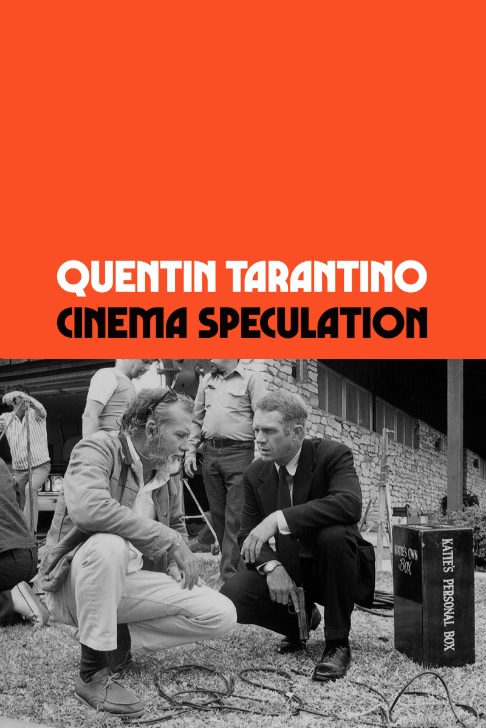
Op de cover: Regisseur Sam Peckinpah en filmster Steve McQueen op de set van The Getaway.

De film maestro geeft verschillende films een eigen hoofdstuk, zoals Bullitt met Steve McQueen (Steven Spielberg werkt momenteel aan een nieuwe interpretatie van deze klassieker). Bullitt herinnert men zich vooral vanwege de auto-achtervolging. Het plot kan niemand je meer vertellen (dat klopt). McQueen was de grootste ster van die tijd naast Newman en Beatty. Hij doet bijna niets in de film, schrijft Tarantino, maar toch is hij geweldig om naar te kijken. Hij acteert minimalistisch. Plus, hij is cool als agent Frank Bullitt omdat hij nooit zijn ‘cool’ verliest in tegenstelling tot andere helden. Als zijn onredelijke baas hem op zijn nek zit, reageert hij helemaal niet. ‘He doesn’t engage’.

De volgende film die hij in detail bespreekt is Dirty Harry, de klassieker die van Eastwood de grootste actiester maakte en van Don Siegel de beste actie-regisseur naast Peckinpah. De invloed van Dirty Harry kan niet onderschat worden. Samen met The French Connection luidde de film de transitie in van westerns naar politiefilms. Het is ook de eerste echte seriemoordenaar-film. Harry neemt het op tegen Scorpio, een fictieve versie van San Francisco’s echte Zodiac killer. The Silence of the Lambs en Se7en zijn de kinderen van Dirty Harry.

De samenleving was aan het veranderen in de jaren 70’, schrijft de auteur. De politie neemt het op voor de boeven, zo was soms de perceptie. Met Dirty Harry kregen de angstigen een held met een .44 kaliber Magnum aan hun zijde. Een held die een groep Black Panther-achtige overvallers uitschakelt terwijl hij een hotdog eet. En een held die het recht in eigen hand neemt als een zaak daarom vraagt. Curieus genoeg heeft het (volgens QT zwakke) vervolg Magnum Force de tegenovergestelde boodschap. Hierin neemt Harry het juist op tegen een groep moordenaars die criminelen zonder proces executeren.

Geweld speelt een grote rol in Tarantino’s films en dit is ook iets dat hij opikte in de glorieuze jaren 70’. Bijvoorbeeld bij de fantastische Double Bill Deliverance en The Wild Bunch. De eerste bevat een schokkende homoseksuele verkrachting. The Wild Bunch eindigt in één van de bruutste grafische geweldsexplosies uit de filmgeschiedenis. Ik bedenk me nu dat de man in Deliverance verkracht wordt door een echte hillbilly. Zou dat inspiratie hebben gevormd voor de verkrachting van Marcellus Wallace door hillbilly Zed in Pulp Fiction? Hoe het ook zij: wat Quentin schrijft over die scène klopt; in plaats van dat je wegkijkt van zoiets gruwelijks kun je je ogen er niet vanaf houden. Kennelijk heeft geweld iets fascinerends voor mensen en is film een ideaal medium om dit kanaliseren.

In de jaren 80’ veranderde dit in veel films. Hollywood ging self-censorship toepassen. De enige niet niet-compromitterende regisseurs uit deze jaren waren Lynch, Verhoeven, Cronenberg, Ferrera, Gilliam en De Palma (soms). Niet toevallig allemaal behorend tot mijn favoriete filmmakers aller tijden. Tarantino klaagt over het gebrek aan immorele, onsympathieke karakters in films uit die tijd. Personages als Parker uit Richard Stark’s boekenserie, waarvan de eerste verfilming The Outfit ook een eigen hoofdstuk krijgt in ‘Cinema Speculation’. Tarantino heeft zelf overwogen om een ‘Parker’ verfilming te doen in de jaren 90’ met Robert De Niro (als Parker), Harvey Keitel en Pam Grier in de hoofdrollen. Hij heeft spijt dat hij dit niet heeft gedaan en ik ook! Nu is Payback de enige Parker-verfilming uit dit decennium en hoewel het een prima film is was die van Tarantino ongetwijfeld beter geworden.

Wat is het speculatieve aspect van het boek uit de titel? Tarantino schrijft over de mogelijkheid dat Brian de Palma en niet Scorsese de film Taxi Driver zou hebben gemaakt. Blijkbaar was dat bijna gebeurd, maar vond De Palma de kans op een negatief financieel resultaat te groot (vreemde angst voor een regisseur, maar De Palma kende de noodzaak van een gat in de markt vinden en films te blijven maken). Als hij het gedaan had, was het ongetwijfeld meer een politieke thriller geworden. Bovendien had waarschijnlijk Jeff Bridges in plaats van De Niro Travis Bickle gespeeld en was de pooier waarschijnlijk zwart geweest zoals in het script en dus door een andere acteur gespeeld. Stel je voor, Taxi Driver zonder Harvey Keitel!

Is het boek een aanrader? Absoluut. Dat Tarantino kan schrijven is bekend. Daarnaast heeft de man ongelofelijk veel kennis en inzichten in het Hollywood van die tijd. Een must-read voor cinema fans dus. Wel een waarschuwing; je ‘to watch list’ wordt wel een heel stuk langer door het lezen van dit boek. De film waar ik me het meeste op verheug na het lezen van ‘Cinema Speculation’? Dat is Rolling Thunder over een getraumatiseerde Vietnam veteraan (nog zo’n echt jaren 70’ thema) die op jacht gaat naar een bende die hem in zijn huis hebben gemarteld en zijn vrouw en zoontje hebben vermoord. De lofzang die Tarantino over deze door Paul Schrader (Taxi Driver) geschreven film afsteekt maakt hem onweerstaanbaar. Het is er slechts één van vele.

Lees ook: QT8: The First Eight