Revenge of the Sith is 20 Years Old. It Is a Prophetic Vision of America Today

TRUMP WARS

Episode III

REVENGE OF THE MAGA

War! The republic is crumbling under ruthless attacks by Maga Lord Elon Musk.
There are assholes on both sides. Evil is everywhere.

In a stunning move, the fiendish president Donald J. Trump, has wiped out trillions in stock market value with an insanely stupid and useless trade war.

As the separatist MAGA-republicans attempt to siege the Capitol with their law enforcement hostages, Bernie Sanders is on his way to kick some Republican ass…

The Dark Side Calling
Exactly twenty years ago, Star Wars Episode III – Revenge of the Sith hit Dutch theaters as the dark turning point in the Star Wars saga. I remember the Darth Vader posters hanging all around the city where I worked. It was a monumental cinema experience, but it was also a dark movie that depicted the fall of a Republic, the rise of an Empire, and the death of democracy at the hands of a terrible authoritarian. Not to mention the tragic fate of all the characters we had grown to love.

Today, it feels less like science fiction and more like prophecy, as the United States of America – once the leading democracy in the world – is now rapidly becoming an authoritarian dictatorship.

The opening shot of Revenge of the Sith is a real triumph. Anakin and Obi-Wan fly through the besieged airspace above Coruscant, and it’s all filmed in one terrific and dizzying shot. Technically, this might be the best of the Star Wars movies.
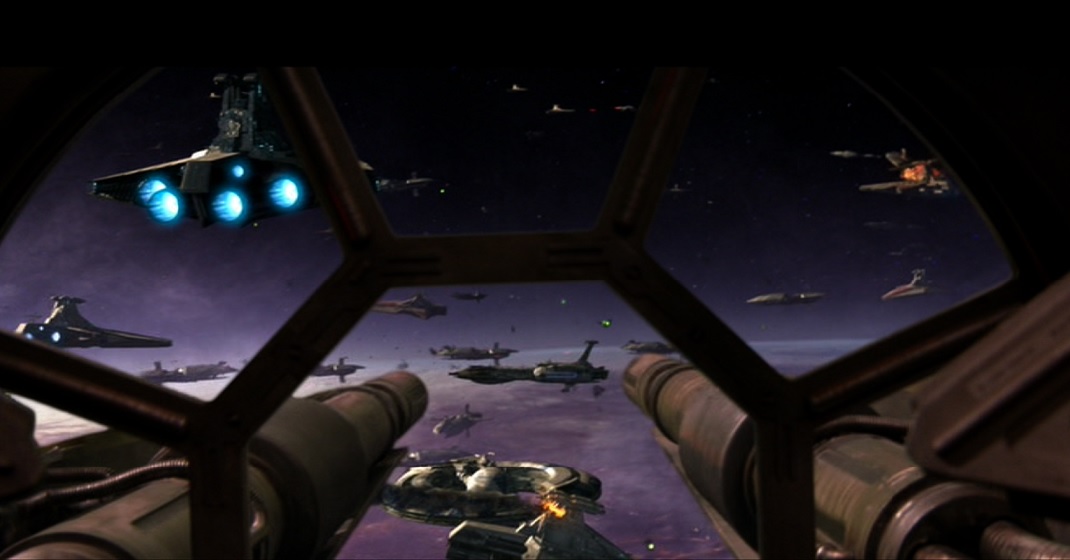
When Anakin and Obi-Wan board the ship where Palpatine is held hostage by Count Dooku and General Grievous, we notice that Anakin is wearing black clothes. This is already a symbol of where he is heading. But he is still a good guy here, unwilling to leave his friend behind in a time of trouble.

Obi-Wan looks a bit like J.D. Vance, the vice president in Trump’s regime. But make no mistake – he is nothing like him in character. He is a great Jedi Knight, just as Qui-Gon Jinn predicted he would become. Vance also looks like Count Dooku (the great Christopher Lee), and he is closer to this Dark Lord in character, though nowhere near as smart.

Then – in the showdown with Count Dooku – we get the first warning sign of Anakin’s approaching downfall. “My powers have doubled since we last met, Count.” Overconfidence, pride, anger… these are all hallmarks of a character vulnerable to Dark Side manipulation. Add fear to that, and Palpatine will have an easy mark.
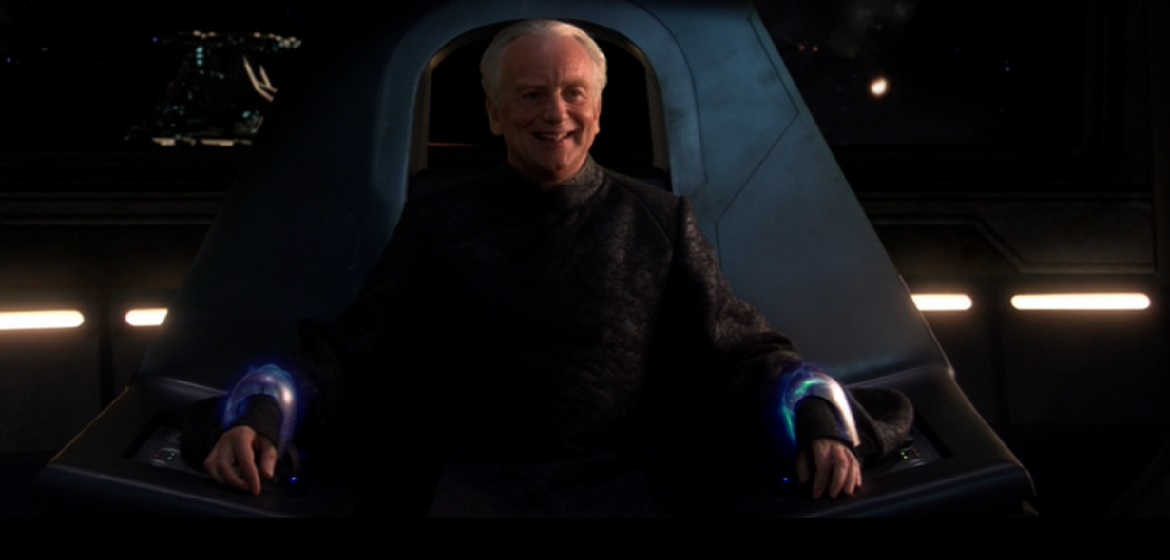
Count Dooku provokes Anakin, leading him to tap into the Dark Side. He uses his anger and aggression to defeat Dooku by cutting off both his hands. Then Palpatine urges him to kill Dooku, and he does. It turns out Anakin had told Palpatine about his mother and the slaughter of the Sand People. Palpatine is using that information to turn Anakin.

So he already has his hooks in the young Jedi. But Anakin is still a good person at this point. He refuses to abandon a wounded Obi-Wan and ensures the entire team escapes from the cruel cyborg General Grievous.

Then Anakin pulls off an amazing emergency landing with a spacecraft. Visually, this parallels the Trump era, where burning planes and helicopters seem to fall from the sky regularly due to Elon Musk’s firing of air traffic controllers.

Fear is the Mind Killer
The Senate gives the Chancellor permission to continue the war against the Separatists. Dictators always use emergency powers to dismantle democracy – and Palpatine and Trump are no exceptions. Trump’s emergency powers are invoked for bogus reasons. The USA is supposedly at war with Venezuelan gang members. That is ridiculous, but in Trump-land, that doesn’t matter.

The reason for these powers in Revenge of the Sith is that General Grievous is still alive. But we see that Grievous secretly works for Palpatine. The General is worried about Count Dooku’s death, but Palpatine assures him, “Soon, I will have a new apprentice. One far younger and more powerful.” He is clearly preparing for his masterstroke.

Revenge of the Sith has a terrific cast. Ian McDiarmid is especially powerful, delivering his lines as though in a Shakespearean play.

Meanwhile, Anakin learns from Padmé that she is pregnant. This is the happiest moment of his life, he tells her. Of course, their love is extremely dangerous in a time of Dark Side seduction. And then it happens: the nightmare. Anakin sees Padmé, his great love, dying, and it terrifies him.

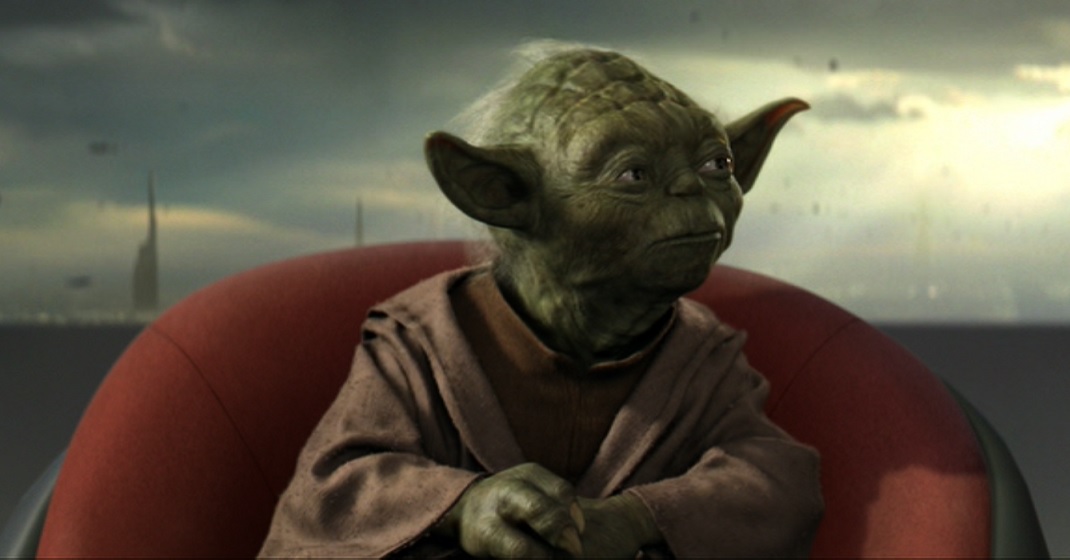
A coaching session with Yoda seems to bring some enlightenment: “Be mindful. Fear of loss is a path to the Dark Side.” If only Anakin had truly understood what those words meant.
Missed Warning Signs
Anakin and Obi-Wan meet, and Obi-Wan is worried about Palpatine, who is about to receive even more executive powers from the Senate. This parallels America today, where Trump has already made Congress powerless and is actively ignoring the courts.

Anakin meets with Palpatine, who flatters him by proposing he become the Chancellor’s representative on the Jedi Council. There are beautiful shots here of Anakin and Palpatine – clearly staged to resemble Darth Vader and the Emperor walking together. “I need you to be the eyes, ears, and voice of the Republic.”
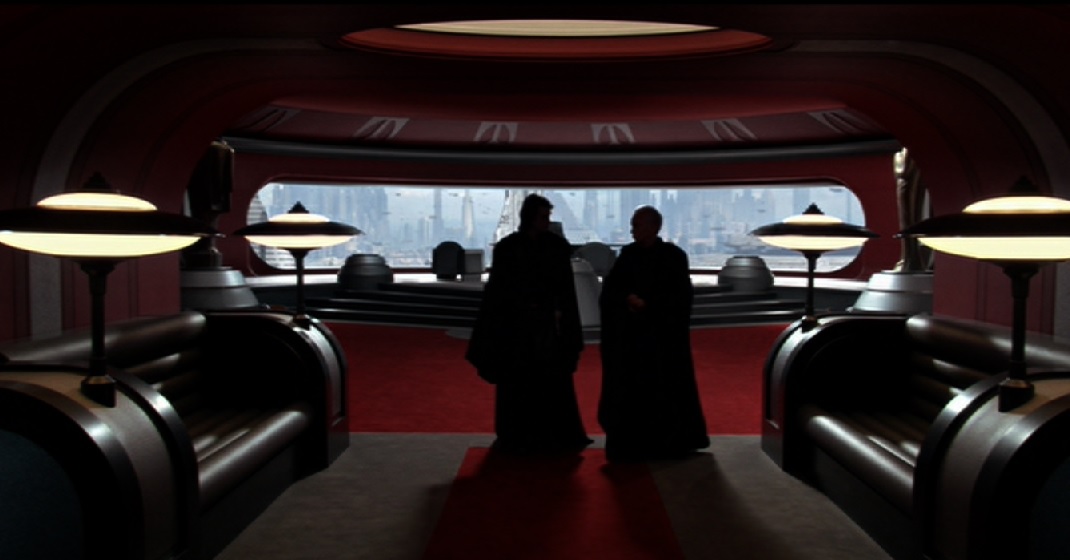
He gives Anakin a special task – just as Trump did with Musk, sending him into government agencies to extract data and build a massive surveillance system, yet another weapon for his dictatorship ambitions.
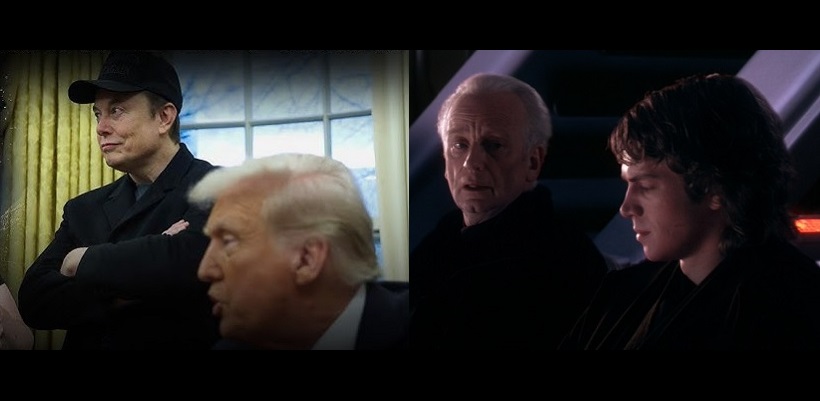
Anakin is brought before the Jedi Council. They accept him, but do not grant him the rank of Master. His angry response should have been a clear warning sign. There were plenty of warning signs during Trump’s campaign too – like mimicking Hitler and other fascist leaders in his speeches.

“It’s unfair”, says Anakin. That’s practically a direct copy of Trump. Narcissists like Trump are always playing the victim. “No country has ever been treated as unfairly as the United States”, Trump often complains. And he constantly claims to be the victim of a political witch hunt.

Standing With the Underdog
In that fateful Council meeting, Yoda utters one of the greatest lines of the film when learning that the Wookiees are under attack from the Separatists: “Go I will. Good relations with the Wookiees I have.”

The battle on the Wookiee planet Kashyyyk recalls Ukraine – a country with limited arms being attacked by a massive mechanized army (Russia). Yet they are stronger, because they are defending their freedom.

In the Ukraine war, Trump has sided with Russia, because he doesn’t care about Ukraine. It is just a pawn in a much greater battle for global control. Russia could be seen as standing in for the Separatists, though they see themselves as an empire.

The Ultimate Gaslighter
Things in Revenge of the Sith turn ugly very quickly. This is another hallmark of establishing a dictatorship. Events accelerate so fast that the good guys – in this case, the Jedi – can’t keep up.

They ask Anakin to spy on Palpatine, because “our allegiance is to the Senate, not its leader.” Most Republicans in the USA seem to have forgotten this pledge. They are 100% loyal to Trump, which is the heart of Project 2025.

Anakin argues with Padmé, who suggests that maybe the democracy they were trying to protect no longer exists. The parallel to the USA is stark: the political system is heavily influenced by money, and democracy is no longer functioning.
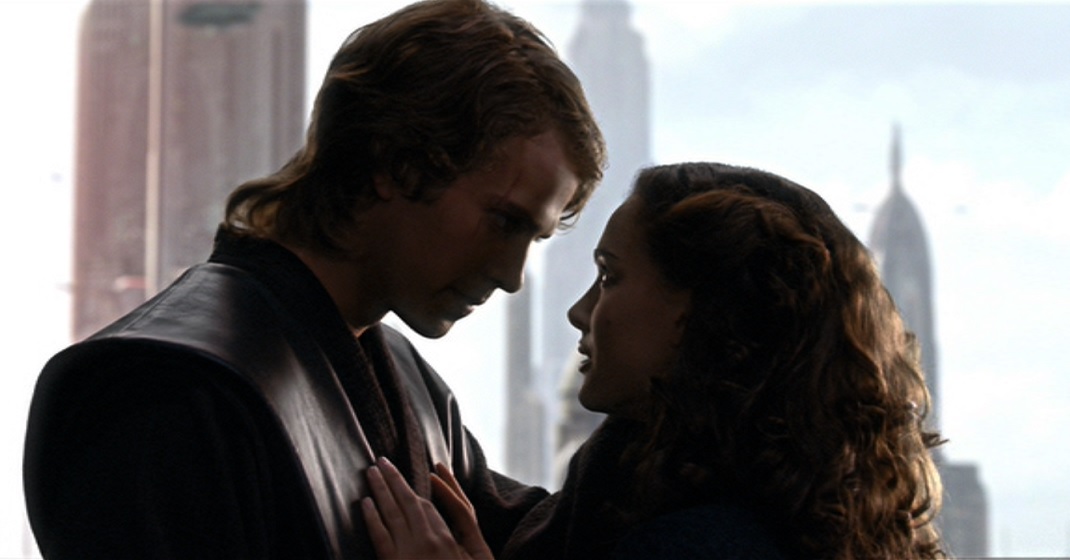
Palpatine’s final move is to portray the Jedi as attempting to illegally seize control of the Republic. Trump similarly convinced Americans that “evil” Biden was doing the same through the so-called deep state. By encouraging conspiracy theories, anti-science views, and mistrust in institutions, Trump sowed the seeds for victory.

“All who gain power are afraid to lose it. Even the Jedi”, Palpatine tells Anakin at a beautifully staged space opera. Also: “Good is a point of view, Anakin.” Indeed, we now have two competing truths: the Trump-Fox News truth and the Biden-CNN truth. On social media, we live in separate bubbles.
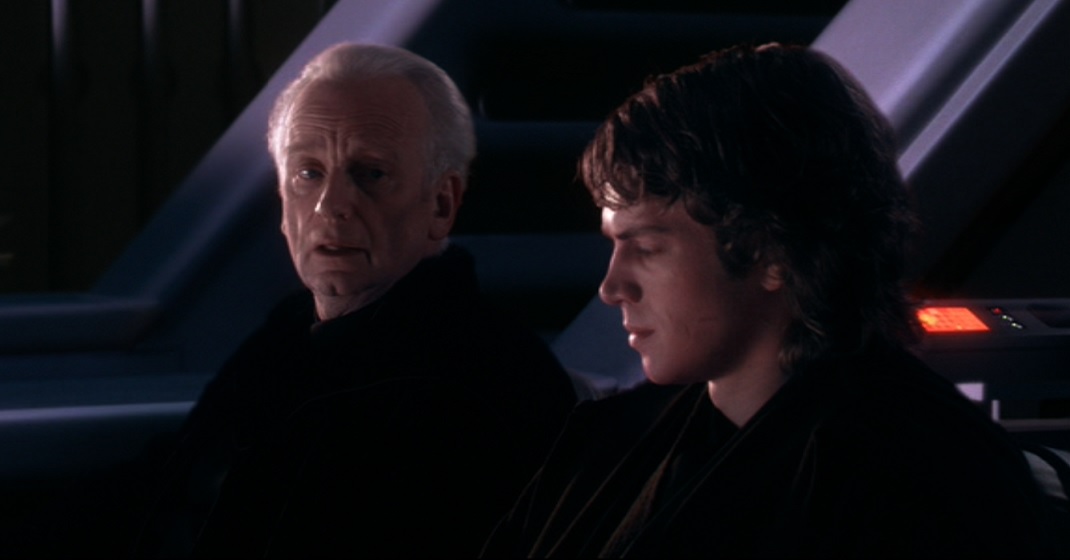
“The MAGA rely on their passion for their strength. They think inward – only about themselves.” “And the Jedi don’t?” This is classic MAGA: twisting narratives to vilify their opponents.

Palpatine tells Anakin the Sith legend of Darth Plagueis and the secret to immortality. This is the film’s Faustian moment. Many in the Trump administration made a similar bargain: loyalty in exchange for power.

ORDER 66 – PROJECT 2025
Before Palpatine’s rise in the Star Wars prequels, the Sith had been extinct for a millennium. Trump was also in a deep hole after losing the 2020 election. But he made a comeback – first by taking over the Republican Party, then by preparing for a return to power through Project 2025.

Trump is like Palpatine in many ways, particularly in his hunger for absolute power. Even physically, his grotesque expression mirrors Palpatine’s post-transformation face. And make no mistake – Trump is a manipulator, exploiting anyone in his way. While he lacks subtlety or strategy, he remains extremely dangerous. His bulldozer tactics may hinder him, but America’s fate remains undecided.

When the Jedi try to arrest Palpatine, the fate of the Republic is sealed. “I am the Senate!”, he screams. That’s typical Trump, who also believes his executive power should be limitless.

He kills three Jedi and convinces Anakin to kill Mace Windu. “He is a traitor”, Palpatine gaslights Anakin. Windu makes one last attempt to persuade him: “He has control of the Senate and the courts. He’s too dangerous to be left alive.” If there is one line in the film that best reflects the current Trump predicament, it is that one.

But Anakin – afraid of losing Padmé if Palpatine dies – makes a fateful choice and cuts off Windu’s hands. Windu is then killed by the now monstrous-looking Palpatine. “UNLIMITED POWER!!!” Anakin’s descent to the Dark Side is complete. Then he carries out Order 66. “Once more, the Sith will rule the galaxy, and we shall have peace.”

Trump seeks to rule the galaxy like Palpatine. He wants control over universities, the media, and the courts. He wants to own Canada, Mexico, Greenland, Panama, and Gaza. And he wants world leaders to bow before him in the Oval Office.

A pressing question remains: will Trump have his own Order 66? Will he use the military to suppress his own people and further his autocratic goals? The first steps already seem underway.

Final Transformation
Palpatine quickly consolidates his power. He sends Darth Vader to kill the Jedi younglings and Separatist leaders, then holds an emergency Senate session to declare the Republic reorganized into the first Galactic Empire.
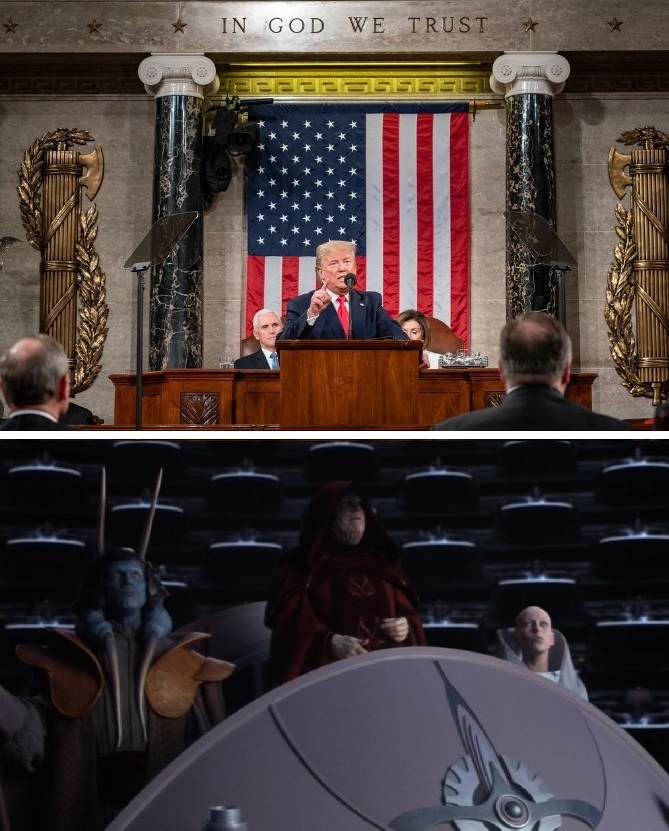
Padmé utters the now-famous line: “This is how liberty dies – with thunderous applause.”

Exactly. This recalls Trump’s victory, cheered by many – including business elites. His sycophants continue to praise him no matter what terrible things he says or does.

The finale of Revenge of the Sith is painful and heartbreaking – as it should be. Yoda and Obi-Wan discover the murdered younglings. Obi-Wan tells Padmé what Anakin has done. Then, after their brutal duel on Mustafar, Anakin is burned alive. It’s dark, powerful stuff.

In their final confrontation, Anakin tells Obi-Wan he now sees the Jedi as evil. Just like Trump and Musk view Democrats and the values they once stood for – like climate protection, freedom, and diversity – as evil.

“I sense Elon is in danger. His Tesla stock is burning.”
Elon Musk has similarities to Anakin. A smart, energetic kid with a passion for technology, he once did good – like supporting Ukraine with Starlink satellites. But he crossed a line. He’s transformed into a Dark MAGA figure and caused massive harm.

Like Anakin kills the Jedi younglings, Elon Musk is responsible for the deaths of thousands of children by slashing USAID funds. He has sunk to a level of evil that few would ever imagine to be possible. The only solution to the Trump-Musk regime is now complete destruction.

That shot where the Vader mask closes over Anakin’s burned face is powerful. His transformation is complete.

Final Thoughts
After the death of Padmé and the birth of Luke and Leia, Yoda and Obi-Wan go into exile – like Harris, Biden, and Waltz, after failing to stop the Trumpian menace.

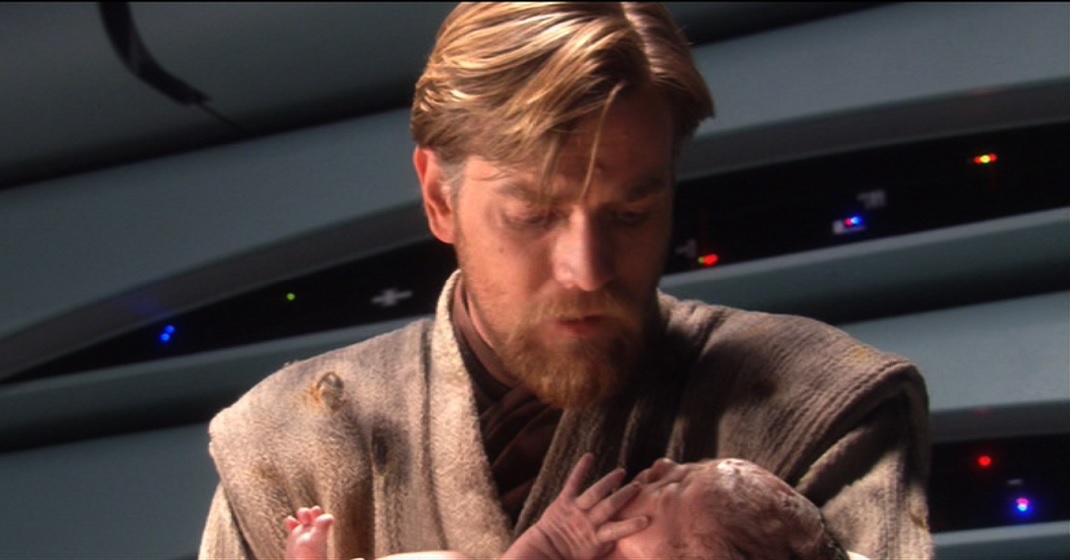
After all that darkness, the film ends on a hopeful note. Leia is delivered to her adoptive parents. Obi-Wan brings Luke to his aunt and uncle on Tatooine as they look out at the twin sunset.

The message: there is always hope.

Tijdloze klassiekers

Rosa is nu op een leeftijd gekomen (tien, bijna elf) dat ze ‘volwassen’ films met me kan kijken. Alhoewel volwassen? Veel mensen zouden Star Wars omschrijven als kinderfilm. Ik zal nog even moeten wachten tot ik mijn gewelddadige favorieten zoals GoodFellas en The Godfather met haar kan bekijken, maar de lichtere klassiekers, zoals de originele Star Wars trilogie dus, zorgen al voor veel (darth)vader- en dochter-kijkplezier.

Ik ben expres begonnen met Star Wars: Episode IV – A New Hope, en niet met de prequel trilogie, omdat ik wilde dat ze de verrassing van episode V (“I am your father”) zou beleven als de oorspronkelijke bioscoopbezoekers in 1980. Ze vond het vreemd om te beginnen met de vierde aflevering van een serie, maar ik heb haar uitgelegd dat de beste verhalen vaak een ongeziene voorgeschiedenis hebben en dat die soms ongezien blijft, maar in het geval van Star Wars later alsnog verfilmd is (een understatement, aangezien Disney bezig is ieder personage en tijdperk een eigen film of serie te geven) .

Het was ook een test om te zien of deze films van 46 tot 40 jaar oud ook een nieuwe generatie zouden aanspreken en dat deden ze. Rosa is een nieuwsgierig kind en ze stelde me allemaal vragen over de personages en de mythologie van het Star Wars universum. Ook wisten de personages haar duidelijk in te pakken; van de komische C3PO en R2D2 en de mysterieuze Obi-Wan Kenobi tot de vurige Leia, koppige Han en dappere Luke. En natuurlijk vond ze de slechteriken fascinerend.

Het was geweldig om haar reactie te zien op legendarische scènes, zoals de ontsnapping uit de Death Star en natuurlijk de ultra-spannende finale. De special effects blijven geniaal. Af en toe doorzag ze de trucjes van het pre-digitale tijdperk, zoals de met stop motion geanimeerde tauntauns in The Empire Strikes Back. In deze fenomenale film leerde ze het personage Darth Vader pas echt kennen. Ze vond het hilarisch om te zien hoe hij zijn incompetente ondergeschikte straft door hem op afstand te force chocken terwijl hij via een monitor de collega naast hem promotie geeft. Dat geeft zelfvertrouwen.

Toen kwam natuurlijk dat moment waarop Vader aan Luke vertelt dat hij zijn vader is. De uitdrukking op haar gezicht was fantastisch en toen in Return of the Jedi volgde er nog een verrassing als Yoda Luke op zijn sterfbed meedeelt: “there is another Skywalker.” De films hebben de toets des tijds glansrijk doorstaan. Goed nieuws voor mij, want ik kan de lijst met films die we gaan kijken flink uitbreiden.

We zijn nu bezig met de prequel trilogie. Visueel staan deze films nog altijd als een huis en de visie erachter ook, maar de uitvoering kent de nodige gebreken. Rosa wist goed uit te leggen waarom ze de originele films beter vond (‘it’s the characters, stupid!’). Ik denk dat er wel een filmrecensent in haar schuilt en sowieso een filmfreak, zoals haar vader.

Waarom zijn we hier?

Vervolg op: Wat is het mentale universum?

Welkom terug. Fijn dat je nog aan boord ben. In dit essay gaan we in op de vraag: wat is de doel van ons bestaan in deze mentale realiteit? Even een opfrisser: Na bijna 100 jaar kwantummechanica wordt het steeds duidelijker dat we voor een enorme transitie in wereldbeeld staan. Het idee van een objectief bestaande wereld om ons heen is definitief verleden tijd, daar zijn natuurkundigen het over eens. Ruimtetijd en materie komen voort uit iets anders, iets diepers. Volgens een aantal prominente wetenschappers, zoals Richard Conn Henry, Robert Lanza en Donald Hoffman kan deze diepere dimensie niets anders zijn dan een mentaal veld. Dat blijkt uit kwantummechanische experimenten waarbij het puur de geest van de onderzoekende wetenschapper is die de uitkomst van het experiment bepaalt.

Deze experimenten hebben ons geleerd dat we niet passief de fysieke wereld om ons heen registreren, maar deze wereld zelf creëren met onze verstrengelde geesten. Hiermee bereiken deze wetenschappers dezelfde conclusies als verschillende Oosterse filosofische stromingen en enkele van de belangrijkste Westerse filosofen aller tijden, waaronder Plato, Kant en Schopenhauer.

Als deze uitdagers van het huidige fysicalistische paradigma gelijk hebben, zegt dat iets over onze identiteit. We kunnen dan stellen dat we geen fysieke wezens zijn mét bewustzijn, maar bewustzijn zelf. Onze lichamen zijn dan slechts avatars. Handig om te navigeren in deze fysieke virtual reality, maar niet fundamenteel. Wat moet je weten om van deze subjectieve ervaring écht een succes te maken?

Evolutie, continue groei en verbetering
Ik ga in dit essay uit van de theorie van alles ‘My Big TOE’ (Theory Of Everything) uitgewerkt door fysicus en bewustzijnsonderzoeker Thomas Campbell. Hij heeft zijn theorie ontwikkeld aan de hand van slechts twee veronderstellingen:
1. De basis van ons universum is een primair bewustzijn waar alles uit voortkomt.
2. De ontwikkeling van dit bewustzijn wordt gedreven door het Fundamentele Proces van Evolutie.

Deze twee assumpties vormen de substantie en dynamiek die de realiteit mogelijk maken. Bewustzijn is het medium waarop de realiteit geprojecteerd wordt en evolutie is het proces van wording dat continu plaatsvindt. Dit proces van optimalisatie eindigt nooit.

In de vorige blog over het mentale universum hebben we het gehad over de eerste veronderstelling. In dit vervolg staan we stil bij de tweede. Ons bestaan blijkt volgens de theorie van Campbell betekenis te hebben. We zitten namelijk opgesloten in een virtuele leeromgeving. Volgens Campbell zijn we als mensen uitgerust met vrije wil. Dat blijkt uit kwantummechanica dat heeft aangetoond dat de wereld, totdat die wordt waargenomen, uit een waarschijnlijkheidsdistributie bestaat. De toekomst is niet zeker, en wordt pas definitief op het moment van waarneming. Met onze intentie/vrije wil kunnen we een zekere invloed uitoefenen op hoe de wereld zich zal manifesteren, aldus de excentrieke fysicus.

Ook het bestaan van evolutie suggereert het bestaan van vrije wil, want om tot winstgevende verbeteringen te komen is het noodzakelijk dat we een leerproces doorlopen en keuzes kunnen maken. De vraag is hoe groot onze invloed op de wereld is. Op de fysieke wereld lijken de effecten beperkt te zijn. Yoda die met zijn geest een ruimteschip kan optillen gaat niet gebeuren. Want hoewel het universum zo mentaal mag zijn als het gesticht uit One Flew Over the Cuckoo’s Nest, betekent nog niet dat er geen natuurwetten van kracht zijn. Maar toch kunnen we invloed hebben op welke realiteit zich zal manifesteren. Dat komt omdat niet vastligt welke van de potentiële toekomstige staten van het universum we gaan manifesteren. Alleen een mate van waarschijnlijkheid dat het de ene of de andere staat is. Je kunt je dit voorstellen als een film die zich aan het afspelen is, maar waarbij het niet vaststaat hoe het volgende frame er precies uit gaat zien. Er zijn een heleboel mogelijkheden en de kijkers beslissen mede welk frame het wordt.

Hoe we invloed kunnen uitoefenen zit hem vooral in onze intenties ten opzichte van andere wezens. Hoe meer we ons richten op anderen en minder op onze eigen ego-verschijning, hoe hoger de kwaliteit van ons bewustzijn, wat weer gemanifesteerd wordt in de buitenwereld. Liefde, compassie, empathie; dat zijn de sleutelwoorden in het manifesteren van een optimale realiteit. Een tip van Campbell is om je minder te richten op wat je zelf wilt, nodig hebt en verlangt en meer op wat je voor anderen kunt betekenen. Hoe investeer je optimaal je energie volgend op je intentie ten opzichte van anderen? Dat is steeds de centrale vraag.

Kwaliteit van bewustzijn
In het grotere plaatje blijven we bacteriën. Het grote bewustzijn is veel groter dan we kunnen bedenken. Alleen al in ons zonnestelsel zijn er 500 miljard sterren te vinden. En dat is slechts één van de 100 miljard bekende sterrenstelsels. En dan hebben we het alleen nog maar over het waarneembare universum. Wie weet wat het superbewustzijn daarbuiten nog allemaal heeft voortgebracht? Maar geen reden om ons onbelangrijk of onbetekenend te voelen. Immers, we kunnen een verschil maken. Door bij te dragen aan de evolutie van bewustzijn op deze planeet. Laat je niet wijsmaken dat evolutie alleen maar een Darwinistisch proces op aarde is dat soorten drijft tot overleving, Dat is slechts een voorbeeld van evolutie. Het Fundamentele Proces is de motor achter iedere verandering in het gehele universum.

Hoe kun je de kwaliteit van je bewustzijn vergroten? Transcendente meditatie is een manier, maar zeker niet de enige. Hallucinerende drugs raadt Campbell af, het enige punt waarop ik het niet helemaal met de bebaarde wetenschapper eens ben. Maar ik snap hem ook wel weer: in veel gevallen maakt dat spul een rotzooi van je hoofd en verschaft het geen helderheid, maar vertroebelt het juist de geest.

Mijn eigen recept bestaat uit onder meer lucide dromen en mindfulness in het dagelijkse leven. Dit helpt mij, maar dat is persoonlijk. Hoe je kunt werken aan de kwaliteit van je bewustzijn is niet iets dat ik, of Campbell, of wie dan ook je kan voorschrijven. Omdat dit leven een schoolervaring is, is het aan iedereen zelf om zijn of haar huiswerk te doen. Goeroes heb je weinig aan, die gaan niet de kwaliteit van je bewustzijn vergroten. Dat kun je alleen zelf.

Boeken (of blogs!) kunnen je ideeën opleveren, maar wijsheid bevindt zich meer in het hart en in de ziel, dan in het intellect. Ervaringen opdoen, de pudding proeven, je bewust worden van je intenties… Dit is de manier. Campbell zegt dat de beloning groot kan zijn: “Degenen die serieus de uitdaging aangaan om de realiteit te verkennen en hun bewustzijn te vergroten, komen zelden met lege handen thuis. Ze vinden onvermijdelijk een grotere realiteit die verder gaat dan de objectieve fysieke materie-realiteit, en dat is voor hen bijna altijd veel meer waard dan de aanzienlijke inspanning die het kost om er toegang toe te krijgen.”

Waarom zijn we hier? Om te leren. In het mentale universum staat individuele groei centraal. En er is niemand die dat voor je kan bereiken, jij zit aan het stuur. Morpheus: “Ik probeer je geest te bevrijden, Neo. Maar ik kan je alleen de deur laten zien. Jij bent degene die er doorheen moet lopen.”

⟿ Lees meer over bewustzijn en de ware aard van de realiteit op Free-Consciousness

George Lucas, Not Guilty

Today, on the premiere of ‘The Last Jedi’ – the eighth official episode in the Star Wars saga, creator of Star Wars – Mr. George Lucas – stands trial. He is accused of being a hack.

The prosecution (The internet)
Of the many things that catch blame for ‘ruining’ the Star Wars prequels – Jar Jar Binks, midi-chlorians, almost every line of dialogue George Lucas wrote for Padme and Anakin – there is one moment that makes almost every fan cringe, no matter how dedicated. We’re talking about Anakin Skywalker’s transformation into Darth Vader, literally the jumping-off point of the entire Star Wars saga.

In this moment, Vader learns that he has lost his wife and unborn children…and has been transformed into, like, a Space Robocop. So, what does he do? He breaks free from his shackles and lets out the now infamous, “NOOOOOOO!” that felt like it had a Kanye-level of autotune to it. It felt ridiculous when it should have been the defining moment of the prequels. What the hell was Lucas thinking?

The defense (Johnny Cochran)

This defense will be short and easy. This is the man who gave us Star Wars after all. The original Star Wars films still form the best trilogy ever created hands down. Even the third part – which is never the best in any series – is in case of Star Wars nearly perfect: ‘Return of the Jedi’ contains some of the best stuff of the series. Legendary film critic Roger Ebert (1942 – 2013) gave each of the three original films the maximum rating of four stars (read his awesome reviews here, here, and here).

So why is Lucas so hated despite being the man who gave us Darth Vader, Yoda, Han Solo, Princess Leia and Luke Skywalker amongst many others? Because he also gave us Jar Jar Binks? Because he writes remarkably terrible love scenes? So what? Didn’t the other great filmmakers of his generation make similar mistakes? Francis Ford Coppola cast his daughter in ‘The Godfather: Part III’ and it nearly ruined the film. Yet, he is never criticized in the way Lucas is.

Statistically, after sunshine comes rain. Lucas gave us the best trilogy ever made, so the prequels were never going to top that. Still, that is no excuse for not making better movies. But are they really so terrible?

Episode I: The Phantom Menace is the worst, most will agree. But look at what it does have: the pod race, Darth Maul (IMDb-poll names him the second greatest SW villain after Vader), and the return of many great characters: Palpatine, Yoda and Obi-Wan (Ewan McGregor is perfect casting as a young Alec Guinness). There is also fun foreshadowing going on of all that is to come. Finally, the world building is spectacular and unforgettable.

Roger Ebert – who gave ‘The Phantom Menace’ 3,5 stars out of 4 – concluded: “Mostly I was happy to drink in the sights on the screen, in the same spirit that I might enjoy ‘Metropolis’, ‘Forbidden Planet’, ‘2001: A Space Odyssey’, ‘Dark City’ or ‘The Matrix’. The difference is that Lucas’ visuals are more fanciful and his film’s energy level is more cheerful; he doesn’t share the prevailing view that the future is a dark and lonely place.”

Episode II: Attack of the Clones – The greatest weakness is the love story, we can be clear about this. But it would be a shame to let that ruin the whole movie experience, because episode II has a lot going for it. First of all, it has a terrific Raymond Chandler-style mystery plot. Also, there is a great sense of urgency; the battle for the galaxy has now really begun. And the filmmaking in general – the editing, sound, production design, music, etc – are all A-grade. There are few filmmakers with such imagination, and with the ability to bring it to the screen, like Lucas.

As for villains, usually the best thing about a Star Wars-film, I don’t like Jango Fett so much, but Count Dooku – played the uncanny Christopher Lee – is terrific, and so is his lightsaber duel with Yoda. The dark side is really prevailing now and Lucas effectively uses the principles of Eastern Philosophy to craft the story development. People may not like Hayden Christensen, but what is actually accomplished by his performance is that we get an uneasy feeling about Anakin. The air gets thick in the confrontational scenes. Unlike Obi-Wan – who was the perfect Jedi-student in episode I – Anakin is the pupil you always have to worry about. And these foreshadowing shots with Palpatine are grand. His quest to the dark side is thus very well handled.

Episode III: Revenge of the Sith  Episode III is a return to the classic space opera style that launched the series, and many agree that Lucas really approaches old trilogy greatness here. In the saga’s darkest chapter, Anakin really journeys to the dark side under the influence of the demonic Palpatine. Aside from the infamous ‘Noooo’-moment, episode III is a thoroughly exciting and enjoyable film with some of the best action sequences in the series.

And so, ladies and gentlemen of the jury, if George Lucas is a hack, then Chewbacca lives on Endor, and therefore you must acquit! The defense rests.

So let us all shut the hell up and enjoy Lucas’ legacy.