City Swalking

By Jeppe Kleijngeld

Return of the Prodigal Son . . . A Personal Account of Loss & Sorrow . . . Taking the Touristic Route . . . AK47 & Familiar Habits . . . and Finally; The Meaning of a Human
Life . . .

When thinking about Argentina, most people will think of famous soccer players, like Messi or Maradona. Or Maxima perhaps. Or grill & steak. Or economic crises… I think of my old pal Alejandro. I remember dropping him off at the gate of Schiphol Airport, 20 years ago. One last handshake, a big hug and watching him walk towards the departure gate…

Now he is back in the Netherlands, my old friend Alejandro from Argentina. I met him at the Leidseplein in Amsterdam on 14:00 in the afternoon the day before Kings Day. He was late. I think he always was late. But that is a cultural thing he later told me. ‘Jeppe, in the Netherlands, everything is very structured. If you want to play a game of tennis with somebody, you ask him at least a week in advance even if you want to play right now.’ Therefore, he let all his Dutch contacts know well in advance that he would be coming around at this time.

He learned a lot about Dutch culture and traditions when he was here in 1995. His curiosity was inspiring. In six months he learned to speak Dutch fluently, which everybody found very impressive. He made a lot of friends too. Me for example. He became one of my closest friends in just a few weeks time. This South-American monkey was pretty charming.

While waiting, I was reading a New York Times article about the rats of New York City. It said that rats tend to stay in the same area their whole lives. They don’t cover a lot of ground and rarely move. Cool huh? Then I got a WhatsApp: ‘Hey Jeep, I’m there in ten minutes.’ I got a nervous feeling. What will it be like seeing him again? Will I even recognize him? And am I still a cool guy he will enjoy hanging out with? But no problemo, it turned out. From the moment he stood in front of me, we were talking as if nothing ever changed and time just… well evaporated. Or something.

He was with a friend from Argentina: Fabio. His boyfriend it soon turned out. ‘I switched sides ten years ago’, he told me. He was in several relationships with woman, but something was never quite right. Then one day after his last relationship ended, he went to a large gay club in Buenos Aires and picked up a guy. The day after he kicked the guy out, and then he knew: ‘this is it for me’. Soon after he met Fabio.

His coming out among friends and family members was remarkably easy. In Argentina homosexuality is very accepted nowadays. Gay marriage became legal in 2009. While Argentina got more tolerant, the Netherlands has lost some of its tolerance, I regretfully informed my friend. When he was here with the student exchange programme in 1995, it was a blissful time or so it seemed. People from all backgrounds lived together in relative peace and harmony, and there was little bitterness and resentment.

Now that has changed. Was it the murder on Theo van Gogh that was the breaking point? Alejandro had heard about that shattering event off course. For centuries Amsterdam had been a free haven for all sorts of freaks & weirdos from every outskirt of the planet. A place where they could believe whatever they wanted to believe and nobody would bother them. We Dutch & international guests managed to live together so well for a long time. Have we lost that ability?

Fact is, we are losing ground fast to other countries that are advancing in tolerance and acceptance. Even in a notoriously backward country like the USA, quite a few states have legalized marijuana, while suppliers in the Netherlands still have to worry getting arrested while driving their greens to the coffeeshop. But no reason to get all depressed, not yet anyway. When we walked around in Amsterdam – after drinking a beer on Alejandro’s return – the vibe was good on this day preceding the second Kings Day on April 27, 2015.

While walking around to check out some of the touristic sites, we talked about the year he was here – 1995 – and what came afterwards. Going back to Argentina was a real hangover for Alejandro, and he couldn’t stay in touch. I told him no hard feelings whatsoever. I knew him a little and figured back then that, despite his easy going appearance, he wasn’t a complete lightweight when it came to emotional processing. He could not take his departure from the Netherlands lightly. He came here, found home and wanted to stick, but he had outstayed his one year ticket. There was no way in sight to stay here longer. Not legally anyway.

And Alejandro left a lot behind. The friendship we had developed was real, and he had adopted largely – if not completely – to the Dutch way of life: boerenkool, zuurkool, bloemkool, aardappelen, weed…. He was always good at adopting, this Argentinian. Very much one of Darwin’s own super species. His agility also became apparent from his current job: Manager Social Media for a large Argentinian company. He had obviously mastered the digital skills that have become so essential for survival in this challenging current age, constantly tapping, typing and swiping through a variety of useful apps and platforms on this oversized i-phone, while swalking through the city with me and Fabio on this cold but happy day in April.

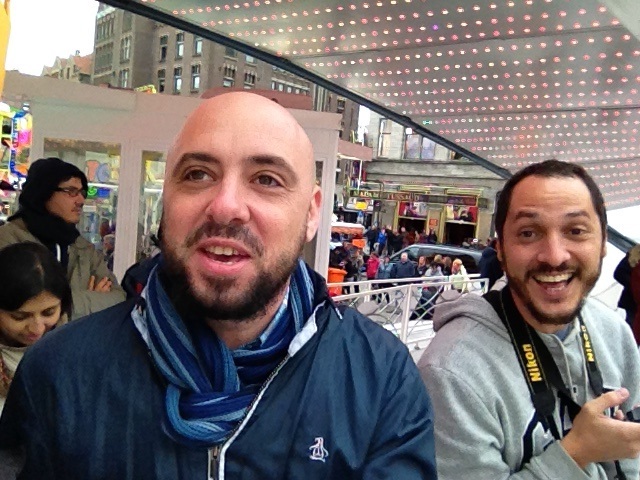
Alejandro 1

Ajejandro (left) & Fabio

Their style of holiday was very much like my own; just walking around and sightseeing, occasionally stopping at bars and restaurants to load up on foods and drinks. His friend Fabio is a photography freak, stopping every 20 metres or so, to take a few shots of the impressive Amsterdam architecture. We started our walking tour at the Museumplein, and then headed back towards the Dam area, stopping underway to have pancakes (pannenkoeken) and bitterballen. We tried to bring back Alejandro’s ability to speak Dutch and it did after a while.

We also played the ‘remember when…’ game. How we met in 1995, when my parents offered to take Alejandro to France with us on Holiday. That decision was right; we had a terrific time there along with our other friend Boris. We talked about how we jumped from a 18 metre cliff into a lake. And I reminded him of a mini-twister that blew the stuff of a group of Dutch tourists in the water, but Alejandro can’t remember that one.

We also talked about the loads of marijuana we smoked during his stay in the Netherlands. And it was probably inevitable that we would smoke some on that day. Early evening, we headed over to The Doors, a small coffeeshop close to central station. The lightest weed we could get our hands on was AK47 that went for 10 euros per gram. I rolled a joint and lit it. I hadn’t smoked that stuff in ages, so it came in pretty hard. Same goes for those two Argentinian dudes. Then we were high. After about 10 minutes of indecisiveness (should we go or stay? Get a drink or shouldn’t? Leave the rest of the weed or take it?) we walked out and strolled through the Jordaan, where people were now setting up shop for Kings Day. Fabio said he enjoyed the fairy-tale like houses in the inner city, but for the rest we didn’t talk much. We just walked – stoned – and it felt great.

At the boys’ apartment we watched CNN. A massive earthquake had hit Nepal and caused a devastating loss of life and history. The presenter seemed mostly concerned with promoting a special feature Facebook introduced to help those involved in the disaster, but we couldn’t figure out what was so new about it. If you’re in a disaster you can use social media, so what? The footage for the broadcast was provided by Nepalese television, which doesn’t consist of much more than one old camera held together by duct tape. ‘Man, that’s sucks’, said Alejandro. ‘You live in the poorest country in the world, you own nothing, and then on top of everything else you get hit by a gigantic fucking earthquake.’

We talked some more and noticed that our particular way of conversing and thinking from our childhood came back. That was a nice realisation; some things just exist and don’t disappear. Even if we had changed, we were still the same people in a way. Some time later, I left the boys to crash and decided to walk back to my own sleeping address, straight through many kilometres of Kings Day crowd. I bought a beer from a street bar and started marching through the crowd. I loved it. My mind was like a racetrack, moving between memories past and observations from the current moment. Walking is terrific: the ultimate existential activity.

I figured I would probably get an emotional hangover from this little get together. I am rather sensitive for these kinds of meetings. For the idea that meetings with friends and loved ones can be so meaningful and yet so brief. That life itself is so brief. I might see Alejandro again. Maybe I’ll visit him in Argentina sometime. I took him 20 years to get back here, so I should be able to do it. Until then I’ll try to keep on walking and living, and Alejandro will do the same.

Is that the point of human existence, I wondered. To collect a large number of meaningful memories with friends and lovers? To feel things? I, like other humans I suppose, have the need for some narrative in my life. I will probably see Alejandro again. He will come back some day, or I will visit him in his country, and then one day one of us will learn of the others persons death of the other side of the world. I figured there is some narrative in that, but it is not Shakespeare. It’s more like Scorsese. Not much plot, but just life. And life is often very good as well. Especially in this little country we Dutch are all so damn lucky to live in. And I wished more of my countrymen would see that as well. But by then I didn’t care. I was confidently walking towards more bliss. And there was plenty of time to worry about the future later.

Icon 27 - Argentina

De maffiaboeken van Nicholas Pileggi – Deel 2

Door Jeppe Kleijngeld

Casino: Love and Honor in Las Vegas

De journalist / schrijver Nicholas Pileggi heeft tweemaal in zijn carrière een onthullend boek geschreven over zijn grootste fascinatie: de maffia. Eerder schreef ik al over zijn boek ‘Wiseguy’, dat in 1990 door Martin Scorsese werd verfilmd als ‘GoodFellas’. Dit keer bespreek in zijn tweede maffiaboek: ‘Casino: Love and Honor in Las Vegas’. Ook dit boek werd door Scorsese verfilmd, namelijk als ‘Casino’ in 1995 met Robert de Niro, Sharon Stone and Joe Pesci.

Pileggi heeft wederom een fascinerend non-fictie verhaal ontdekt en de juiste personen om er aan mee te werken. Het meest fascinerende aspect van ‘Casino’ is hoe de hoofdpersoon, beroepsgokker Frank ‘Lefty’ Rosenthal, die normaal niets aan het toeval overliet, trouwde met de meest instabiele vrouw van Las Vegas. Een gigantische gok, die catastrofaal is uitgepakt. Later overleefde Rosenthal op miraculeuze wijze een bomaanslag… Het is bijna te vreemd om echt gebeurd te zijn.

Casino 1

In ‘Casino’ schetst Pileggi een beeld van de gokstad Las Vegas die in de jaren 70/80 nog het soort glamour had waar échte gokkers op af kwamen. Maar ook normale families kwamen al in groten getale om het collegegeld van junior weg te spelen op de roulettetafels. Rosenthal herinnert zich van zijn begintijd in Vegas dat hij een camper buiten de stad zag stoppen om te lunchen. Binnen stond een blackjack tafel en binnen drie uur had de man er 2400 dollar doorheen gespeeld en ging de familie rechtsomkeert. Ze hebben Vegas niet eens gehaald. ‘Dat ben ik nooit vergeten’, aldus Rosenthal.

Las Vegas is een stad met een maffiageschiedenis. Opgericht door Bugsy Siegel en later geëxploiteerd door maffia families uit het Midwesten van de VS: Chicago, Kansas City, Milwaukee en Detroit. Een man die zelf geen deel van de maffia uitmaakte, maar wel veel geld voor ze verdiende was professioneel gokker Frank ‘Lefty’ Rosenthal. Hij werd uitverkoren de vier casino’s te leiden die onder geheim bestuur van de maffia vielen. Hij was een fenomenaal casino manager, maar het liep allemaal verkeerd af…

Problemen kwamen uit verschillende hoeken. Lefty’s huwelijk met Geri McGee was een ramp. Ze zette Lefty vaak voor schut en was vooral op geld belust; ze heeft nooit van hem gehouden. Niet dat hij zelf een heilig boontje was. Hij ging continu vreemd en vernederde haar voortdurend. Ze hadden constant ruzie en vaak publiekelijk; dit was slecht voor Lefty’s gezondheid en carrière. Daarnaast had Lefty continu problemen met de gaming commission, het orgaan dat toekent wie wel en niet mogen opereren in de stad. De FBI deed daarnaast fulltime onderzoek naar de vermoedelijke afroompraktijken in de casino’s en het was een kwestie van tijd voordat ze voldoende bewijsmateriaal verzameld hadden.

Dan is er nog Lefty’s jeugdvriend, de levensgevaarlijke gangster Anthony ‘The Ant’ Spilotro. The Ant, zo genoemd vanwege zijn beperkte lengte, trok naar Vegas om te profiteren van het door de maffia onontgonnen terrein. Buiten het zicht van de maffialeiders begon Spilotro links en rechts te roven, te moorden en te stelen. Dit ontging natuurlijk niet de lokale politie en Spilotro werd met zijn continue publiciteit een steeds groter probleem voor de bazen in het Midwesten. Hij kwam gewelddadig aan zijn einde.

Casino 2

Het meeste wat in de film ‘Casino’ te zien is, berust op de waarheid zo blijkt uit het boek. De wat onrealistische moord in een bar waarin Spilotro (Nicky Santoro in de film) een man doodsteekt met een pen komt niet in het boek voor. Maar de beruchte martelscene waarin hij het hoofd van een gangster in een bankschroef stopt en samenperst tot zo’n 10 centimeter, zodat zijn ogen uit hun kassen poppen is echt gebeurd.

Uiteindelijk viel de maffiaoperatie in Vegas als een kaartenhuis in elkaar en de stad veranderde vervolgens in een soort Disneyland. Het was de laatste keer dat straatgangsters zoiets waardevols in handen kregen…

Een boeiend boek, maar haalt het niet bij het fenomenale ‘Wiseguy’.

De maffiaboeken van Nicholas Pileggi – Deel 1

Door Jeppe Kleijngeld

Wiseguy: Life in a Mafia Family

Op 12 juni 2012 overleed voormalig gangster Henry Hill aan hartcomplicaties. Hij was 69 jaar oud. Hill was de centrale figuur in het boek ‘Wiseguy: Life in a Mafia Family’ van Nicholas Pileggi dat in 1990 verfilmd werd als ‘GoodFellas’ door Martin Scorsese. Mijn favoriete film aller tijden!!! ‘As far back as I could remember, I always wanted to be a gangster.’

Het boek ‘Wiseguy’ voegt zeker het nodige toe aan de film, namelijk meer inzichten in hoe het is om deel uit te maken van een maffia familie halverwege de jaren 50 tot en met de jaren 80. Het doel van Pileggi was om de maffia te laten zien van binnenuit en door de ogen van de werkende maffioos en niet iemand die deel uitmaakt van de top. Hill is hiervoor perfect. Hij heeft van alles meegemaakt, had toegang tot alle niveaus van de onderwereld en kan zich alles levendig herinneren.

Henry Hill werd op jonge leeftijd opgenomen in de maffiagroep van Paul Vario, een rijzende ster in één van de vijf families van New York: de Lucchese familie (de andere zijn: Gambino, Genovese, Bonanno en Colombo). Het was de jaren 50’ en het waren gouden tijden voor de maffia in New York. Ze zaten nog niet zo onder de radar van de FBI en ze profiteerden van de rijzende economie.

Hill wist zijn weg op een organische manier te vinden in de familie en hij maakte veel vrienden en contacten, waaronder de levensgevaarlijke beroepscrimineel Jimmy Burke (Jimmy Conway in ‘GoodFellas’, gespeeld door Robert De Niro). ‘Jimmy was knettergek en levensgevaarlijk’, aldus Hill. ‘Hij kon met je lachen tijdens het eten en je overhoop schieten tijdens het toetje.’ Jimmy was eng, zelfs in dat gewelddadige wereldje. Maar hij was ook slim en bracht veel geld in het laatje voor Paul Vario. Daarom werd zijn gekheid getolereerd. Henry maakt ook kennis met Tommy DeSimone, een heetgebakerde gangster die zich wilde bewijzen omdat zijn broer Anthony politie-informant was geworden en daarvoor vermoord zou zijn door een andere familie. In GoodFellas speelt Tommy (meesterlijk vertolkt door Joe Pesci) een grotere rol. Maar de moorden die hij in de film pleegt zitten wel allemaal in het boek. Hill beschrijft hem als complete psychopaat.

Het beeld van de maffia is vaak een wereld van glamour: geld, macht, de duurste auto’s, Hollywood sterren en vijfsterren diners. Maar in werkelijkheid is de maffia niet zo glamoureus, blijkt uit ‘Wiseguy’. Een voorbeeld geeft Henry Hill over zijn baas Paul Vario. Paulie ging altijd met zijn vrouw uit eten en dan betaalde hij met gestolen creditcards. Waarom zou de kapitein van de Lucchese misdaadfamilie zo’n groot risico nemen? ‘Omdat dat het aspect van zijn avond was, waar hij het meeste van genoot’, vertelt Hill. ‘Hij vond niet het eten het leukste aspect, terwijl hij gek was op eten. Ook van het gezelschap van zijn vrouw genoot hij niet het meeste, terwijl hij echt heel veel van haar hield. Waar hij het meeste van genoot was het idee dat hij iemand aan het beroven was en ermee weg kwam. Een echte wiseguy begrijpt dat.’

Dat is de maffia: ze houden zich over het algemeen bezig met kleine straatzwendels: inbraken, vrachtwagens stelen, overvallen plegen, illegale sigaretten en drank verkopen. Dat zijn de maffia-activiteiten in de wereld van echte wiseguys. En het geld dat ze verdienen geven ze direct weer uit aan onzin: eten, gokken, grote fooien, etc. Ze zijn net zo snel weer blut als ze tijdelijk rijk zijn.

De Paul Vario-groep stond lange tijd bekend als gewelddadigste bende van de stad. En het is door geweld dat maffiosi zich onderscheiden. Ze zijn niet bijzonder slim, snel, knap of talentvol, maar ze zijn bereid om geweld te gebruiken; ze genieten er zelfs van. Als een maffia figuur je met geweld bedreigt betaal je hem, want hij doet het. Hij zal niet twijfelen je arm te breken, je uit een raam te gooien of een pistool in je mond te steken en naar je ogen te kijken als hij de trekker overhaalt. Dat is uiteindelijk waar de maffia op is gebaseerd: angst door de dreiging van geweld. Maar daarin zit ook hun zwakte; ze gebruiken het geweld namelijk ook te snel onder elkaar. ‘Wiseguy’ is een verhaal met weinig overlevenden.

Een prachtig voorbeeld van hoe het fout kan gaan in de volatiele maffiawereld is de waargebeurde Lufthansa overval die een grote rol speelt in het boek. Het is de grootste overval ooit; 6 miljoen dollar maakten ze buit, maar het grote succes was ook het grootste probleem. Jimmy Burke stond aan het hoofd van de circa 10 man die de overval beraamde en uitvoerde. Nu moet hij dus al zijn handlangers bedragen tot wel 500.000 per persoon uitbetalen. Voor hem is het dan meteen de keuze; geef ik hem een half miljoen of krijgt hij een kogel in zijn nek? Voor Jimmy is dat eigenlijk geen keuze. In de nasleep van Lufthansa werden 10 mensen vermoord.

Uiteindelijk werd Hill gepakt voor cocaïne en dreigde hij voor 25 jaar de bak in te gaan. Doordat hij zo kwetsbaar was, werd hij een doelwit voor de maffia, maar door in het getuigen beschermingsprogramma te gaan wist hij met een nieuwe identiteit een nieuw leven op te bouwen, terwijl zijn oude vrienden de bak in draaide.

‘Wiseguy’ is verreweg het beste boek ooit geschreven over de wereld van de georganiseerde misdaad en biedt een niet te versmaden blik in deze smerige wereld. Een enorme aanrader voor liefhebbers van het misdaadgenre. Deze non-fictie is opwindender dan de meeste fictie ooit zal worden.

Mijn Top 20 favoriete filmmakers

1. Martin Scorsese
Verantwoordelijk voor mijn favoriete film aller tijden: GoodFellas. Maar maakte talloze andere meesterwerken; Raging Bull, Taxi Driver, Casino, en vele anderen. Scorsese is een echte maestro die nooit teleur stelt.
Beste film: GoodFellas

2. Sergio Leone
Leefde te kort om een enorm portfolio na te laten, maar alles wat hij gedaan heeft is te gek. The Dollars Trilogy met Eastwood zijn de coolste films ooit en Once Upon a Time in America is een geniaal gangster epos.
Beste film: Once Upon a Time in the West

3. Quentin Tarantino
Maakt originele & uber coole films die hij baseert op onbekende pareltjes. Zijn meesterwerk is nog altijd Pulp Fiction, maar Reservoir Dogs en Kill Bill zijn bijna net zo briljant. Maakt nooit iets ondermaats.
Beste film: Pulp Fiction

4. Peter Jackson
Wist de onmogelijke missie om The Lord of the Rings te verfilmen tot een onvoorstelbaar succes te maken. Was daarvoor al een geweldig regisseur die Nieuw-Zeelandse splatter horror films maakte zoals Bad Taste en Braindead.
Beste film: The Lord of the Rings: The Two Towers

5.
The Coen Brothers
Hun oog voor bizarre personages is hyper ontwikkeld, hun humor onovertroffen en hun pen vlijmscherp. Ze maken om de twee jaar een te gekke film al zo’n 25 jaar lang, met hun hoogtepunt in de jaren 90 toen ze achtereenvolgens Fargo, The Big Lebowski en O Brother, Where Art Thou? maakte.
Beste film: Miller’s Crossing

6. Stanley Kubrick
De perfectionist. Leverde meesterwerken af die voor altijd verankerd zijn in de filmgeschiedenis. Wist uit te blinken in verschillende genres waaronder sci-fi (2001: A Space Odyssey), oorlog (Full Metal Jacket) en misdaad (The Killing)
Beste film: A Clockwork Orange

7. Steven Spielberg
Objectief de beste regisseur ter wereld. Weet de magie van film te pakken als geen ander. Heeft talloze klassiekers op zijn staan waaronder E.T.: The Extra-Terrestrial, Close Encounters of the Third Kind, Schindler’s List en Jurassic Park.
Beste film: Raiders of the Lost Ark

8.
Alfred Hitchcock
Hitchcock weet van een kartonnen doos nog tot een super spannend voorwerp te maken. Ze noemen hem niet voor niets de Master of Suspense. Is waarschijnlijk de meest invloedrijke regisseur ooit. Talloze scènes uit zijn oeuvre staan voor altijd op mijn netvlies gebrand.
Beste film: Rear Window

9. Sam Raimi
Maakte de hoogst vermakelijke Spider Man films, maar waar hij zichzelf wat mij betreft mee onsterfelijk heeft gemaakt is de Evil Dead trilogie. Heerlijke films. Maakte met The Quick and the Dead ook een fantastische western.
Beste film: Evil Dead II

10. Francis Ford Coppola
Hey, hij regisseerde The Godfather trilogie, hoe ga ik hem niet in mijn Top 10 zetten? Was ook verantwoordelijk voor de beste oorlogsfilm aller tijden met Apocalyse Now. Fenomenaal.
Beste film: The Godfather

Daarna volgen:
11. George Lucas (Beste Film: Star Wars: Episode IV – A New Hope)
12. James Cameron (Beste Film: Terminator 2: Judgment Day)
13. Danny Boyle (Beste Film: Trainspotting)
14. Brian De Palma (Beste Film: The Untouchables)
15. Akira Kurosawa (Beste Film: Throne of Blood)
16. Paul Verhoeven (Beste Film: RoboCop)
17. Robert Zemeckis (Beste Film: Back to the Future Part II)
18. Richard Linklater (Beste Film: Dazed and Confused)
19. Robert Rodriguez (Beste Film: Sin City)
20. Jim Jarmusch (Beste Film: Ghost Dog: The Way of the Samurai)