Gotti (1996)

Directed by:
Robert Harmon

Written by:
Jerry Capeci (book ‘The Last Gangster: Winning the War Against John Gotti and the Mob’)
Gene Mustain (book ‘The Last Gangster: Winning the War Against John Gotti and the Mob’)
Steve Shagan (teleplay)

Cast:
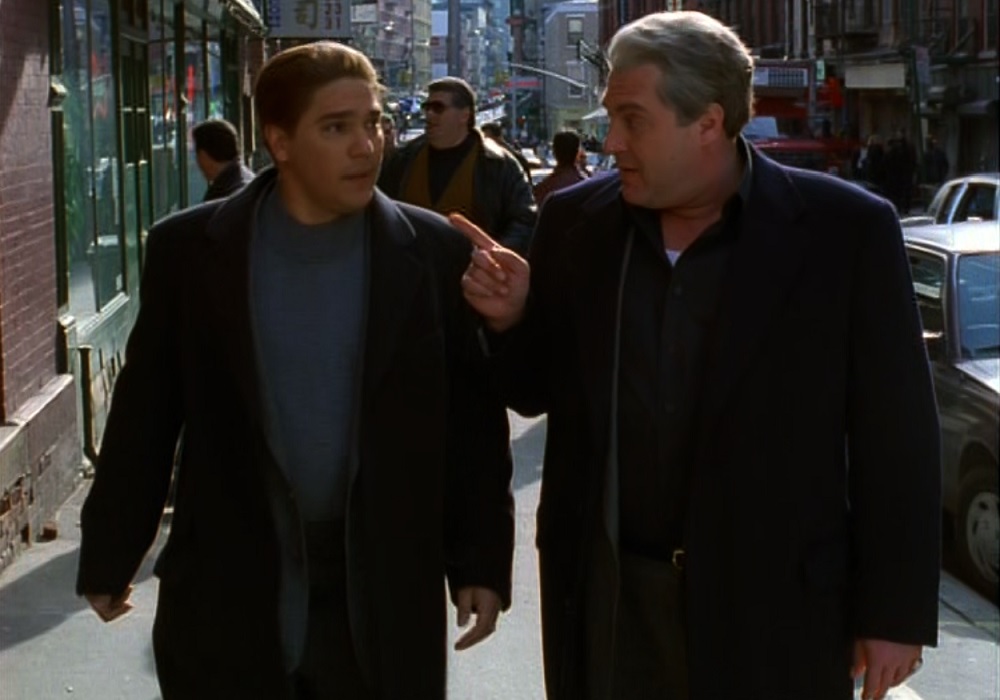
Armand Assante (John Gotti), William Forsythe (Sammy Gravano), Richard C. Sarafian (Paul Castellano), Frank Vincent (Robert DiBernardo), Anthony Quinn (Neil Dellacrose), Dominic Chianese (Joe Armone), Robert Miranda (Frank DeCicco), Scott Cohen (Gene Gotti), Vincent Pastore (Angelo Ruggiero), Tony Sirico (Joe Dimiglia)

John Gotti seemed destined for the Mafia. He was smart, tough, loyal to the code of omertà, never skimmed from the top, and respected the boss’s policy on narcotics. These qualities helped him rise to become boss of the infamous Gambino family in the 1980s. But Gotti also had his flaws: he craved media attention and was too careless about discussing sensitive business in unsecured settings.

Gotti is the biography of one of history’s best-known mobsters. The story begins in 1973, when Gotti first comes to the attention of his crime family, the Gambinos – then the most powerful of New York’s Five Families. Boss of bosses Carlo Gambino asks Gotti for a personal favor, which nearly goes wrong due to the interference from underboss Paul Castellano. The conflict almost dooms Gotti, but his mentor, second underboss Neil Dellacroce (Anthony Quinn), steps in to resolve it.

In the years that follow, Gotti steadily rises through the ranks alongside his close associate and fellow captain Sammy Gravano. When Gambino dies of old age in 1976, he names Castellano as his successor, to the disapproval of Gotti and other top figures. While Gotti was seen as a true man of Cosa Nostra, Castellano was regarded more as a businessman. Tensions eventually culminate in one of the most infamous gangland hits in history: the 1985 assassination of Castellano and his partner outside Sparks Steak House in Manhattan.

Now John Gotti is the boss. But, as noted earlier, his weaknesses ensured that his reign would be relatively short-lived (until 1992 to be precise). As a biographical made-for-tv HBO production, Gotti stands out for offering a complete look at the life and times of a legendary mobster. Armand Assante is memorable in the lead. The supporting cast – featuring many future Sopranos actors – is also strong, with Anthony Quinn and William Forsythe delivering standout performances. If you watch only one television production about the mob, make it Gotti .

Rating:

Quote:
JOHN GOTTI: “A Mexican, a Puerto-Rican and a black guy are sitting in a car. Who’s driving? The police.”

Trivia:
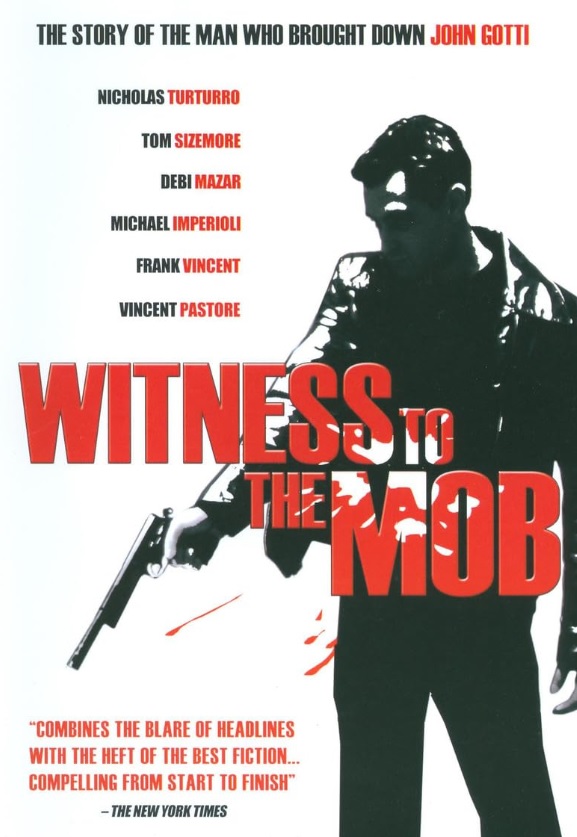
According to IMDb, this film was the highest rated original telefilm in HBO history at that time. The success of the film convinced HBO to cast film co-stars, Dominic Chianese, Vincent Pastore and Tony Sirico in a series in development at the time called The Sopranos (1999).

Backtrack (1990)


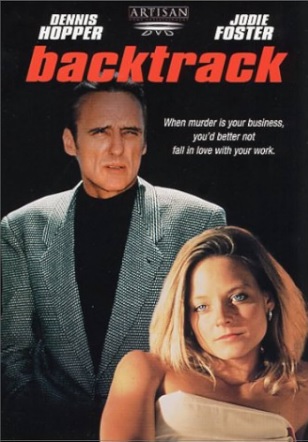
‘When murder is your business, you’d better not fall in love with your work.’

Directed by:
Dennis Hopper

Written by:
Rachel Kronstadt Mann, Ann Louise Bardach

Cast:
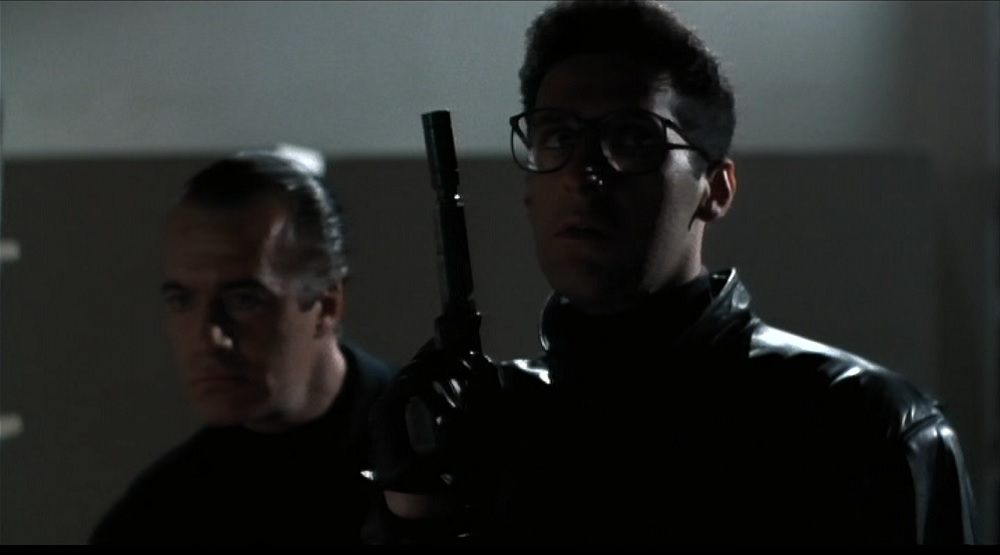
Dennis Hopper (Milo), Jodie Foster (Anne Benton), Joe Pesci (Leo Carelli), Dean Stockwell (John Luponi), Vincent Price (Lino Avoca), John Turturro (Pinella), Fred Ward (Pauling), Julie Adams (Martha), Tony Sirico (Greek), Sy Richardson (Capt. Walker)

Alright, so this is quite a strange film by Dennis Hopper. It was originally released as Catchfire, but that version was apparently so bad that Hopper had his name replaced in the credits with the pseudonym Alan Smithee. Backtrack is the 18-minutes-longer cut made for cable TV, with Hopper’s directorial credit restored.

Jodie Foster plays an artist who witnesses a mafia murder. The mob – led by the explosive Leo Carelli (Joe Pesci, in the same year he gave his ultimate mobster performance in GoodFellas) – hires hitman Milo (Dennis Hopper) to silence her.

What makes it puzzling is the sheer amount of talent involved: Jodie Foster, Joe Pesci (uncredited, despite a substantial role), Dean Stockwell, John Turturro, and others. The film also features familiar faces like Charlie Sheen, Bob Dylan (!), and Tony Sirico (Paulie Walnuts from The Sopranos). Yet, despite this very impressive cast, no one is given particularly strong dialogue – not even the two leads.

The bigger problem is that the film never decides what it wants to be. Is it a tense thriller? An arthouse experiment? A romantic gangster film in the vein of Bonnie and Clyde? Or an action movie given that out of nowhere, there’s a helicopter chase? The tone shifts constantly, leaving the viewer wondering: what exactly am I watching? That question is never answered.

It’s also unclear what motivates Hopper’s character, Milo, a saxophone-playing hitman. He suddenly falls in love with his target, but why? And why does she start to reciprocate? Their relationship feels entirely unconvincing.

Originally, Hopper’s cut ran 180 minutes. It’s difficult to imagine what his true vision for the film might have been. The studio, Vestron Pictures, disliked his version and re-edited it without his consent. Hopper was furious and sued, but by then the company had already gone bankrupt.

In short, Backtrack is a curious film for many reasons, but unfortunately the final product simply doesn’t work. It’s a shame, given the remarkable cast, but the movie is proof that without a strong screenplay, even great talent can’t save the day.

Rating:

Quote:
MILO: “There’s something going on here that I really don’t understand. But I like it.”

Trivia:
The movie includes three Oscar winners: Jodie Foster, Joe Pesci and Bob Dylan; and three Oscar nominees: Dennis Hopper, Catherine Keener and Dean Stockwell.

The Verdict: Wise Guy: David Chase and The Sopranos

As a devoted fan of The Sopranosmy all-time favorite show – I thought there wasn’t much left for me to discover. But HBO’s new two part documentary Wise Guy: David Chase and The Sopranos offers fresh insight, focusing primarily on the mastermind behind the series, David Chase (1945), especially in its first half. Chase is a compelling figure: intelligent, introspective, and a natural storyteller. Director Alex Gibney (Gonzo: The Life and Work of Dr. Hunter S. Thompson, Enron: The Smartest Guys in the Room) places Chase in a metaphorical psychiatrist’s chair, allowing him to speak candidly about his upbringing, his eccentric mother, dreams, death, and how these themes shaped The Sopranos. Chase recalls his time in college down south, which he disliked, though he was exposed to European cinema by directors like Godard, Bergman, and Fellini. “I saw , and I don’t think I understood it, but it blew my mind”, he reflects. This experience ignited his desire to become a filmmaker, leading him to study at Stanford’s film school. The documentary even shows part of his student film – a gangster story with an attempted Godard flair, which is amusing in its ambition. While Chase’s destiny wasn’t in film directing, he found his calling in television. He worked on successful shows like The Rockford Files and Northern Exposure, but his true breakthrough came when HBO greenlit The Sopranos in 1998. The series became a cultural phenomenon, and Chase infused it with deeply personal elements, including therapy sessions and his tumultuous relationship with his mother. Other talented writers like Robin Green and Terence Winter also contributed significantly to the show’s depth. In The Offer, a recent series about the making of The Godfather, we learn that Coppola saw the film as a commentary on capitalism. Similarly, The Sopranos carries an underlying critique of America’s decline. As Chase puts it, “Americans have gotten so materialistic and selfish that it made a mob boss sick.” That vision, combined with Chase’s storytelling genius, is part of what makes The Sopranos so enduringly powerful.

Wise Guy: David Chase and The Sopranos is now available on HBO Max

The verdict: to stream or not to stream? To stream (especially Part 1)

The Sopranos – A Quantum Mechanical Ending (Video)

‘There are only two endings for a high profile guy like me, dead or in the can, big percent of the time.’
– Tony Soprano in ‘For All Debts Public and Private’ (SE4, EP1)

In retrospect, this quote already told us how the show would end. Except it wasn’t one or the other. Rather, Tony Soprano got both. The New Jersey mob boss ended up like physicist Schrödinger’s cat, both dead and alive at the same time.

In this new video on Jeppy’s Video Circus, we see the ending for what it truly is: a kaleidoscope of all possibilities existing simultaneously.