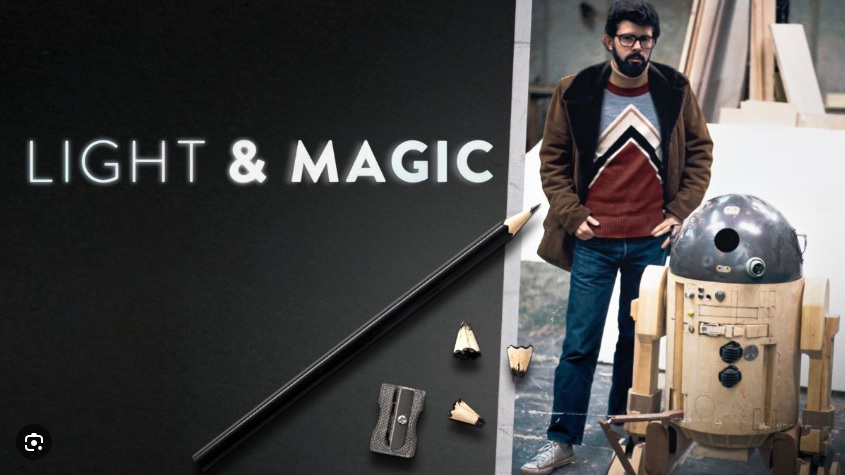
Light & Magic: The Making of Cinema Magic

Special effects have always been a huge part of movies. From King Kong (1933), to the Ray Harryhousen films with the brilliant stop-motion effects, to the stunning 2001: A Space Odyssey (1968). Movies offer viewers the chance to see things that cannot be seen any other way. The six-part Disney Plus documentary Light & Magic tells the story of Industrial Light & Magic (ILM) that played an enormous part in the evolution of visual effects in Hollywood movies. The company was founded by George Lucas when he was working on his first Star Wars movie in 1977. He visited every optical effects company in the industry, but found none that could deliver what he had in mind.

2001: A Space Odyssey had really pushed the boundaries in what could be achieved in visual effects, but the movie was slow. Lucas wanted to create speed and energy. He wanted to see dog flights in space. He met a special effects man called John Dykstra, who was part of a small community of special effects people. He hired him to set up the team of model makers, storyboard artists and camera and light people at the newly founded ILM.

The first two episodes show the extremely challenging process of getting the first Star Wars film made. Thousands of elements had to be combined into extremely complicated shots. There were many desperate moments, but the end result was amazing and audiences and industry experts were blown away. Nobody but the people at ILM could have done it back then. It inspired many directors to also push the envelope in special effects the following years and decades, like James Cameron: “I went home, and said to my wife; ‘I quit my job. You have to pay the bills for a while, cause I’m gonna make a film’.”

The third episode is about ILM’s challenge to create a worthy sequel: The Empire Strikes Back (1980). This classical space opera had even more complicated special effects to accomplish. Like always with sequels, the scale was much larger than the first movie. The team also got other assignments than Star Wars, namely Raiders of the Lost Ark (1981), Dragonslayer (1981) and ET: the Extra-Terrestrial (1982). Movies that were nominated for or won Academy Awards for their amazing visual effects.

Lucas also got interested in computers and he hired Ed Catmull to digitize processes. The computer team made the impressive terraforming sequence in Star Trek 2: The Wrath of Kahn (1982) and this can be seen as the beginning of computer generated effects in movies. This inspired Lucas and the ILM people to get into it. Catmull’s division (Pixar) was later sold to Steve Jobs and they turned it into a cartoon company.

The next major project was Return of the Jedi (1983), the most complex movie in terms of visual effects ever conceived. “It was not a fun movie to make”, says one of the team members. But the result surely was fun to watch. Each of the 900 visual effects shots was a triumph for the ILM team. It was followed up by a number of other eighties classics: Indiana Jones and the Temple of Doom (1984), The Goonies (1985) and Back to the Future (1985). Each new project had its own challenges, and the attitude at ILM always was: ‘let’s do something that’s never been done before.’

In episode 5 titled ‘Morphing’, the computer era is really about to take off. The first successful computer effect was the water creature in James Cameron’s The Abyss (1989). Now that film could be translated into pixels that could be manipulated, anything became possible. But the industry needed a proof of concept and the 90 seconds sequence in The Abyss was just that. But as always with new technology, there is resentment at first. They called digital ‘the dark side’. Digital wasn’t yet seen as the main thing, but as an addition to old school effects. The model shop remained the central place in ILM’s laboratory.

Then one day, James Cameron called and he wanted to do something way bigger than The Abyss. He pitched them: Terminator 2: Judgment Day (1991). A liquid metal man was a huge leap from a water snake. The team had only nine months to create the T-1000. They first had to capture actor Robert Patrick in data. They filmed his muscles and how he moved. Once they had him digital, they combined all special effects with the right lighting, so it all seems to be part of the same world. The end result was stunning. One ILM guy recalls the T-1000 walking through the bars in the mental institution; an impossible shot. This was truly groundbreaking stuff.

The following year, another major movie would truly signal the end of traditional special effects. They had planned to create the dinosaurs in Jurassic Park (1993) with advanced stop motion animation. Spielberg hired the best guys in the business. Stan Winston would design the creatures and Phil Tippett would animate them. He also hired Michael Lantieri, a practical effects genius and Dennis Muren, a visual effects wizard. The team had already built the dinosaurs, and Light & Magic gives us a few images of what the Velociraptors looked like with stop-motion. They’re certainly impressive, but since we are now used to digital effects, the unrealness becomes an issue. Once they did a successful test with a digital T-Rex running through a landscape everybody knew: visual effects will never be the same again. “I feel extinct”, said Tippett, and Spielberg used that line in the movie.

So 1993 was the year of the big breakthrough of digital effects, and they would be used for many successful movies in the nineties, like The Mask (1994), Forrest Gump (1994), Jumanji (1995) and Star Wars Episode I: The Phantom Menace (1999). The documentary series ends with the final innovation that the visionary George Lucas had anticipated all along. The tv-series The Mandalorian (2019) is shot entirely in a round set called ‘The Volume’. This is ILM’s replacement for the green-screen. It uses a massive, curved LED screen to create photorealistic backdrops, circumventing the need for outdoor locations or extensive physical sets. Due to this innovation, The Mandalorian is able to deliver Star Wars effects on a tv-schedule and budget. ILM, which had started with a group of creative designers in a warehouse at Van Nuys, is still pushing the boundaries in creating cinema magic today, now also for the small screen.

5 geheimen van uitschieters (waar je geen invloed op hebt)

5 geheimen van uitschieters 1
Als het aankomt op geniën en uitblinkers in welk veld dan ook, zijn we geneigd te kijken naar hun unieke talenten en geniale prestaties. In ‘Outliers: The Story of Succes’ kijkt Malcolm Gladwell juist naar de dingen die hen zijn overkomen die hun succes verklaren. Hiermee zegt hij niet dat de bestudeerde uitschieters geen bijzondere talenten hebben, alleen dat de omstandigheden ervoor gezorgd hebben dat ze hun talenten optimaal hebben kunnen benutten. Hun succes komt niet alleen uit hun eigen acties voort. Welke toevalligheden kunnen bijdragen aan succes?

1. Geboortedatum
Hoe komt het dat Canadese tophockeyers en Kroatische topvoetballers bijna allemaal geboren zijn in januari, februari of maart? Omdat jonge spelers die in deze maanden geboren zijn, veel meer hebben kunnen oefenen dan anderen op het moment dat de selectie voor het volgende niveau plaatsvindt. Vervolgens stromen ze door en kunnen ze weer meer oefenen en zo gaat het door en door. De voorsprong die ze daarmee krijgen is al snel niet meer in te halen. De manier waarop het selectieproces is ingericht vormt in dit geval de omstandigheid waardoor spelers die in januari, februari of maart geboren zijn in staat worden gesteld door te breken.

2. Geboortejaar
Waarom zijn veel leidende figuren uit de computerindustrie uit Silicon Valley allemaal geboren in 1955 (zoals Bill Gates en Steve Jobs)? Omdat op het moment dat de eerste doe-het-zelf thuiscomputer uitkwam (een zeer belangrijk moment in de opkomst van de PC), deze pioniers precies op de leeftijd waren dat ze op deze ontwikkeling konden inspelen. Al waren ze jonger geweest hadden ze de kans gemist, en als ze ouder waren geweest waren ze ongetwijfeld al aan het werk geweest voor een multinational, zoals IBM. Nu waren ze begin 20 toen dit gebeurde: precies de juiste leeftijd om dit unieke moment in de geschiedenis aan te grijpen.

5 geheimen van uitschieters 2
Zelfs uitblinkers die bovenstaande opgave kunnen oplossen (ik niet dus), hoeven het nog niet te maken zonder de juiste omstandigheden. Het antwoord* vind je onderaan deze blog.

3. Oefentijd
Gladwell is niet de eerste die de 10.000 uur regel beschrijft; de tijd die je minimaal moet oefenen om ergens meester in te worden. The Beatles (toen nog The Quarrymen) werden geselecteerd voor een clubtour in Hamburg. Daar speelden ze avond aan avond wel 8 uur achter elkaar. Dit dwong ze een enorm repertoire op te bouwen en zich te bekwamen in optreden. Er was na deze periode geen band te vinden die beter op elkaar ingespeeld was en die een groter uithoudingsvermogen had. De kans om zoveel te oefenen is onbetaalbaar, ervoer ook Bill Gates die op de enige universiteit ter wereld terecht kwam waar hij bijna onbeperkt kon oefenen in programmeren (computers – die toen nog een hele kamer in beslag namen – waren zeer schaars).

4. Sociale achtergrond
Gladwell brengt een bezoekje aan Christopher Langan – ook wel de slimste man ter wereld genoemd met een IQ van rond de 200. Waarom heeft dit genie het ondanks zijn verbluffende cognitieve capaciteiten niet gemaakt als Einstein-opvolger? Gladwell wijt het aan zijn sociale achtergrond. Langan groeide op in een arm gezin en zijn ouders brachten hem geen praktische intelligentie bij, iets wat volgens de auteur onmisbaar is voor succes. Een kenmerkend voorbeeld uit Langlan’s leven is dat hij door omstandigheden niet op de normale schooltijden aanwezig kon zijn, en hij er niet in slaagde de docenten te overtuigen voor hem een aanpassing te maken. Hadden ze geweten van zijn enorme intellect hadden ze hem zeker geholpen, maar helaas. Langan is er nooit in geslaagd door te breken en anderen heel erg geïnteresseerd te krijgen in zijn theorieën.

5. Culturele achtergrond
In China hebben ze de uitdrukking: ‘niemand die 360 dagen per jaar voor 6 uur opstaat, zal er niet in slagen zijn familie rijk te maken’. 360 dagen per jaar! Dat zijn nog eens werktijden. De meeste Chinezen waren in het verleden rijstboeren en het onderhouden van een rijstveld (gemiddeld zo groot als een hotelkamer) is ongelofelijk zwaar en precies werk. Deze werkijver is steeds genetisch doorgegeven aan de volgende generatie. Zou het kunnen dat Chinese studenten hierdoor gemiddeld veel beter zijn in wiskunde dan hun Amerikaanse medestudenten?

De niet-succesvolle onder ons kunnen zich met deze wetenschap iets beter over zichzelf gaan voelen (en de uitschieters iets minder goed).

* Het correcte antwoord van de puzzel is A. Geen idee waarom. Probeer er maar eens een patroon in te ontdekken; ik ben er niet in geslaagd.

Betaald films streamen: De beste aanbieders in Nederland

Wie illegaal films download gaat naar de hel. Steve Jobs zei het al toen hij de iTunes Store lanceerde in 2003: ‘Betaal voor je muziek, dat is beter voor je karma.’ Hij heeft natuurlijk gelijk en de iTunes Store was ook een goede oplossing voor artiesten en muziekmaatschappijen om nog wat te verdienen aan hun opgenomen werk.

Op filmgebied is echter niet zo snel op dergelijke schaal een betaalde dienst verschenen. De mindset is Nederland is dat je films gewoon download. Als je daar voor gaat betalen ben je een schlemiel, al is het natuurlijk gewoon diefstal. Deze mentaliteit heeft al veel distributeurs in de problemen gebracht en geleid tot het faillissement van A-Film.

Betaald films streamen

Laat het dus duidelijk zijn; illegaal downloaden doe je niet, je betaalt voor de films die je wilt kijken. Maar waar kun je daarvoor het beste terecht? Ik denk dat iTunes de beste oplossing is. Oké, iTunes is helemaal geen streamingdienst, maar je kunt er wel films huren en kopen. En het aanbod is enorm: er zijn 50.000 titels beschikbaar! Vergelijk dat met streamingsdiensten als Videoland en Netflix met 1500 titels en je begrijpt waarom ik enthousiast ben over deze Apple Store.

Bovendien verschijnen nieuwe films direct in de iTunes Store en dat is bij streamingdiensten niet het geval. Tot dit moment mogen nieuwe films namelijk niet worden opgenomen in diensten, zoals Netflix, Videoland en UPC MyPrime. Videoland heeft hier wel een oplossing voor gevonden. In het systeem staan namelijk ook recente films. Wil je deze kijken, dan kun je de films als losse titels huren. Dat kan ook bij Pathé-thuis.nl.

Maar wat als je gewoon wilt streamen en geen zin hebt om los films te huren of dat te duur vindt? Tja, dan ben je waarschijnlijk het beste af met Netflix. Voor een redelijke prijs, 10 euro per maand, heb je toegang tot een zeer aantrekkelijk aanbod series (House of Cards, Better Call Saul, Fargo en vele anderen). Het filmaanbod is echter heel karig (ze hebben maar één western in hun hele aanbod) en nieuwe films tref je helemaal niet aan. Toch is Netflix vergeleken met de anderen een prima aanbieder, maar voor een echte filmverslinder zal het niet bevredigend zijn.

HBO zou ik niet aanraden omdat het heel sterk leunt op één topserie (Game of Thrones) maar verder weinig te bieden heeft, en bovendien een waardeloze app heeft. Een aanbieder die heel interessant zou kunnen zijn is Amazon. Maar hun streamingdienst Amazon Prime is nog niet toegankelijk in Nederland. Jammer jammer, want het filmaanbod ziet er heel veel veel beter uit dan wat de huidige Nederlandse aanbieders hebben. Ook ontwikkelt Amazon goede eigen series, zoals ‘Bosch’. Het ziet er erg goed uit. Misschien dat wanneer Amazon fysiek aanwezig is in Nederland vanaf oktober dit jaar, dat ook de streamingdiensten toegankelijk worden. Ik wordt klant, want Amazon is – net als Apple – een waanzinnig bedrijf dat zijn klanten altijd op nummer 1 zet.

Betaald films streamen 2

Writing’s on the Wall

Big night.

In a few hours seeing the latest Bond SPECTREcle, as a completion of my major 007 project. Quite a happy prospect.

It is also an existential quest, as always. My parents in law are moving out of town. They sold their place to a crazy Chinese Dutch entrepreneur, and will move to Vijfhuizen early February next year. This will be the last night I’m crashing here. Me and my little girl.

The pieces are always moving. Constantly. It is enough to drive any man crazy. Still searching for a littl’ bit of purpose, eh? Yesterday, I attended a conference for credit managers. Does that sound depressing? Not to me, I’m used to it. But… I did witness this kind of odd, kind of scary phenomenon. A Dutch super star CFO, yes they do exist, who made it big in Switzerland as finance chief of a major logistics company, attended the conference. He did a session on global working capital, which I covered for my finance platform. In the room, there were about 20 credit managers, 25 tops. And the CFO started the session by saying he reached the age of 66 and recently retired… So what right?

Now here’s the scary part. If this guy – who made it to the board of a multinational, and was in charge of thousands of people, and billions of euro’s worth of assets – is now doing speeches for a bunch of credit controllers, if that is his future, then WHAT THE HELL IS MY FUTURE GONNA LOOK LIKE? Or for any other sad chap around me? Yes, even for the likes of Brad Pitt. Because if that guy completed a movie… let’s say Se7en. He completed Se7en and it’s a huge hit, right? And for a while this mofo is the hottest shit on the planet, and everything’s great for him, BUT then this tropical wind of bliss will blow over, people will move over to the Next Gigantic Thing, and Pitt Boy will be left a sorry ass wanker. A sad tad. Yes, it is true. It is true because it’s experience.

There is nothing you can do. No way to become immortal. I don’t care if your name is Michael Jordan, Steve Jobs or Freddie Mercury. Today it is SPECTRE. Tomorrow some other big thing will come along. Welcome to human existence.

There is a cure though: alcohol.

I am sitting in the bar of the Krasnapolsky right now ordering wine 7 euro’s a glass. One after the other… I am meeting my homeboy Willem in 20 minutes. Then we’ll grab a bite and check in for my childhood hero. My hero still… I’ll report afterwards.

Editor’s Note: The rest of the notebook consists of nothing but incomprehensible scratchings. There is only one sentence readable. It says: ‘Live raw and always live in the moment’.

Writings on the Wall 2