In anticipation of SPECTRE, FilmDungeon.com editor Jeppe Kleyngeld lists his favourite things about the James Bond series in 12 unique features. Enjoy!
Continuation of:

The James Bond Films Rated From Worst To Best (24-11)
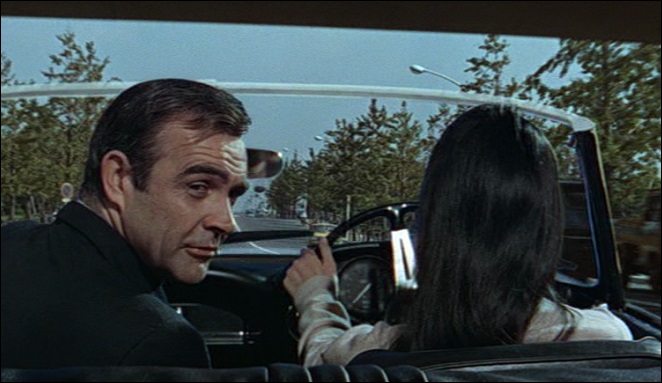
10. Never Say Never Again (1983)
Director: Irvin Kershner
Written by: Jack Whittingham (story), Kevin McClory (story), Ian Flemming (story), Lorenzo Semple Jr. (screenplay)
Cast: Sean Connery (James Bond), Kim Basinger (Domino Petachi), Klaus Maria Brandauer (Maximilian Largo), Barbara Carrera (Fatima Blush), Max von Sydow (Ernst Stavro Blofeld)

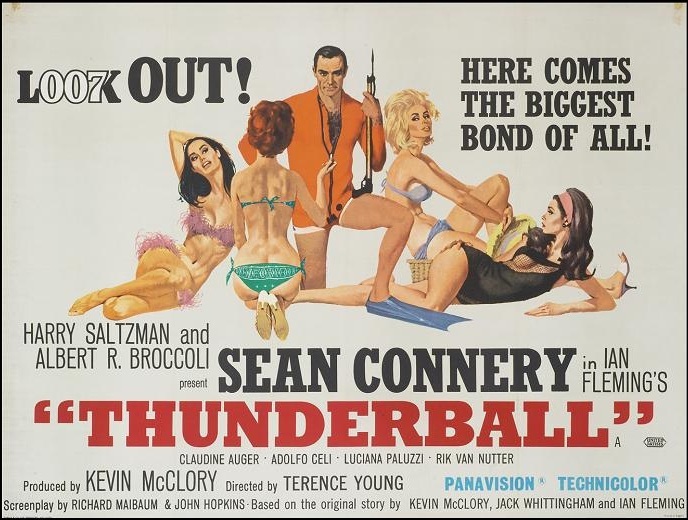
Bond goes to a health centre to eliminate his ’free radicals’ on orders of the new M (played by Edward Fox). Here he stumbles on a SPECTRE plot. The evildoers manage to steal two nuclear weapons and demand money from the Western governments to return them. This only unofficial Bond film (not produced by EON Productions that owns the series) was basically made because of remake rights owned by screenwriter Kevin McClory relating to THUNDERBALL. The title of the movie is allegedly based on what Connery told his wife about playing Bond again. At the time this movie came out, the official Bond movie OCTOPUSSY was also released starring Connery’s friend Roger Moore. The films did equally well at the box office. So how is this unofficial part? Pretty good actually. It takes getting used to all these unknown actors playing familiar characters, but Connery is great as always in the lead role. The supporting cast is also a major plus; a terrific Bond girl (Kim Basinger), villain (Klaus Maria Brandauer) and – pretty rare in the Bond series – a femme fatale, wonderfully played by Barbara Carrera. NEVER SAY NEVER AGAIN basically has everything you could ask of a Bond movie: the perfect location (Bahamas’), pretty girls, naughty villains, dangerous creatures (sharks) and plenty of humour and suspense. Therefore too bad Connery’s final word is ‘Never’ as he winks to the audience.
Best moment: Bond and villain Largo play a modern computerized version of Risk called ‘world domination’. Whenever you lose, the controls give you electric shocks.
9. Skyfall (2012)
Director: Sam Mendes
Written by: Neal Purvis (written by), Robert Wade (written by), John Logan (written by)
Cast: Daniel Craig (James Bond), Judi Dench (M), Javier Bardem (Silva), Ralph Fiennes (Gareth Mallory), Naomie Harris (Eve)
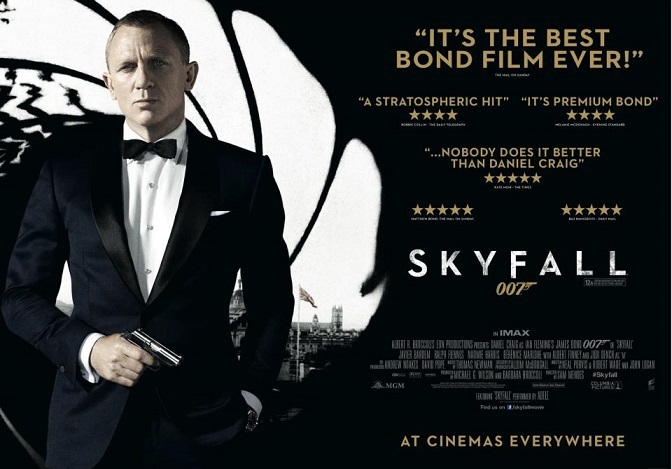
Bond’s 50 anniversary movie is a real blast. Audiences loved it and SKYFALL became the highest-grossing film in the Bond series. This time our favourite spy is going after a cyber-terrorist who is keen on discrediting M for something she did in the past. Much of the movie appropriately takes place in London, where MI6’s headquarter is located. The film sees the return of two recurring characters to the series after an absence of two films: Q, played by Ben Whishaw, and Eve Moneypenny, played by Naomie Harris. SKYFALL is the first Bond movie to show us more of the origin of the James Bond character, as he returns to his parents’ home in Scotland for a final showdown with bad guy Silva (Javier Bardem). Judi Dench has more screen time in this film alone than Desmond Llewelyn had in his 17 films as Q, making her portrayal of M the most common character in the series after Bond himself.
Best moment: Bond meeting the new Q at MI6’s headquarters, a very young computer Wizard. ‘You still have spots’, Bond sneers. Then Q hands him his equipment: a gun and a radio. ‘Not exactly Christmas is it?’, remarks 007. Q: ‘What were you expecting: an exploding pen? We don’t really go for that anymore. Please return the equipment in one piece.’ Brave new world.
8. Dr. No (1962)
Director: Terence Young
Written by: Richard Maibaum (screenplay), Johanna Harwood (screenplay), Berkely Mather (screenplay), Ian Flemming (novel)
Cast: Sean Connery (James Bond), Ursula Andress (Honey Rider), Joseph Wiseman (Dr. No), Jack Lord (Felix Leiter), Bernard Lee (M)

The first ever Bond movie is a suave and engaging spy story. Everything is still fresh and original. Bond gets his hands on his trademark gun, the Walther PPK. We also witness his first flirtation with Miss Moneypenny and see him make his first kill (a disarmed man even, James Bond is a killer. That is clearly established here). It is a true delight, to see Bond take on his challenging assignment in such a professional manner. This was chosen to be the inaugural film in the James Bond series as the plot of the source novel is the most straightforward. It has only one major location (Jamaica) and only one big special effects set piece (Dr. No’s nuclear missile basis). The plot contains the highest level of mystery of the Flemming novels. Bond still really functions as detective here, working on a big case and putting all the pieces together. Connery is superb in his first turn as 007, Andress is a delightful Bond-girl and Wiseman makes a decent baddie as metal-handed Dr. No. All in all, a terrific start of the Bond legend.
Best moment: The scene in which Bond gets a night time visit from a deadly spider – a gift from Dr. No – is very tense.
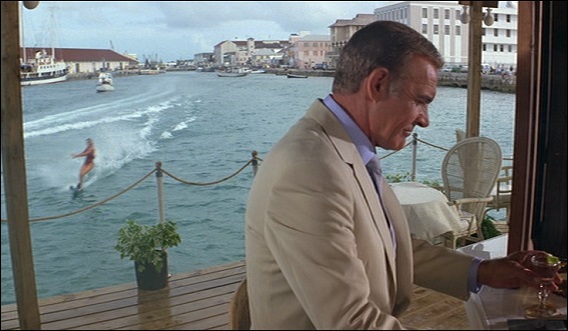
Never Say Never Again
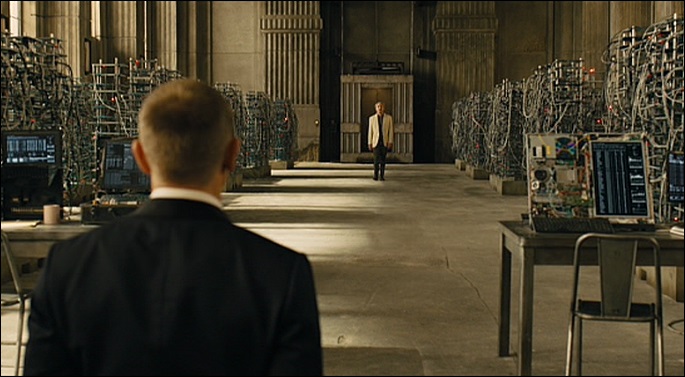
Skyfall
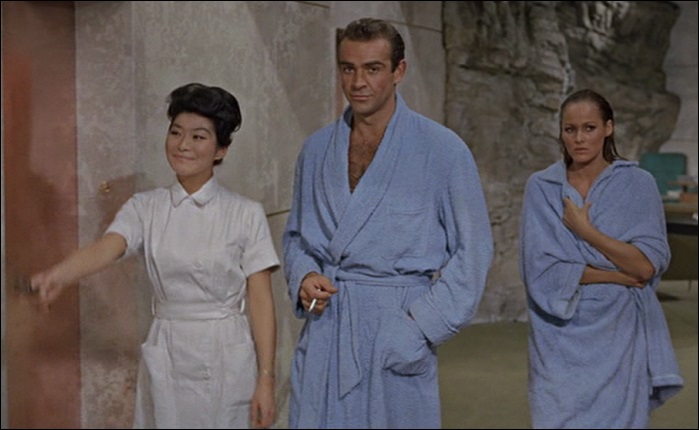
Dr. No
7. Casino Royale (2006)
Director: Martin Campbell
Written by: Neal Purvis (screenplay), Robert Wade (screenplay), Paul Haggis (screenplay), Ian Flemming (novel)
Cast: Daniel Craig (James Bond), Eva Green (Vesper Lynd), Mads Mikkelsen (Le Chiffre), Judi Dench (M), Jeffrey Wright (Felix Leiter)

Terrific reboot of the Bond series. Director Martin Campbell, who already gave us the first real modern Bond GOLDENEYE in 1995, introduces us to a fresh new 007, played by the superb Daniel Craig. On his first mission ever, Bond unravels a plan by banker and terrorist financier Le Chiffre to destroy a prototype Skyfleet airliner and crash the company’s stock prices. Bond prevents the attack. Left with a huge loss and under pressure to recoup his terrorist clients’ money, Le Chiffre sets up a high-stakes poker tournament at the Casino Royale in Montenegro. Hoping that a defeat would force Le Chiffre to aid the British government in exchange for protection from his creditors, MI6 enters Bond into the tournament. Then Bond meets British treasury agent Vesper Lynd, played by the stunning Eva Green, and quickly falls in love… From start to finish, CASINO ROYALE is truly awesome. It is full of clever references like bond winning an Aston Martin. It also contains a number of unforgettable 007 moments, like the Madagascar Foot Chase. Dear producers, keep ‘m coming like this one.
Best moment: Well, this is CASINO ROYALE, the poker tournament – including a cardiac arrest / poisoning and a deadly staircase fight – is a real blast!
6. From Russia with Love (1963)
Director: Terence Young
Written by: Richard Maibaum (screenplay), Johanna Harwood (adaptation), Ian Flemming (novel)
Cast: Sean Connery (James Bond), Daniela Bianchi (Tatiana Romanova), Pedro Armendáriz (Kerim Bey). Lotte Lenya (Rosa Klebb), Robert Shaw (Donald Grant)
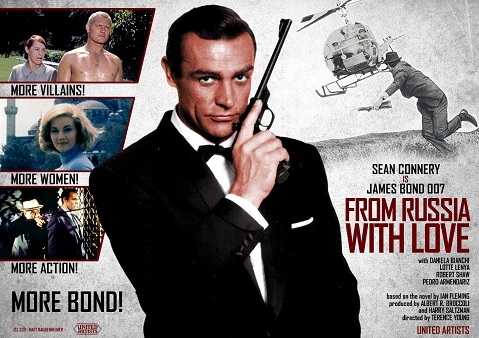
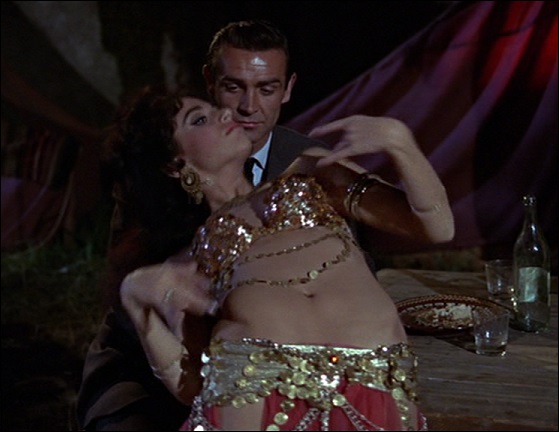
The best Bond film according to many. Sinister villains from SPECTRE (Special Executive for Counter-intelligence, Terrorism, Revenge and Extortion) want to steal a special cipher machine from the Russians that can decrypt secret messages. They also want revenge on Bond for killing their operative Dr. No in the previous instalment. James is in terrific shape. He is making love in his first scene and snogging another girl in his last. The whole adventure in between is tense, sexy and exciting. It is the cat and mouse game between Bond and SPECTRE’s killer Donald Grant that captivates most. Interesting trivia: The opening scene where James Bond’s doppelganger is stalked and killed by Grant was originally written to appear later in the film. However, editor Peter R. Hunt figured it would work better as a teaser at the start of the movie, thus instigating the now-traditional pre-credits sequence.
Best moment: One of the final action scenes in which Bond is attacked by a helicopter can match the legendary airplane attack in field in Hitchcock’s NORTH BY NORTHWEST.
5. For Your Eyes Only (1981)
Director: John Glen
Written by: Richard Maibaum (screenplay), Michael G. Wilson (screenplay), Ian Flemming (stories)
Cast: Roger Moore (James Bond), Carole Bouquet (Melina Havelock), Topol (Milos Colombo), Lynn-Holly Johnson (Bibi Dahl), Julian Glover (Kristatos)

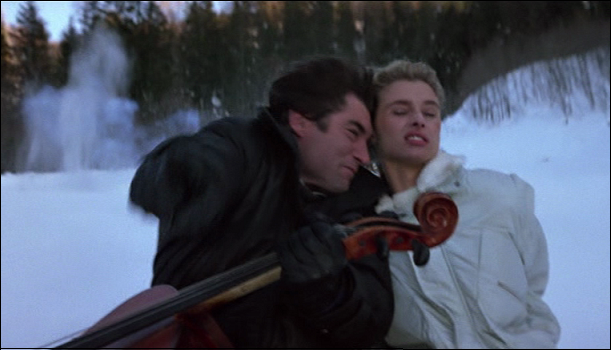
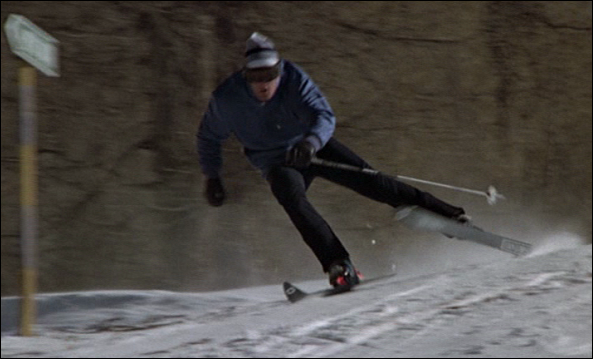
After two ‘rescue the world’ missions in MOONRAKER and THE SPY WHO LOVED ME, the producers felt it was time again for a more regular spy mission without all the high-tech and gadgets. Bond goes after the ATAC – an Automatic Targeting Attack Communicator that uses an ultra low frequency to order submarines to launch missiles. The device is stolen in Greece and Bond is to find out by whom. He soon meets the gorgeous Melina who is after the same people as James for the murder of her parents. Together, they make a passionate team as they travel from Madrid to Switzerland to finally Greece. This could be the most romantic Bond film as the chemistry between the two leads is heartfelt. Director John Glen, who had previously edited and acted as second-unit director on a number of Bond films, makes this the second best Roger Moore entry with a good story, tension and dynamic action.
Best moment: James climbing a very steep mountain to get to villain Kristatos’ hide-out has Hitchcock-like tension.

Casino Royale
From Russia with Love

For Your Eyes Only
4. GoldenEye (1995)
Director: Martin Campbell
Written by: Jeffrey Caine (screenplay), Bruce Feirstein (screenplay), Michael France (story), Ian Flemming (characters)
Cast: Pierce Brosnan (James Bond), Sean Bean (Alec Trevelyan), Izabella Scorupco (Natalya Simonova), Famke Janssen (Xenia Onatopp), Joe Don Baker (Jack Wade)

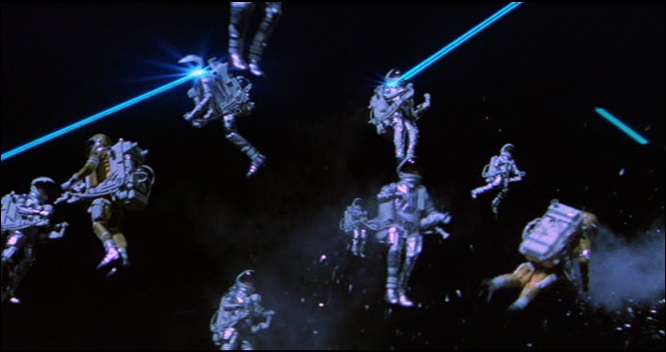
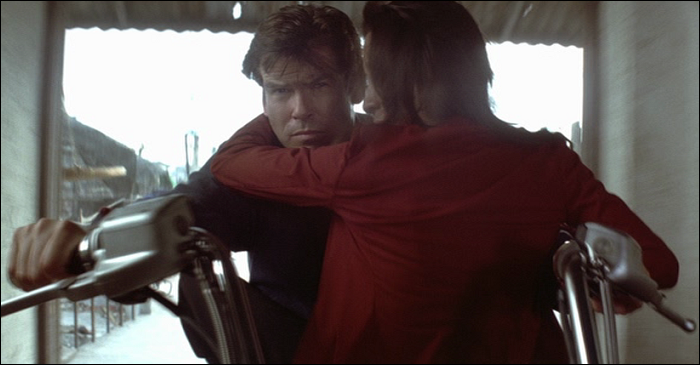
After a seven year hiatus due to legal issues, Bond is back with a vengeance in GOLDENEYE. There have been a lot of changes, and they all turned out surprisingly well. Brosnan makes an excellent 007, and he gets support from a strong supporting cast. On the good side, we have Judi Dench and Joe Don Baker as terrific additions. On the evil side, Famke Janssen and Sean Bean make lasting impressions. The story revolves around the powerful GoldenEye satellite weapons that can create electromagnetic pulses. The baddies in GOLDENEYE want to use it to cause a global financial meltdown. GOLDENEYE has all the elements that make Bond movies such awesome experiences. The locations are stunning and the action sequences and effects are truly remarkable in GOLDENEYE. For instance, the opening 220 meter bungee jump at Archangel, Russia – shot at the Verzasca Dam in Switzerland – was voted the best movie stunt of all time in a 2002 Sky Movies poll, and set a record for the highest bungee jump off a fixed structure. Then there is the tank-chase through St. Petersburg that raises the bar for destructive chases. All in all, GOLDENEYE confirms that Bond, without a doubt, still has a place in modern times.
Best moment: Judi Dench does such a showstealer in her briefing of James that it surpasses all the other great moments in the film. ‘I think you’re a sexist, misogynist dinosaur. A relic of the Cold War, whose boyish charms, though wasted on me, obviously appealed to that young woman I sent out to evaluate you.’ Brilliant casting.
3. Licence to Kill (1989)
Director: John Glen
Written by: Richard Maibaum (screenplay), Michael G. Wilson (screenplay), Ian Flemming (characters)
Cast: Timothy Dalton (James Bond), Carey Lowell (Pam Bouvier), Robert Davi (Franz Sanchez), Talisa Soto (Lupe Lamora), Anthony Zerbe (Milton Krest)

Bond loses his licence to kill when he chooses to go on a private vendetta against a drug lord who tortured his CIA-buddy Felix Leiter and killed his wife. Second and final Bond-film starring Timothy Dalton as 007. The previous one, THE LIVING DAYLIGHTS, was still quite humorous because the script was originally written with Roger Moore in mind. LICENCE TO KILL, on the other hand, was written tailor made for Dalton’s more solemn take on the role. Therefore, this is the most dark and violent entry in the series. It is also one of the best. LICENCE TO KILL features some of the most ambitious stunts and action sequences of any Bond movie. After the release of the film, legal wrangling over control of the series and the James Bond character resulted in a six-year long delay in production of the next Bond film (GOLDENEYE) which resulted in Dalton deciding not to return. It is also the final Bond film for actors Robert Brown (M) and Caroline Bliss (Moneypenny), screenwriter Richard Maibaum (he died in 1991), title designer Maurice Binder (he also died in 1991), director John Glen, and producer Albert R. Broccoli, although he would later act as a consulting producer for GOLDENEYE before his death.
Best moment: Many, but the final chase in the mountains is unforgettable.
2. Goldfinger (1964)
Director: Guy Hamilton
Written by: Richard Maibaum (screenplay), Paul Dehn (screenplay), Ian Flemming (novel)
Cast: Sean Connery (James Bond), Honor Blackman (Pussy Galore), Gert Frobe (Auric Goldfinger), Shirley Eaton (Jill Masterson), Tania Mallet (Tilly Masterson)

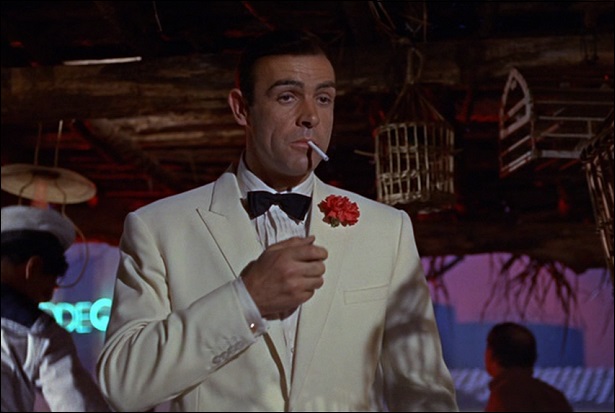
‘Everything he touches turns to excitement’, states the tagline on the USA-poster. Well it’s true. GOLDFINGER is the terrific third entry in the Bond series and the second to have the main villain’s name as title. GOLDFINGER is daring in scale and ambitious in plot. No longer is James merely doing detective work, he has to prevent a mass slaughter and economic catastrophe. The girls, the villains, Connery… they all run like a Swiss clockwork in a movie that entertains and thrills throughout its running time. Visually, the film is great (the girl covered in gold scene for example is magnificent) and the beautiful ‘Goldfinger’ theme music supports the exciting action. This is also the first Bond movie that features lot’s of gadgets and high tech stuff, which was appreciated by the fans. In short; a near perfect Bond experience!
Best moment: Bond nearly getting castrated by an industrial laser in Goldfinger’s foundry is terrifying.

GoldenEye

Licence to Kill
Goldfinger
1. The Spy Who Loved Me (1977)
Director: Lewis Gilbert
Written by: Richard Maibaum (screenplay), Christopher Wood (screenplay), Ian Flemming (characters)
Cast: Roger Moore (James Bond), Barbara Bach (Major Anya Amasova / Agent XXX), Curt Jurgens (Karl Stromberg), Richard Kiel (Jaws), Caroline Munro (Naomi)
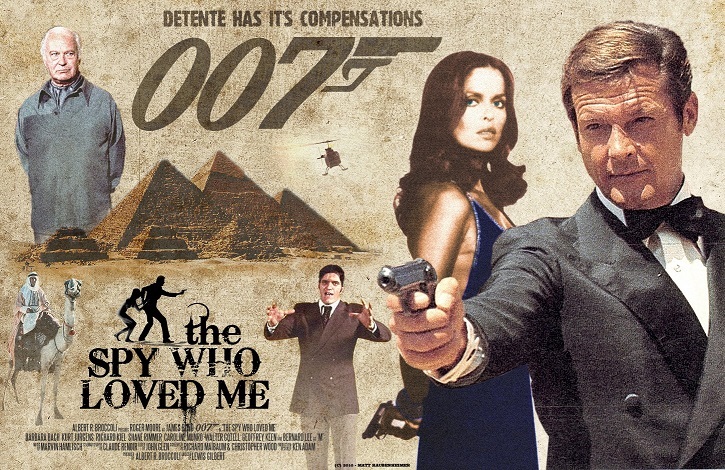
This one has it all; terrific locations (Austria, Egypt, Sardinia), dynamic action, sinister villains and an intriguing save the world plot. Bond teams up with his beautiful Russian counterpart Anya Amasova and together they must discover the location of a submarine tracking device and stop whoever is using it. From the first to the last minute, THE SPY WHO LOVED ME thrills and entertains. Nobody does it better indeed. This entry was also creator Ian Flemming’s favourite, together with GOLDFINGER and FROM RUSSIA WITH LOVE.
Best moment: Difficult, but the introduction to central villain Stromberg is superb. His ‘house’ is the jawdropping sea city Atlantis where we witness him feeding his secretary to the sharks, assassinating two other accomplices and assigning the terrible killer Jaws.
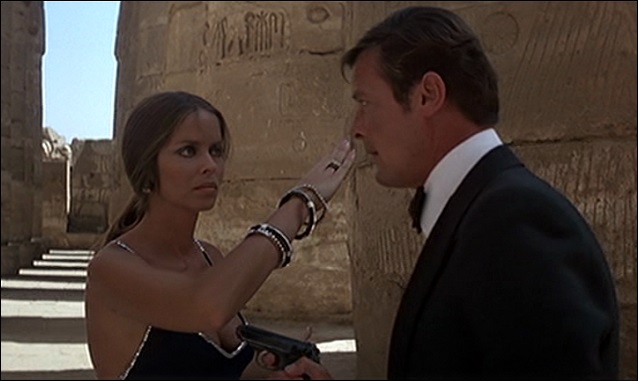
The Spy Who Loved Me
Read also:
James Bond: 10 Best Title Sequence

James Bond: 10 Greatest Villains
James Bond: 10 Most Memorable Deaths (Caused by Bond’s Adversaries)