The Sopranos Ending Explained: Tony is not Definitively Dead, but his Future Looks Bleak

10 June 2007, 10 years ago today, the legendary finale of the legendary HBO-show ‘The Sopranos’ was aired. It became perhaps the most discussed moment in television-history…

I remember the day after when everybody was confused as hell about it (or just pissed off). Creator David Chase said he hadn’t intended to be coy, he just wanted to entertain his audience. That may be so, but what was the audience to make of the ambiguous ending in which protagonist Tony Soprano – after having his arch enemy Phil Leotardo killed – visits an American diner with his family to have onion rings? A suspicious looking man sits at the bar and goes to the bathroom later. And Tony tells his wife Carmella that one of his crew members, Carlo, will testify against him. That’s basically it. Then the screen suddenly goes black while on the jukebox, the song ‘Don’t Stop Believing’ by Journey is still playing. At ‘don’t stop’, it stops.

For those who need a reminder, it’s right here:

One theory that quickly appeared was that the suspicious man shot Tony when exiting the bathroom and that the moment this happened, the camera switched to Tony’s point of view, indicating his death with the black screen. Others claimed that the ‘hints’ for Tony’s suggested death didn’t mean anything, and that the show ‘just ended’.

These two opinions lead to furious debate on the International Movie Database that went on for nearly ten years, until IMDb shut down the message board early 2017.

In this article I will explain what really happened, what David Chase meant (and didn’t mean), and how we are to interpret certain clues. But in advance: both of the theories stated above are wrong. Chase has said so himself. Obviously there were clues for Tony’s death – it’s ridiculous and insulting to Chase to state the show simply ended. But he didn’t intend for the viewer to interpret these clues as Tony’s definitive death either… Here’s why…

‘There are only two endings for a high profile guy like me, dead or in the can, big percent of the time.’
– Tony Soprano in ‘For All Debts Public and Private’ (SE4, EP1)

In retrospect, this quote already told us how the show would end. Except it wasn’t one or the other. Rather, Tony Soprano got both. The New Jersey mob boss ended up like physicist Schrödinger’s cat, both dead and alive at the same time.

Why did he get both endings? Well, there are certainly clues that a hitman is after Tony in the final scene. I won’t go into great detail about this, but the most important clues are several instances of foreshadowing during the final season, most notably his brother-in-law Bobby Bacala telling Tony: ‘you probably don’t even hear it when it happens’ and New York mobster Gerry Torciano being murdered in a restaurant and Silvio not realizing it till blood splattered in his face. The way the final scene is shot – moving in and out Tony’s point of view – could mean a bullet entered his brain the moment the screen goes black.

But murder is certainly not the only option, as there is also the threat of indictment. as one of Tony’s associates, Carlo, has flipped and is about to spill his guts to the FBI. That means that besides the option of Tony getting whacked, he could be indicted. I refer once again to the quote above.

Dead or in the can… Wasn’t it Carmela who – earlier during the final season – feared these two options like a piano hanging over their heads? It was also Carmela who asked Tony in the episode ‘Sopranos Home Movies’ (during the opening scène of the final season, that should not be overlooked): ‘Is this it?’, referring to the FBI ringing the doorbell.

David Chase has said about the ending: ‘There was nothing definite about what happened, but there was a clean trend on view – a definite sense of what Tony and Carmela’s future looks like. Whether it happened that night or some other night doesn’t really matter.’

It is interesting that Chase uses the word ‘it’. This could refer to Tony’s death, but it might as well be referring to Tony’s arrest. Both options would have a significant impact on Tony and Carmela’s (lack of) future. That is the explanation for the ending right there. There is a sense of impending doom, but by the time the screen goes black, nothing has happened yet, unless a bullet has entered Tony’s brain at that point, ending his life immediately. And there are certainly reasons to think that, but it remains only one out of several bleak options for Tony’s future.

The ending is just simply showing us how Tony’s life is at this point. What has the show been about in the first place? In simple terms: a mobster in therapy. The ending shows us that Tony has made his choices. He had the opportunity to change his ways, but didn’t. So the consequences are his and are very likely going to be severe, like the monks told him in his coma dream in the episode ‘Join the Club’. A very significant scene earlier in the season was a conversation Tony had with Little Carmine Lupertazzi in which Lupertazzi (who was generally considered an idiot in mob circles) told Tony he had quit the gangster life in order to spend more time with his family in peace and happiness. If only Tony had made the same decision he could have perhaps avoided the only two endings of the mob life. Now it’s definitely too late.

That is the point the final scene makes. Death could come knocking at any time and for any reason. An indictment could come at any time as well. With Carlo in the hands of the feds, it is only a matter of time before they come for Tony….

We have witnessed the life of Tony for eight years. We have seen him steal, scheme, cheat and murder. He also reaped the benefits of his criminal life: woman, luxury, respect, money. But off course a price has to be paid. The mobster’s life is destructive, as we have seen many times during the series…

Most of Tony’s mob friends, who lived the same type of life, are now dead or in the can (but mostly dead) or in a coma. For Tony, who was always a little luckier and smarter, the consequences come a little later. David Chase didn’t want to show that crime doesn’t pay, but he also didn’t want to show that crime does pay. The ending gives us exactly that; a mosaic of possibilities, limited down to the overall negative. Logical consequences of a life in crime, but nowhere moralistic. The ending in that sense is crystal clear, but to explain it would be to diminish it. And that’s what Chase meant with: ‘there is no mystery’ and ‘I’m not trying to be coy’.

The major point is to not look at the ending as storytelling, but more in terms of the overall themes that the show was covering. David Chase has said he was inspired by ‘2001: A Space Odyssey’ in creating the final scene. What did Kubrick say about that ending? “They are the areas I prefer not to discuss because they are highly subjective and will differ from viewer to viewer. In this sense, the film becomes anything the viewer sees in it. If the film stirs the emotions and penetrates the subconscious of the viewer, if it stimulates, however inchoately, his mythological and religious yearnings and impulses, then it has succeeded.”

This 2001-influence was very palpable. For example when Tony enters the restaurant, he looks at a seat and then suddenly… he is sitting there without having crossed the space in between! That is quantum-weirdness going on… Chase is telling us: this is an experience, not straightforward storytelling. Chase has also said many times that he was inspired by David Lynch in making ‘The Sopranos’. Nobody ever claimed to fully understand a David Lynch film. They are moving paintings. There are always possible interpretations, but never convey one definite meaning or truth.

Chase is making a philosophical statement about the nature of life and death rather than showing death itself. It often arrives suddenly and you’re not necessarily ready or prepared. In the case of a Mafia member it is even worse. Murders usually happen from behind, so that makes for a shitty death experience. Ironically, sudden death came for James Gandolfini, one of the greatest actors ever who made Tony Soprano such an unforgettable character.

But it doesn’t have to be a murder that ends the mobster, there is prison too. What is the point of mentioning Carlo if the scene is only about the supposed hit on Tony? Another consequence of the life of the mobster is that you can get busted at any moment, and since a made member has certainly committed crimes that can get him into prison for life (like Johnny Sack who died in prison earlier this season), he is constantly facing the end. Tony and Carmella both knew this. What a way to live…

And since death comes suddenly, it is important to enjoy the good times with your family, exactly like A.J. reminds his father to do. David Chase has confirmed the above open interpretation in an interview with The Directors Guild of America. He states:

“I thought the possibility would go through a lot of people’s minds or maybe everybody’s mind that he was killed … Whether this is the end here, or not, it’s going to come at some point for the rest of us. Hopefully we’re not going to get shot by some rival gang mob or anything like that. I’m not saying that [happened]. But obviously he stood more of a chance of getting shot by a rival gang mob than you or I do because he put himself in that situation. All I know is the end is coming for all of us.”

He continues: “The biggest feeling I was going for, honestly, was don’t stop believing. It was very simple and much more on the nose than people think. That’s what I wanted people to believe. That life ends and death comes, but don’t stop believing. There are attachments we make in life, even though it’s all going to come to an end, that are worth so much, and we’re so lucky to have been able to experience them. Life is short. Either it ends here for Tony or some other time. But in spite of that, it’s really worth it. So don’t stop believing.”

Conclusion
This is the end. It might not be the epic conclusion some were hoping for, but it’s a unique scene nevertheless. Chase makes an almost cosmic experience out of something ordinary like eating onion rings in an American diner. Like he said, there is nothing definite about what happened, but we do get a clean trend on view on what Tony and Carmela’s future looks like. ‘The Sopranos’ was never the show to tie up everything neatly anyway. In that sense, there is quite a lot of closure in the final season. Therefore, the ending is as fitting an ending as it can be with loads of stuff to analyze for the fans even 10 years later. Salute.

De markante televisie carrière van Steven Van Zandt

Door Jeppe Kleyngeld

Hij viel me direct op in ‘The Sopranos’: Steven Van Zandt, die de memorabele rol vertolkte van Silvio Dante, Tony’s consiglieri en eigenaar van de Bada Bing stripclub. Hij had geen enkele acteerervaring toen hij werd gecast. Van Zandt was decennialang de vaste gitarist in Bruce Springsteen’s E Street Band en droeg bij aan vele andere muzikale projecten voordat zijn carrière als acteur begon. Ook had hij een tijdje zijn eigen band: ‘Little Steven and the Disciples of Soul’.

Van Zandt groeide op in New Jersey, waar hij al op jonge leeftijd in bandjes ging spelen. Van 1969 tot 1971 maakte hij als gitarist deel uit van Steel Mill, een vroege band van Bruce Springsteen. In 1972 was hij betrokken bij de oprichting van de E Street Band, Springsteen’s vaste achtergrondband die gedurende het al 40 jaar durende bestaan ook voor vele andere befaamde artiesten optrad waaronder; Bob Dylan, The Rolling Stones, David Bowie, Sting, The Grateful Dead, Santana, Tracy Chapman, Lady Gaga, and Aretha Franklin.

Van Zandt is van Italiaanse afkomst. Hij werd geboren als Steven Lento, maar zijn moeder hertrouwde toen hij jong was, en hij nam de achternaam van zijn stiefvader aan die een Nederlandse achtergrond heeft. Als lid van de E Street Band was de zeer muzikaal begaafde Van Zandt niet zomaar een achtergrondgitarist en zanger, maar een artiest die daadwerkelijk bij het creatieve werk betrokken was. Springsteen heeft hem zelfs credit gegeven als medebedenker van de beroemde gitaarlijn in ‘Born to Run’.

In 1997 zou de carrière van Steven een flinke wending krijgen. Sopranos-bedenker David Chase (ook een Italiaan, zijn oorspronkelijke achternaam is DeCesare) zag Van Zandt op televisie toen hij The Rascals in de Rock and Roll Hall of Fame mocht inlijven. Chase vond Van Zandt erg grappig en charismatisch. Toen zei hij tegen zijn vrouw: hem moeten we hebben voor onze show!

Steven Van Zandt 1

De twee gezichten van Stevie Van Zandt

Chase was destijds bezig ‘The Sopranos’ van de grond te krijgen en hij nodigde Van Zandt uit voor een gesprek. Deze had toevallig zelf een script geschreven waarin hij de rol zou vertolken van een nachtclubeigenaar in Atlantic City genaamd Silvio Dante. In het script was het de rol van deze Dante om bandjes te boeken voor de club. ‘Zoiets hebben we niet in onze show’, antwoorde Chase toen. ‘Maar er moet toch een manier zijn dit in de show te verwerken.’ Zo gezegd, zo gedaan en de ongewone casting van de acteur zonder acteerervaring was een feit.

Het karakter Silvio Dante is wat mij betreft de beste toevoeging aan ‘The Sopranos’ op de hoofdpersoon Tony Soprano na. En in het geval van ‘The Sopranos’ zegt dat wel wat. Van Zandt is zeker niet de beste acteur uit de show, en wat dat betreft is het goed dat de rol van Tony Soprano – waarvoor Van Zandt ook auditie deed – niet naar hem is gegaan, maar naar de briljante acteur James Gandolfini. Net zoals Silvio de tweede man is voor Tony werd Stevie dat voor James. Silvio’s uitspraak ‘Some people are better at being number two’s’ klopt dan ook als een bus.

Wat maakt Van Zandt nou zo’n goede toevoeging aan de serie? Hij heeft gewoon wat, noem het de X-factor. Zijn manier van praten, zijn ingetrokken nek, zijn humor, zijn toupet dat elk seizoen hoger lijkt te worden…. Hij is op internet wel eens omschreven als maffia karakter dat zo uit Mad Magazine is weggelopen, en dat is zeker een terechte observatie. Maar hoewel hij in de eerste seizoenen vooral als komisch bijfiguur dient, wordt zijn rol in latere seizoenen wat zwaarder en serieuzer. Vooral wanneer hij zich als brute, misogyne moordenaar ontpopt in de voorlaatste aflevering van het vijfde seizoen. Sopranos liefhebbers weten direct over welke scene ik het hier heb…

Zijn acteer carrière had gemakkelijk kunnen eindigen met het einde van ‘The Sopranos’ in 2007, maar in 2012 was daar ineens de Noorse (!) serie Lilyhammer met in de hoofdrol … jawel Good Old Stevie Van Zandt. De serie gaat over maffiabaas Frank ‘The Fixer’ Tagliano die in het getuigenbeschermingsprogramma gaat na een aanslag op zijn leven, en wordt geheralloceerd in het Noorse Lillehammer, een plaatsje dat hij kent van de Olympische Winterspelen van 1994. ‘Lilyhammer’ is de eerste exclusieve content aangeboden door Netflix.

Steven Van Zandt 2

Het is natuurlijk geen Sopranos, maar dat is geen enkele serie. Maar het is wel een komische en zeer vermakelijke show met een fantastische hoofdrol voor Van Zandt! Feitelijk speelt hij gewoon opnieuw Silvio, en daar is absoluut niks verkeerds aan. De humor zit vooral in de pogingen van de Noorse maatschappij om Tagliano te integreren in de samenleving, maar als maffiosi schrijft hij zijn eigen regels, dus verloopt het integratieproces vaker andersom. Hij opent een populaire nachtclub en weet de zaakjes prima naar zijn hand te zetten. En hij boekt ook nog de bandjes en artiesten voor de club. Dit keer wel.

Het eerste en tweede seizoen van de serie was een groot succes en onlangs werd ‘Lilyhammer’ al weer vernieuwd voor een derde ronde. Een mooie kans om nog wat langer te genieten van het komische talent van Van Zandt.

De wereld stopt niet met draaien

Amstelveen, een saaie kantoordag. En moordend heet bovendien. Ik heb net een bak patat weggewerkt en moet weer aan de slag om de schade van afgelopen week in te perken. Week 31 staat nu te boek als minst productieve week van 2013, dus wie weet kan ik daar nog wat aan doen. Daarna racen naar de kinderopvang op Rosa op te halen.

Maar ik moet deze blogpost beginnen met een overlijdensbericht. Onze prachtige Lolita is niet meer. En collega-hen Heksje is ook dood. Nog geen twee maanden na het tragische overlijden van Brave Hendrik is onze kippenclan gereduceerd van 8 naar 5. En het besmettingsgevaar is nog niet geweken.

Op de avond van 29 juli waren Lolita en Heksje niet op komen dagen voor het eten. De volgende dag zat Lolita ’s ochtends wel in het hok, maar veel slomer dan normaal. De andere kippen waren verspreid over het eiland, dus ik dacht dat Heks daar ook wel bij zou zitten. Toen ik ’s avonds terugkwam lag Lolita dood in het hok en vond ik Heksje in de bosjes, aangevreten door de ratten. Volgens de dierenarts duidde mijn beschrijving op een besmettelijke bacterie die de luchtwegen aantast.

Gisteren heb ik een ‘Painted Veil’-stijl epidemiebestrijding uitgevoerd. 3 uur lang schrobben, boenen, de overige kippen inenten en de doden begraven. Nu hopen dat de overige vijf het gaan halen… Zondag weet ik meer…

Slachtoffers van de kippengriep

Slachtoffers

Kippen kunnen wel 13 jaar worden, dus Lolita en Heksje zijn met 3 en 2 niet oud geworden. Ze hebben wel een heerlijk vrij buitenleven gehad, duizend keer beter dan de gemiddelde plofkip. Verdriet voelen we vooral voor Lolita omdat we die als piepkuiken hebben grootgebracht. Het was de tamste kip ter wereld, die zelfs een keer bij Loesje op schoot kwam zitten. Heksje was erg schuw, maar ook een schatje. Ze krijgen een mooi plekje op het dierenkerkhof van het eiland (dat overigens binnenkort niet meer van ons is, maar daarover later meer). Vanuit ons huis kunnen we het plekje zien liggen. We zullen nog vaak terugdenken aan de mooie glanzend bruine Lolita en zwarte Heksje die relaxed over het eiland struinden, zoekende naar een worm of andere kippensnack.

Wat betreft deze week, Jezus christus. Ik was vooral afgeleid door de eeuwige discussie op IMDb over of Tony Soprano dood is. Het antwoord is ‘nee’ (ja, de acteur die hem speelt, James Gandolfini, wel, maar dat terzijde). Verder is het gewoon een typisch geval van een zomerdip. Een professioneel internetredacteur als ik kickt op wekelijks minstens één mooie headline uit eigen hand, maar het tempo ligt nu lager. Net als het aantal lezers trouwens. Maar net als een topsporter kom ik binnenkort wel weer in vorm. Het beste is om hier op een beetje goede oude ‘Dudeism’-manier naar te kijken: ‘I can’t be bothered by that shit… life goes on, man.’

IMG_0283

10 Management Lessons From Highly Successful Gangsters

By Jeppe Kleijngeld

Running a large company or criminal empire, what’s the difference? The demands for its managers and leaders are very similar for sure. As a leader, your vision needs to inspire others and your actions need to have significant impact. You also need to be able to effectively solve problems and prevent painful blunders. Taking a close look at 10 highly successful gangsters from popular movies and television series can be inspirational. Eventually most of them went down, but they all had impressive careers as criminal CEO’s. What can business leaders learn from their successful approaches and significant failures?

1. Plan all your actions carefully
Neil McCauley
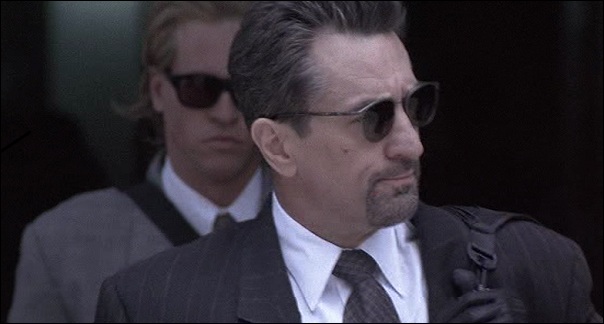
The Gangster: Neil McCauley, Heat

The Lesson: In the spectacular opening scene of Michael Mann’s Heat, criminal chief Neil McCauley and his team of robbers manage to take down a huge score. The key to their success? Planning, planning, planning. McCauley is a perfectionist; every detail needs to be scrupulously prepared, nothing can be left to coincidence. It there is even a slight chance that something is wrong; he will walk away from a job no matter how much money is at stake. Off course, there is a slight bump in the road for McCauley and his team later on, but that is only because pulling armed robberies is a highly volatile business. But even with a terrific investigation team on their tail lead by a fanatical Al Pacino, they manage to take down another – even larger – score later on in the movie.

2. Build a team you can rely on
Joe Cabot
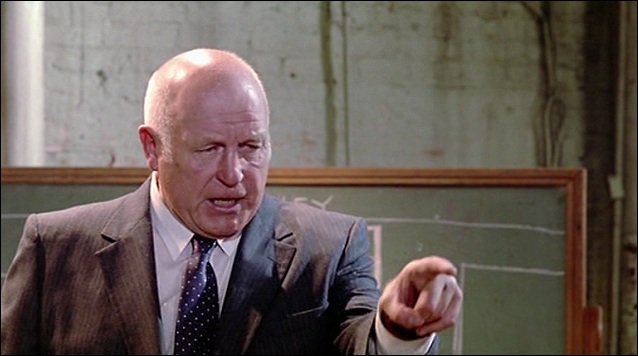
The Gangster: Joe Cabot, Reservoir Dogs

The Lesson: ‘I should have my head examined for going with someone I wasn’t a 100 percent on…’ Yeah, you should have Joe. As a manager, your most important task is to choose the right people around you and make them perform optimally. When you have a crucial project to realise – a diamond heist in Joe Cabot’s case – you don’t want to take any chances on whom you hire for the job. Joe’s negligence at this point, allowed a special LAPD-agent to infiltrate his crew, leading to a disastrous outcome for the project and all those involved.

3. Always look out for opportunities and know when to strike
Henry Hill
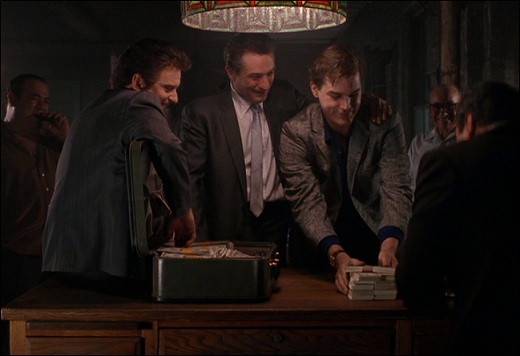
The Gangster: Henry Hill, GoodFellas

The Lesson: In Wiseguy, the novel on which the classic mob movie GoodFellas is based, protagonist Henry Hill describes his bewonderment at how lazy many people are. Great entrepreneurs like him are always looking for new ways to make money. Once in a while, a golden opportunity arises and a highly successful business manager will recognize this once in a lifetime chance and grab it. In Henry Hill’s case, this was the Air France heist in 1967. He walked away with 420.000 US dollars from the Air France cargo terminal at JFK International Airport without using a gun; the largest cash robbery that had taken place at the time. This was Hill’s ticket to long term success within the Mafia.

4. Analyse, decide and execute with conviction
Michael Corleone
The Gangster: Michael Corleone, The Godfather

The Lesson: Your success as executive depends for a great deal on the way you make decisions and follow them through. When his father, family patriarch Don Vito Corleone, is shot by Virgil ‘The Turk’ Sollozzo, Michael Corleone knows the threat of his father’s killing will not be over until Sollozo is dead. That is his analysis. Then, without any hesitation, he decides to kill Sollozo despite the hard consequences that he knows will follow. The third part – the execution – he performs flawlessly, killing Sollozo and his bodyguard Police Captain McCluskey in a restaurant. Michael later in the film again proves to be an extremely decisive leader when he has the heads of the five families killed when they conspire against the Corleone family.

5. Support the local community
Young Vito Corleone
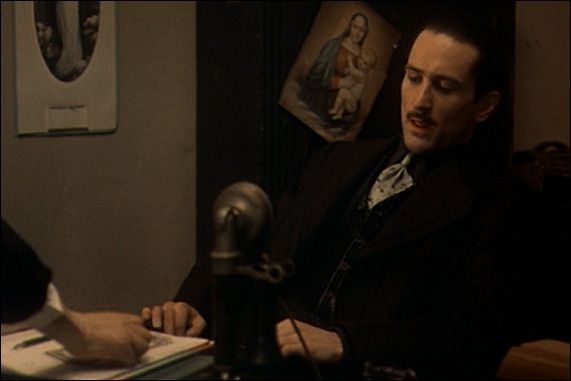
The Gangster: Young Vito Corleone, The Godfather Part II

The Lesson: For long term success, you need more than just great products (in the mob’s case: protection, gambling and theft). You will need commitment from all your stakeholders and especially goodwill from the communities you operate in. Young Vito Corleone sees that gangster boss Fanucci is squeezing out everybody in the neighbourhood he lives in. Nobody is happy with him. So he murders Fanucci and takes over as neighbourhood chieftain. Rather than squeezing out people, he starts helping them. Every favour he does for somebody, earns him a favour in return. Those are a lot of favours and a lot of people who think he deserves his success and wealth. They are willing to give everything for their Don.

6. Don’t be afraid to use your subconscious
Tony Soprano
The Gangster: Tony Soprano, The Sopranos

The Lesson: As a leader, you want to base your decisions on hard facts as much as possible, but sometimes your intuition is much more powerful than the greatest performance dashboard in the world. In the first season of HBO’s monumental Mafia series The Sopranos, family patriarch Tony Soprano’s own mother tries to have him whacked. He had revealing dreams about this before it happened, but refused to look at the painful true meaning of these dreams. Through therapy, he learned to use his subconscious like a true expert, so when his friend Big Pussy Bonpensiero starts ratting for the FBI in season 2, he knows something is wrong. In a fever dream, Big Pussy (as a fish), reveals the hard truth to Tony. When he wakes up, he knows exactly what to do. Big Pussy must sleep with the fishes. Tony’s new ability to listen to his subconscious makes him a much more effective leader.

7. Think and act faster
Nucky Thompson
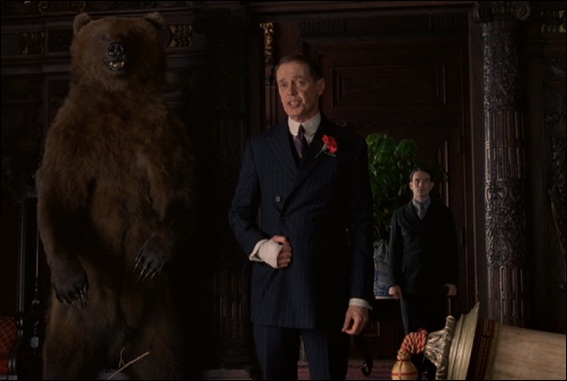
The Gangster: Nucky Thompson, Boardwalk Empire

The Lesson: After a botched assassination attempt on bootlegger and crooked politician Nucky Thompson, his enemies are left numb and indecisive of what to do next. Nucky – on the other hand – immediately makes a counter move. He goes to see his enemies and tells them the attempt on his life changed his perspective on things. He will abandon the bootlegging business and politics, so his enemies can take over. In secret however, Nucky books a trip to Ireland the next day, where he purchases a huge amount of cheap and highly qualitative Irish whiskey. His enemies underestimated him. By thinking and acting faster than his opponents, Nucky manages to surprise them and outperform them in business.

8. Take compliance seriously
Al Capone
The Gangster: Al Capone, The Untouchables

The Lesson: He was the king of his trade; the bootlegging business in Chicago. He made millions importing booze and selling it to bars and clubs. The thing that brought him down was income tax evasion. Managers can learn a simple truth from this mistake; compliance is your license to operate. Off course in Capone’s case this was a little different because he did not have any legal income to begin with, but many CEO’s of businesses have fallen into the same compliance trap. Sure, sometimes it is cheaper to pay a fine than to spend a fortune on meeting some obsolete policy, but you should never fail to answer to the most important rules and regulations. So even when it is sometimes tempting to bend the rules, in the end: being non-compliant is always more costly than being compliant.

9. Ride the Industry Waves
Tony Montana
The Gangster: Tony Montana, Scarface

The Lesson: Every industry has its waves, and a great CEO knows how to ride these waves. Take the drug business in the 1980’s. Cocaine was coming up big time in Florida. After Montana gets rid of his weak boss Frank, he sets up a massive cocaine trade in Miami and surroundings. His supply chain is very efficient. He imports the stuff straight from the source in Bolivia. Nobody can compete with that. It isn’t before long that Montana is Florida’s one and only cocaine king.

10. Keep your friends close and your enemies closer
Don Vito Corleone
The Gangster: Don Vito Corleone, The Godfather

The Lesson: You want to know what your competitors are up to? Invite them over for dinner and a meeting. Don Vito Corleone does it all the time. When he invites the heads of the five families for a sit down, in this powerful scene in The Godfather, he learns a great deal. It is not Tattaglia he should worry about, but that treacherous Barzini. Now that he understands the conspiracy against the Corleone family, he can help his son Michael take the necessary precautions.